La Paz to Durango
Durango → La PazFTL freight transportation service between La Paz and Durango. Reliable logistics solutions for your business.
Route Description
Everything you need to know about the corridor La Paz - Durango
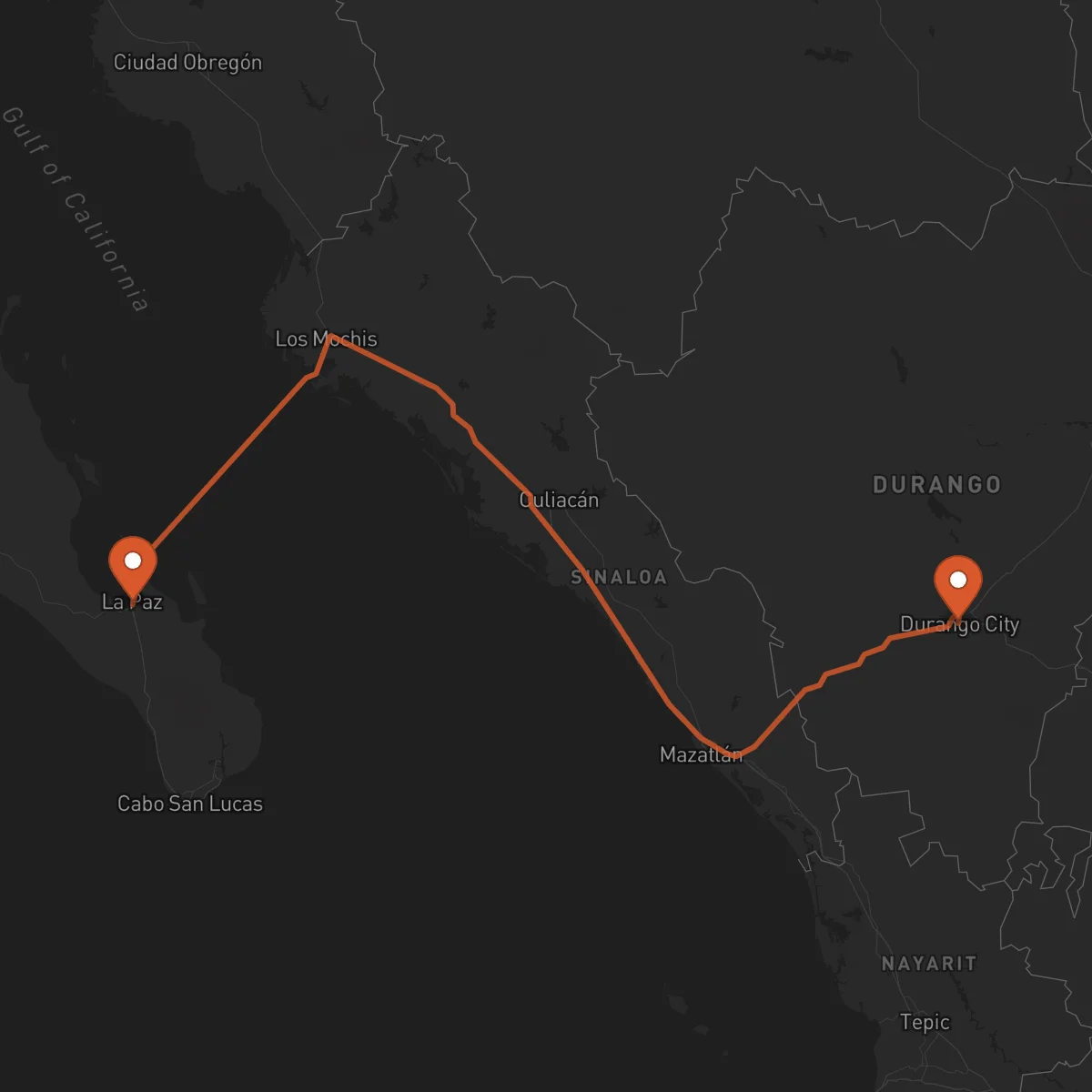
The La Paz-Durango corridor represents a vital connection between Baja California Sur and the Mexican highlands, spanning approximately 574 kilometers through diverse terrain. This domestic route traverses the Sierra Madre Occidental, linking the Pacific coastal region with the central-northern industrial corridor of Mexico. The strategic importance of this corridor lies in its role as a bridge between two distinct economic regions, facilitating the movement of goods from the port and tourism-focused economy of Baja California Sur to the manufacturing and industrial centers of Durango and beyond.
The economic context of this corridor reflects the complementary nature of both regions. La Paz serves as the capital and commercial hub of Baja California Sur, with its economy traditionally based on tourism, fishing, and emerging technology sectors. Durango, meanwhile, has developed as an important industrial center with strong presence in mining, manufacturing, and agricultural production. The corridor enables the efficient flow of raw materials, finished products, and supplies between these regions, supporting both local economies and national supply chains.
This route is particularly important for industries such as mining equipment and supplies, agricultural products, manufacturing components, and consumer goods. The transportation of specialized cargo, including oversized equipment for mining operations and temperature-sensitive products, requires reliable logistics solutions. The main highway infrastructure includes the well-maintained Federal Highway 1D connecting La Paz to the mainland, and Federal Highway 40D (La Entrada al Pacifico), a modern toll road that provides efficient transit through the mountainous terrain between the two cities.
Control Terrestre facilitates seamless operations along this corridor through our specialized full truckload services. Our strategic alliance with certified carriers ensures reliable transportation of cargo, whether it's dedicated shipments for manufacturing clients or expedited freight for time-sensitive deliveries. We understand the unique challenges of this route, including elevation changes and weather variations, and deploy appropriate equipment and experienced drivers to ensure cargo arrives safely and on schedule.
Services for this Route
Available services for the corridor La Paz - Durango
 Origin
La Paz
La Paz, the capital of Baja California Sur, occupies a strategic position on the eastern coast of the Baja California Peninsula, facing the Sea of Cortés. This coastal location provides unique logistical advantages, including access to maritime shipping routes and proximity to major tourism destinations. The city serves as the economic and administrative center of the state, with a well-developed infrastructure that includes the Manuel Márquez de León International Airport and the commercial port of Pichilingue, which handles cargo and passenger vessels. The urban area features modern industrial parks and commercial zones that support the region's diverse economic activities, from tourism and fishing to emerging technology and renewable energy sectors.
 Destination
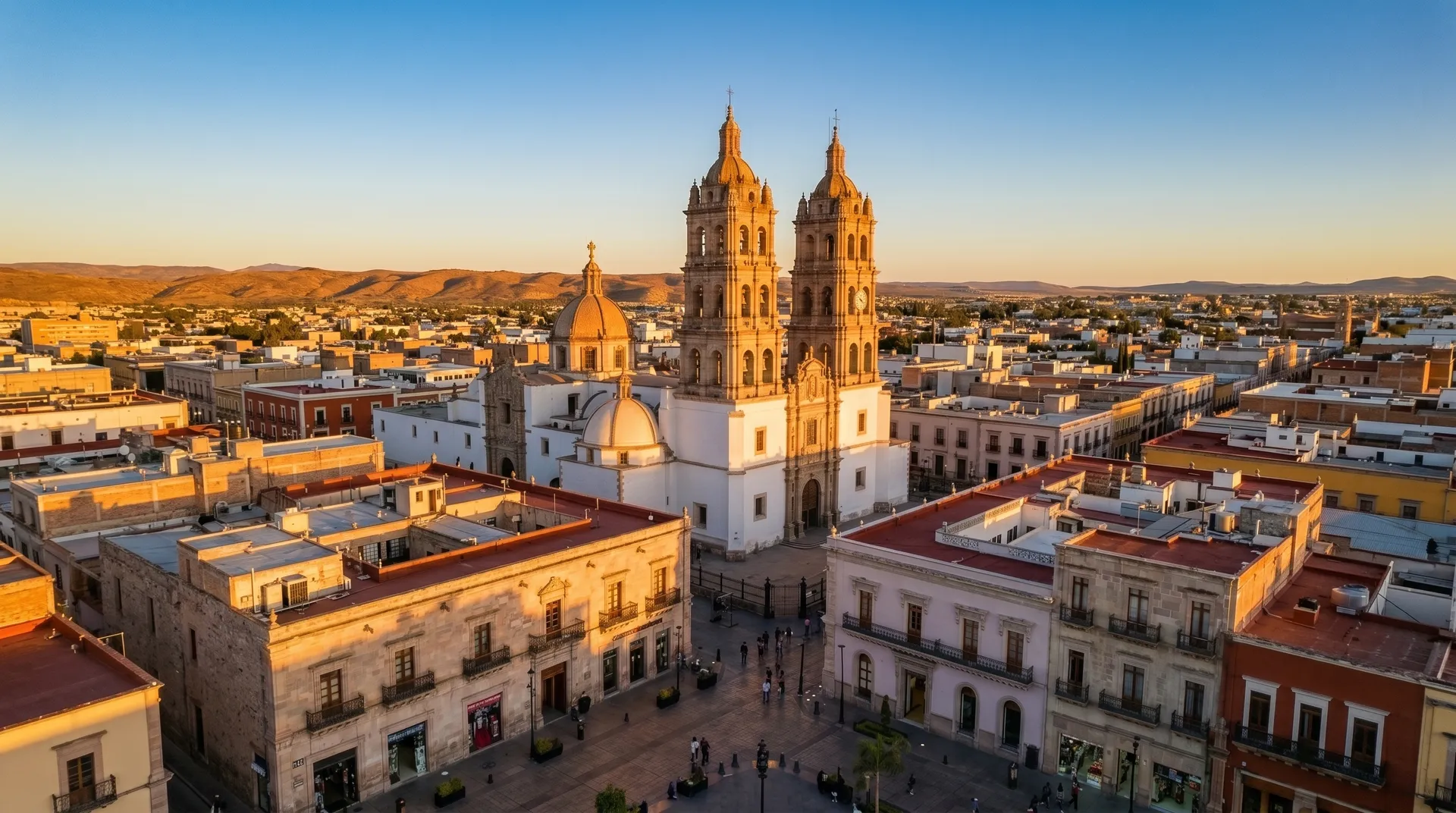
Durango, the capital of the state of the same name, is strategically located in the central-northern region of Mexico, serving as a key connection point between the Pacific coast and the central highlands. The city sits at an elevation of approximately 1,890 meters above sea level, providing access to major industrial corridors and transportation networks. Durango has developed significant infrastructure to support its industrial activities, including the Durango International Airport and a network of highways connecting to major cities like Monterrey, Guadalajara, and Mexico City. The surrounding region is rich in natural resources, particularly minerals, which has driven the development of mining and manufacturing industries. The city's industrial parks and commercial zones are equipped to handle diverse cargo types, from raw materials to finished products, making it a crucial node in Mexico's industrial supply chain.










