La Paz to Columbus
Columbus → La PazFTL freight transportation service between La Paz and Columbus. Reliable logistics solutions for your business.
Route Description
Everything you need to know about the corridor La Paz - Columbus
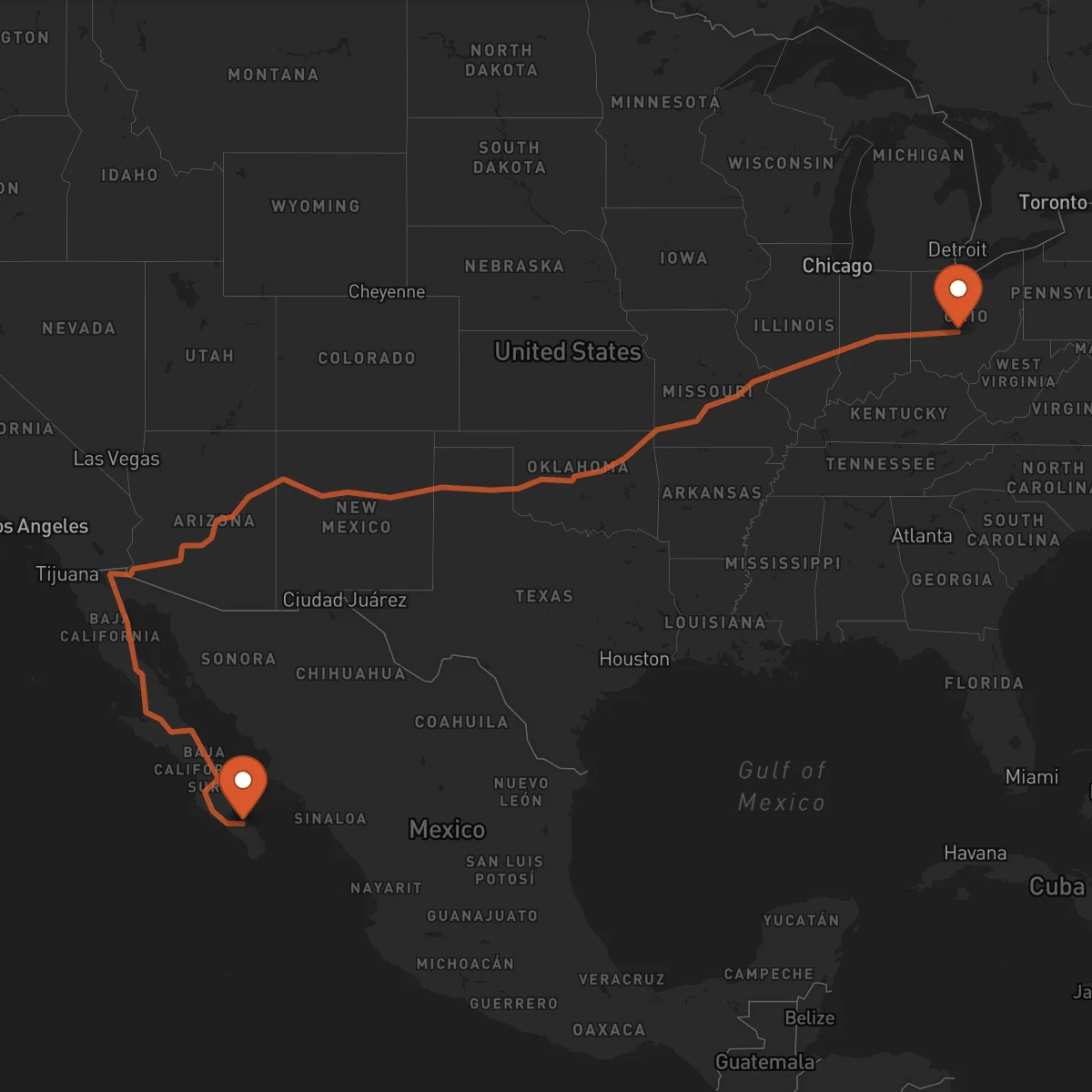
The logistics corridor connecting La Paz, Baja California Sur, to Columbus, Ohio, represents a vital trade link between Mexico and the United States. This cross-border route spans approximately 3,097 kilometers, traversing diverse terrains and economic regions. The corridor facilitates the movement of goods between the Pacific coast of Mexico and the industrial heartland of the American Midwest, supporting international trade and supply chain efficiency.
The economic significance of this corridor is underscored by the complementary industrial activities in both regions. La Paz serves as a key port and logistics hub for Baja California Sur, while Columbus stands as a major distribution center in the Midwest, with strong manufacturing, technology, and agricultural sectors. The route enables seamless movement of products ranging from electronics and automotive parts to agricultural goods and industrial equipment.
Transportation infrastructure along this corridor includes major highways such as Mexico's Federal Highway 1 and Federal Highway 5, transitioning to U.S. Interstate highways including I-35 and I-70. The primary border crossing is typically at Laredo or El Paso, where efficient customs processing is essential. Control Terrestre's expertise in cross-border operations ensures smooth customs clearance and compliance with all regulatory requirements, minimizing delays and optimizing transit times for full truckload shipments.
Services for this Route
Available services for the corridor La Paz - Columbus
 Origin
La Paz
La Paz, the capital of Baja California Sur, occupies a strategic position on the Sea of Cortez, making it an important maritime gateway for Mexico's Pacific trade. The city's port facilities handle a significant volume of cargo, connecting the region to international markets. La Paz's economy is driven by tourism, fishing, and a growing technology sector, with increasing industrial development in aerospace and renewable energy. The city's transportation infrastructure includes the Manuel Márquez de León International Airport and well-maintained road networks linking to major Mexican cities and the U.S. border.
 Destination
Columbus
Columbus, Ohio, serves as a strategic logistics hub in the American Midwest, benefiting from its central location and robust transportation infrastructure. The city is home to Rickenbacker International Airport, one of the largest cargo airports in the region, and is intersected by major highways including I-70 and I-71. Columbus's economy is diverse, with strong presence in education, healthcare, technology, and manufacturing sectors. The city's central location provides excellent connectivity to major U.S. markets, making it an ideal distribution point for companies serving the Midwest and beyond.










