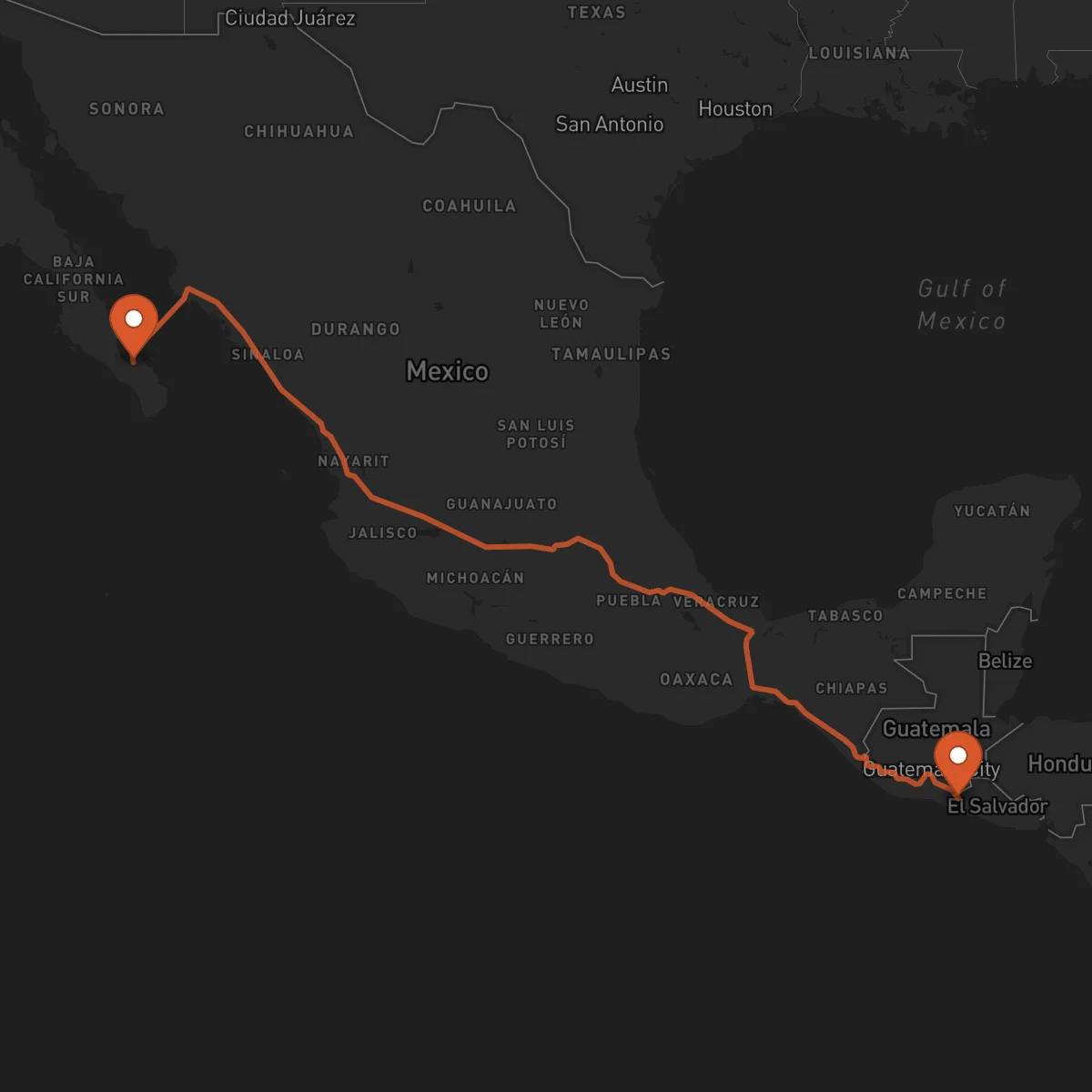
La Paz to Ahuachapán
Ahuachapán → La PazFTL freight transportation service between La Paz and Ahuachapán. Reliable logistics solutions for your business.
Route Description
Everything you need to know about the corridor La Paz - Ahuachapán
The La Paz to Ahuachapán corridor represents a vital logistics route connecting Mexico's Baja California Sur with El Salvador's western region. This 2429 km cross-border corridor traverses diverse terrain and economic zones, facilitating trade between the Pacific coast of Mexico and Central America's growing industrial centers. The route passes through key Mexican states including Baja California, Sonora, Sinaloa, Nayarit, Jalisco, Michoacán, Guerrero, Oaxaca, Chiapas, and crosses into Guatemala before reaching El Salvador.
The corridor's strategic importance stems from its connection between Mexico's tourism and agricultural sectors with El Salvador's textile, manufacturing, and agricultural industries. Major highways such as Mexico's Federal Highway 1 and Federal Highway 200 provide the backbone for this transportation route, with critical border crossings at Ciudad Hidalgo and Ciudad Tecún Umán. Control Terrestre specializes in navigating the complexities of this cross-border journey, ensuring seamless freight movement through multiple customs jurisdictions and regulatory environments.
Key industries utilizing this corridor include agricultural exports from Baja California Sur, automotive components from various Mexican states, and finished goods destined for El Salvador's growing manufacturing sector. The route also supports reverse logistics, with products from El Salvador's maquiladora industry moving northward. Control Terrestre's expertise in cross-border operations, customs clearance, and specialized freight handling makes us the ideal partner for companies seeking reliable transportation along this corridor.
Services for this Route
Available services for the corridor La Paz - Ahuachapán
 Origin
La Paz
La Paz, the capital of Baja California Sur, serves as a strategic logistics hub for the region's agricultural and tourism industries. Located on the eastern coast of the Baja California Peninsula, the city benefits from its proximity to major agricultural production areas and its connection to mainland Mexico via air and sea routes. The region's economy is driven by fishing, agriculture (particularly tomatoes, green peppers, and other vegetables), and tourism, creating consistent freight movement needs. La Paz's transportation infrastructure includes the Manuel Márquez de León International Airport and the Port of Pichilingue, complemented by road connections to the north and mainland Mexico via Federal Highway 1.
 Destination
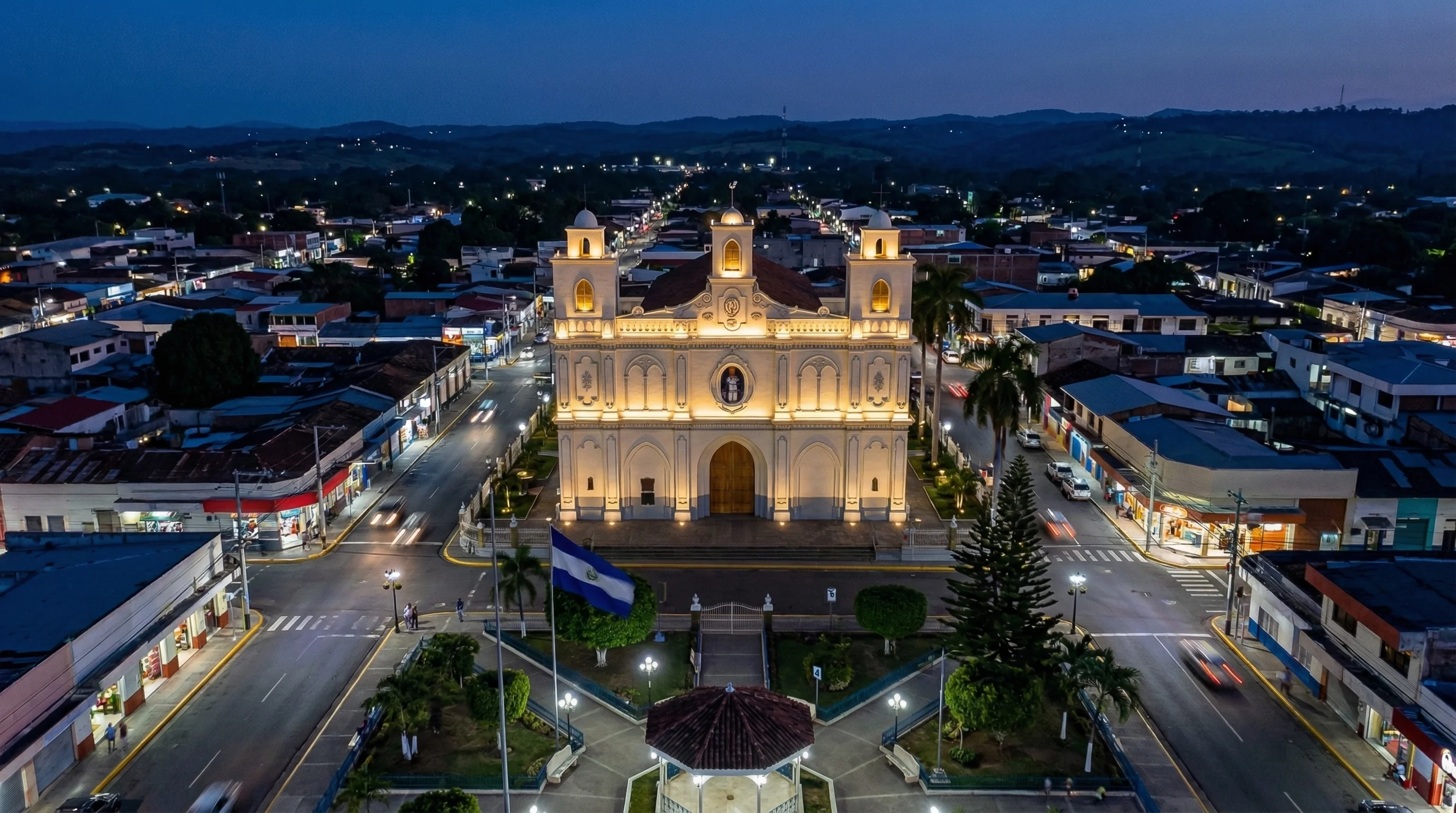
Ahuachapán
Ahuachapán, located in western El Salvador near the Guatemalan border, is a strategic logistics point for Central American trade. The city and surrounding region are known for their coffee production, geothermal energy facilities, and growing manufacturing sector. Ahuachapán's proximity to both Guatemala and the Pacific coast makes it an ideal distribution point for goods entering or leaving Central America. The region's transportation infrastructure includes the CA-1 Pan-American Highway, which connects to major cities throughout Central America, and the Port of Acajutla, facilitating both import and export operations. The area's economic activities create consistent demand for reliable freight transportation services.










