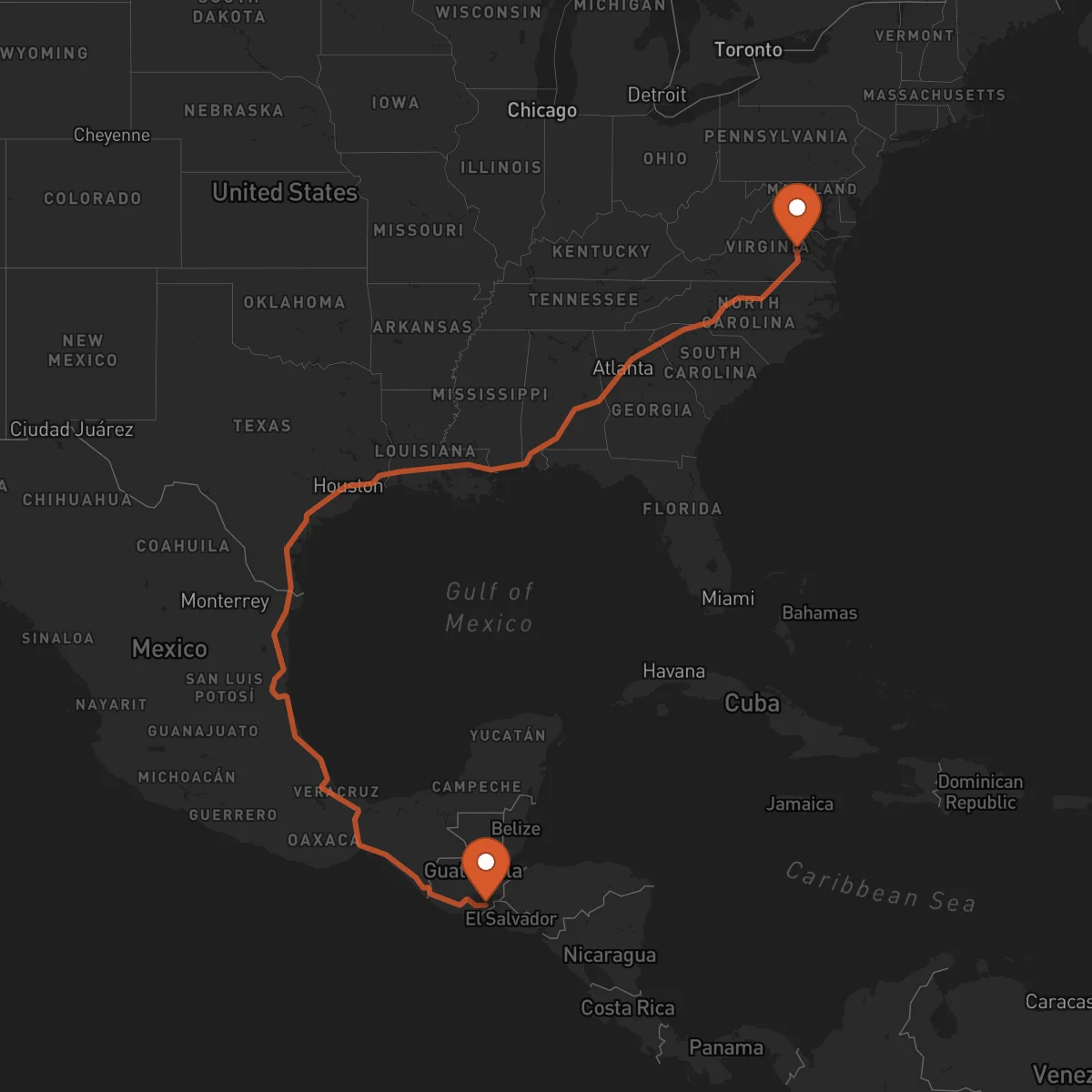
Jutiapa to Richmond
Richmond → JutiapaFTL freight transportation service between Jutiapa and Richmond. Reliable logistics solutions for your business.
Route Description
Everything you need to know about the corridor Jutiapa - Richmond
The Jutiapa, Guatemala to Richmond, Virginia corridor represents a critical north-south trade artery connecting Central America's production hubs with the major consumption and distribution markets of the U.S. East Coast. This cross-border route is strategically vital for moving goods efficiently across Mexico and into the United States, serving as a logistical bridge for industries on both ends. The economic context is defined by robust trade flows under agreements like CAFTA-DR, facilitating the movement of raw materials and finished goods. Key industries leveraging this corridor include agriculture (coffee, sugar, fruits), textiles and apparel, manufactured parts, and consumer goods. The primary transportation infrastructure relies on a network of major highways: from Jutiapa, the CA-1 connects through Guatemala City to the Mexican border at Tecún Umán/Ciudad Hidalgo. In Mexico, the route predominantly follows the toll highway network (Autopistas) like Mexico 190 and 150D towards the key border crossing at Nuevo Laredo/Laredo. After U.S. customs clearance, the journey continues on the comprehensive U.S. Interstate system, primarily I-35 north to Dallas/Fort Worth, then I-20 east through Texas, Louisiana, Mississippi, Alabama, and finally I-95 north into Virginia to Richmond. The most significant customs and border consideration is the efficient processing at the Laredo/Nuevo Laredo crossing, the busiest in North America. Navigating this requires expertise in Mexican customs (Aduanas) and U.S. CBP procedures, including compliance with programs like C-TPAT and FAST for pre-approved, expedited clearance. At Control Terrestre, we facilitate seamless operations on this corridor through our strategic alliance of certified carriers. Our providers hold essential credentials including C-TPAT, FAST, and BASC, which streamline border processes. We manage the entire cross-border complexity—from origin pickup in Jutiapa through Mexican transit, U.S. import customs clearance, to final delivery in Richmond—ensuring a single point of contact for our clients' full truckload (FTL) shipments. Our focus is on providing a reliable, human-centric service that navigates the regulatory landscape while maintaining the integrity of your supply chain.
Services for this Route
Available services for the corridor Jutiapa - Richmond
 Origin
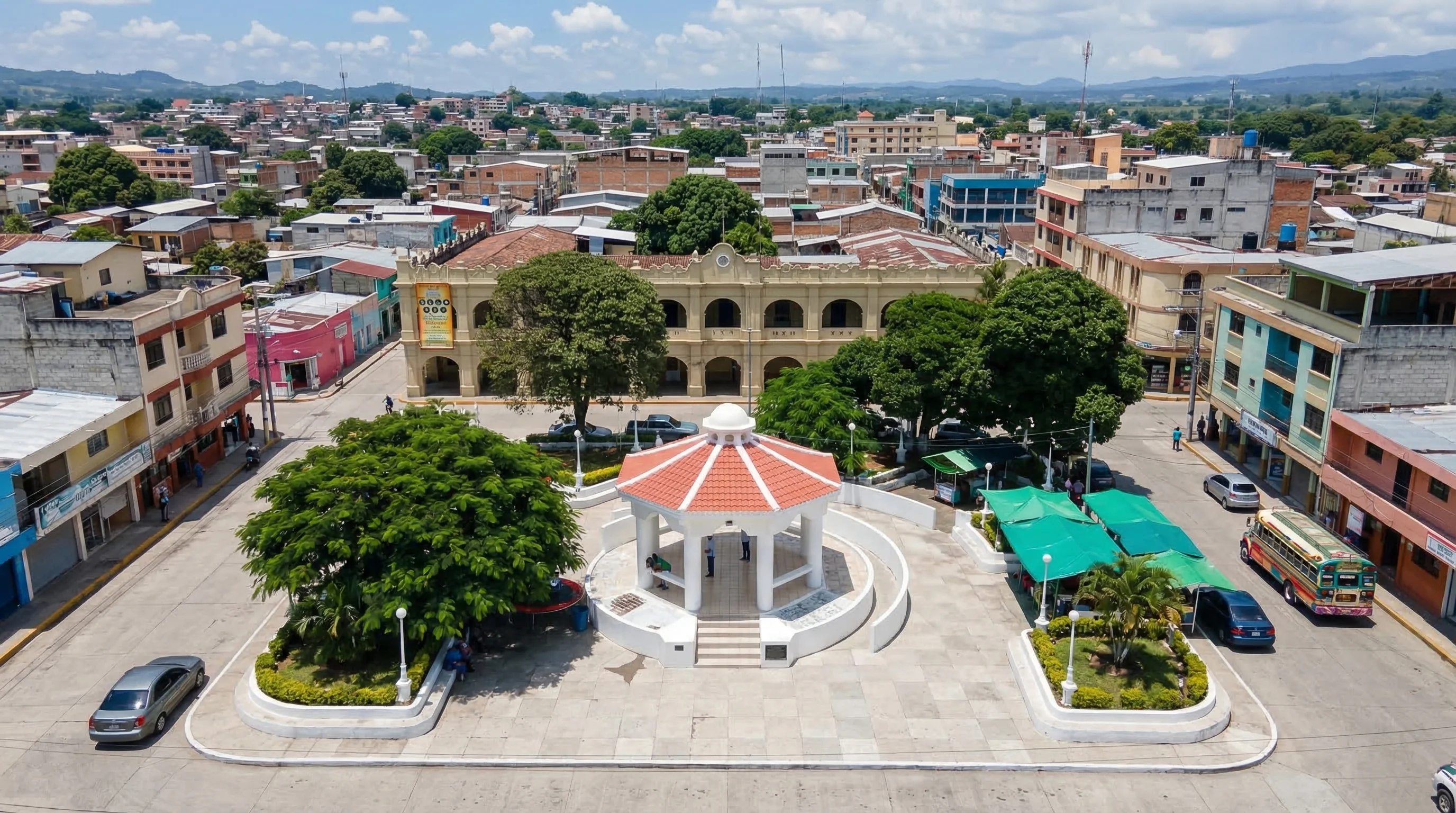
Jutiapa, located in southeastern Guatemala near the border with El Salvador, serves as a strategic agricultural and light industrial logistics origin. Its position provides direct access to the Pan-American Highway (CA-1), enabling efficient connectivity to major Pacific seaports like Puerto Quetzal and the primary land border crossing with Mexico at Tecún Umán. The region's economy is anchored by high-value agriculture, including coffee, sugar cane, and tropical fruits, alongside growing textile manufacturing and food processing sectors. This creates consistent demand for outbound freight transportation of raw agricultural commodities and finished goods. The available transportation infrastructure is centered on the CA-1 highway corridor, which supports heavy truck traffic destined for Mexico and beyond. While Jutiapa itself is a production and collection point, its true logistical strength lies in its role as a gateway, funneling goods from Guatemala's interior onto the North American continental freight network via the Mexican border.
 Destination
Richmond
Richmond, Virginia, is a pivotal logistics and distribution hub on the U.S. East Coast, offering exceptional strategic value for supply chains. Its central location within the Mid-Atlantic provides rapid access to major metropolitan markets from Washington, D.C. to Raleigh-Durham, and efficient connections to the entire Eastern Seaboard via I-95. The city's economy is diverse, anchored by manufacturing (chemicals, plastics, tobacco products), a significant presence of federal government agencies and contractors, and a thriving warehousing and distribution sector. This drives strong demand for inbound freight to supply regional production facilities and distribution centers. Richmond's transportation infrastructure is robust, featuring the critical I-95/I-64 interchange, direct rail access via CSX and Norfolk Southern, and proximity to the Port of Virginia in Hampton Roads (approximately 70 miles away). This multimodal capability makes Richmond an ideal final-mile destination for cross-border FTL shipments from Central America, allowing for easy onward transfer or local delivery.










