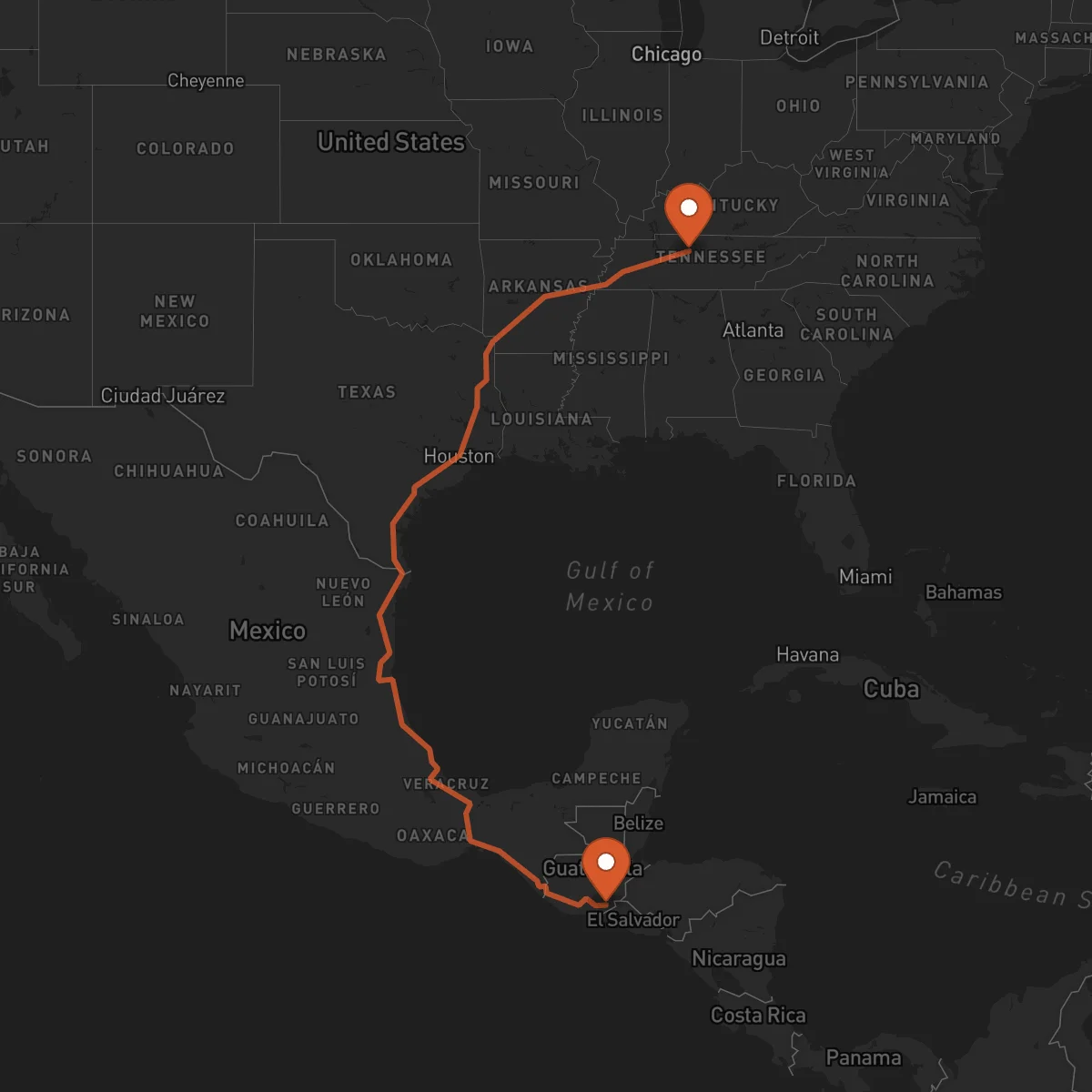
Jutiapa to Nashville
Nashville → JutiapaFTL freight transportation service between Jutiapa and Nashville. Reliable logistics solutions for your business.
Route Description
Everything you need to know about the corridor Jutiapa - Nashville
The logistics corridor between Jutiapa, Guatemala, and Nashville, Tennessee, represents a vital trade route connecting Central America with the southeastern United States. This 2,453-kilometer cross-border corridor facilitates the movement of goods between Guatemala's industrial base and Tennessee's manufacturing and distribution centers. The route traverses key transportation hubs, enabling efficient freight movement across international borders and supporting growing trade relationships between the two regions.
The corridor's strategic importance lies in its ability to connect Guatemala's agricultural and manufacturing sectors with Nashville's diverse industrial base, which includes automotive, healthcare, and music-related industries. Companies utilizing this route benefit from access to both markets, with products ranging from textiles and electronics to agricultural goods and industrial equipment. The corridor serves as a critical link in the supply chain for businesses looking to expand their operations across North America.
Transportation along this route relies on major highways including CA-1 in Guatemala, connecting to Mexican federal highways, and ultimately linking to US Interstate 40 and I-24 into Nashville. Key border crossings at Ciudad Hidalgo or El Ceibo facilitate the movement of goods between Guatemala and Mexico, while the Laredo or El Paso crossings handle the Mexico-US transition. Control Terrestre's expertise in cross-border logistics ensures seamless customs clearance and compliance with all regulatory requirements, minimizing delays and optimizing transit times for our clients' freight shipments.
Services for this Route
Available services for the corridor Jutiapa - Nashville
 Origin
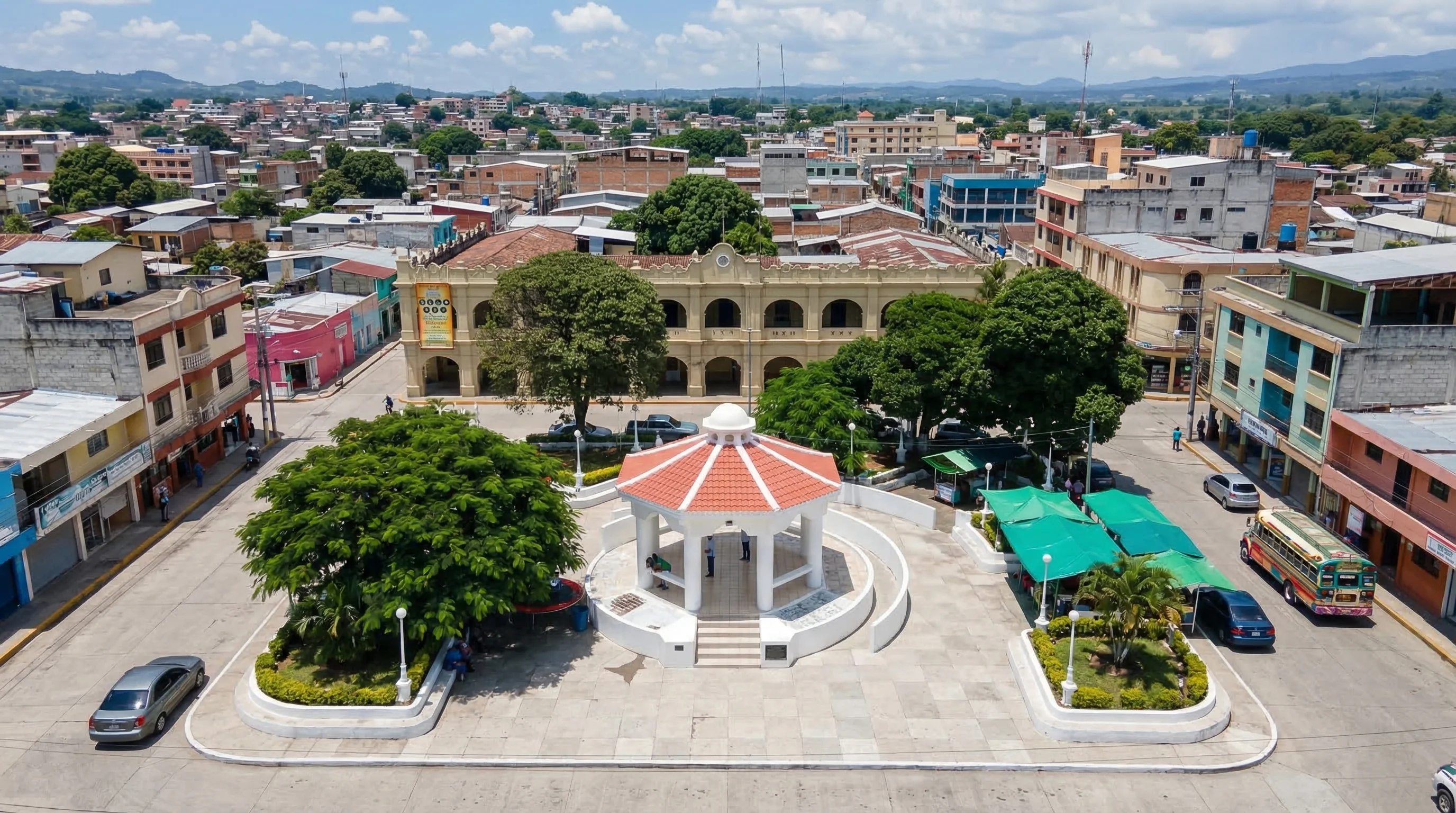
Jutiapa, located in southeastern Guatemala, serves as a strategic logistics hub due to its proximity to both El Salvador and Honduras borders. The city's location provides excellent connectivity to major Central American trade routes and access to Guatemala's growing manufacturing and agricultural sectors. Jutiapa's industrial base includes food processing, textile manufacturing, and agricultural production, making it an ideal origin point for diverse freight shipments heading to the United States.
The region benefits from developing transportation infrastructure, including access to CA-1 (the Pan-American Highway) and connections to major ports on both the Pacific and Atlantic coasts of Guatemala. Local warehousing and distribution facilities support efficient cargo consolidation and preparation for cross-border transportation. Jutiapa's growing logistics ecosystem, combined with its strategic border proximity, makes it an increasingly important origin point for companies seeking to leverage Guatemala's competitive advantages in manufacturing and agriculture for North American markets.
 Destination
Nashville
Nashville, Tennessee, stands as a major logistics and distribution hub in the southeastern United States, offering exceptional connectivity and infrastructure for freight operations. The city's strategic location provides access to major interstate highways, including I-40, I-24, and I-65, facilitating efficient distribution throughout the eastern United States. Nashville's growing population and economic development have created increased demand for diverse freight services, supporting industries ranging from automotive manufacturing to healthcare and entertainment.
The region boasts modern warehousing facilities, intermodal yards, and a robust transportation network that can handle various freight types efficiently. Nashville's proximity to major markets in the eastern US, combined with its central location, makes it an ideal destination for cross-border shipments from Central America. The city's logistics infrastructure includes advanced tracking systems, customs clearance facilities, and a skilled workforce, ensuring that freight arriving from Guatemala can be quickly integrated into the broader North American supply chain.










