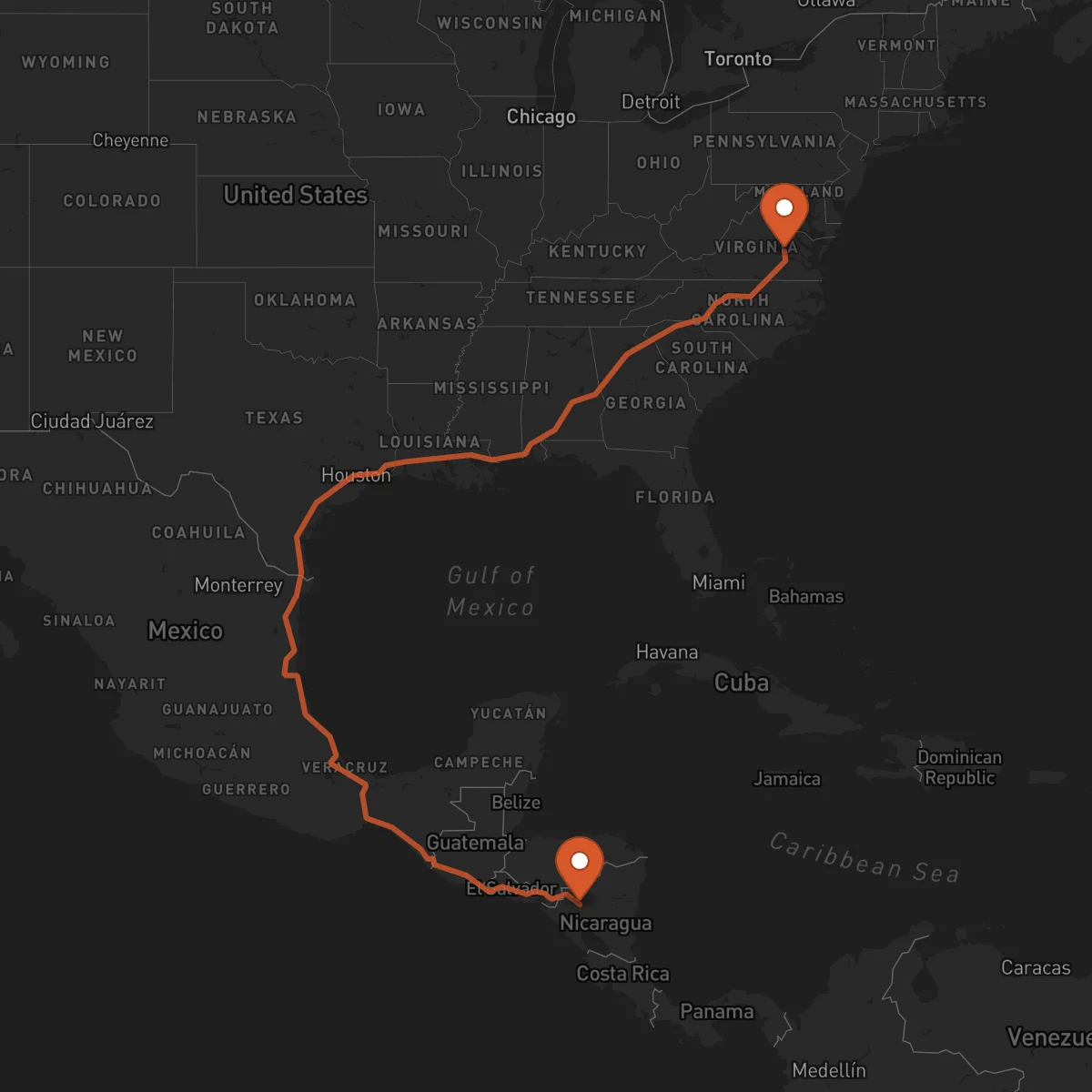
Jinotega to Richmond
Richmond → JinotegaFTL freight transportation service between Jinotega and Richmond. Reliable logistics solutions for your business.
Route Description
Everything you need to know about the corridor Jinotega - Richmond
The Jinotega-to-Richmond corridor represents a vital North-South logistics artery connecting Central America's agricultural heartland with the industrial and distribution hubs of the U.S. East Coast. Spanning approximately 2,849 km, this cross-border route is strategically essential for moving time-sensitive, high-value full truckload (FTL) cargo efficiently across multiple jurisdictions. The economic context is driven by the robust export of Nicaraguan agricultural products—primarily coffee, beef, and grains—to meet the demands of U.S. processors, distributors, and retailers. Conversely, the corridor facilitates the inbound flow of manufactured goods, industrial supplies, and consumer products from the Richmond metropolitan area and broader Mid-Atlantic region into Central America.
Key industries leveraging this corridor include agribusiness, food and beverage processing, and industrial manufacturing on both ends. Transportation infrastructure relies on a sequence of major highways: starting with Nicaragua's RN-3 and RN-1 connecting to the Pan-American Highway (CA-1) through Honduras and Guatemala. The route then traverses Mexico via federal highways such as Mex-185 and Mex-150D before reaching the U.S. border. Critical border crossings, such as those at the Guatemala-Mexico (e.g., Ciudad Hidalgo/Tecún Umán) and Mexico-U.S. (e.g., Laredo/Colombia or Brownsville/Matamoros) interfaces, require meticulous customs compliance. Control Terrestre facilitates seamless operations on this complex corridor through our strategic alliance network of certified carriers. Our partners hold key accreditations including C-TPAT, FAST, and BASC, which streamline customs procedures and enhance security. We manage the entire cross-border process, coordinating dedicated FTL, refrigerated, or specialized equipment as needed, ensuring a singular point of contact for our clients while navigating the distinct regulatory landscapes of each country.
Our expertise in this corridor means we optimize for reliability and transit integrity, handling the unique challenges of long-haul international freight, from documentation to border transition. We do not consolidate; we provide exclusive use of trailer capacity, which is crucial for sensitive agricultural exports and industrial shipments requiring consistent environmental control or security.
Services for this Route
Available services for the corridor Jinotega - Richmond
 Origin
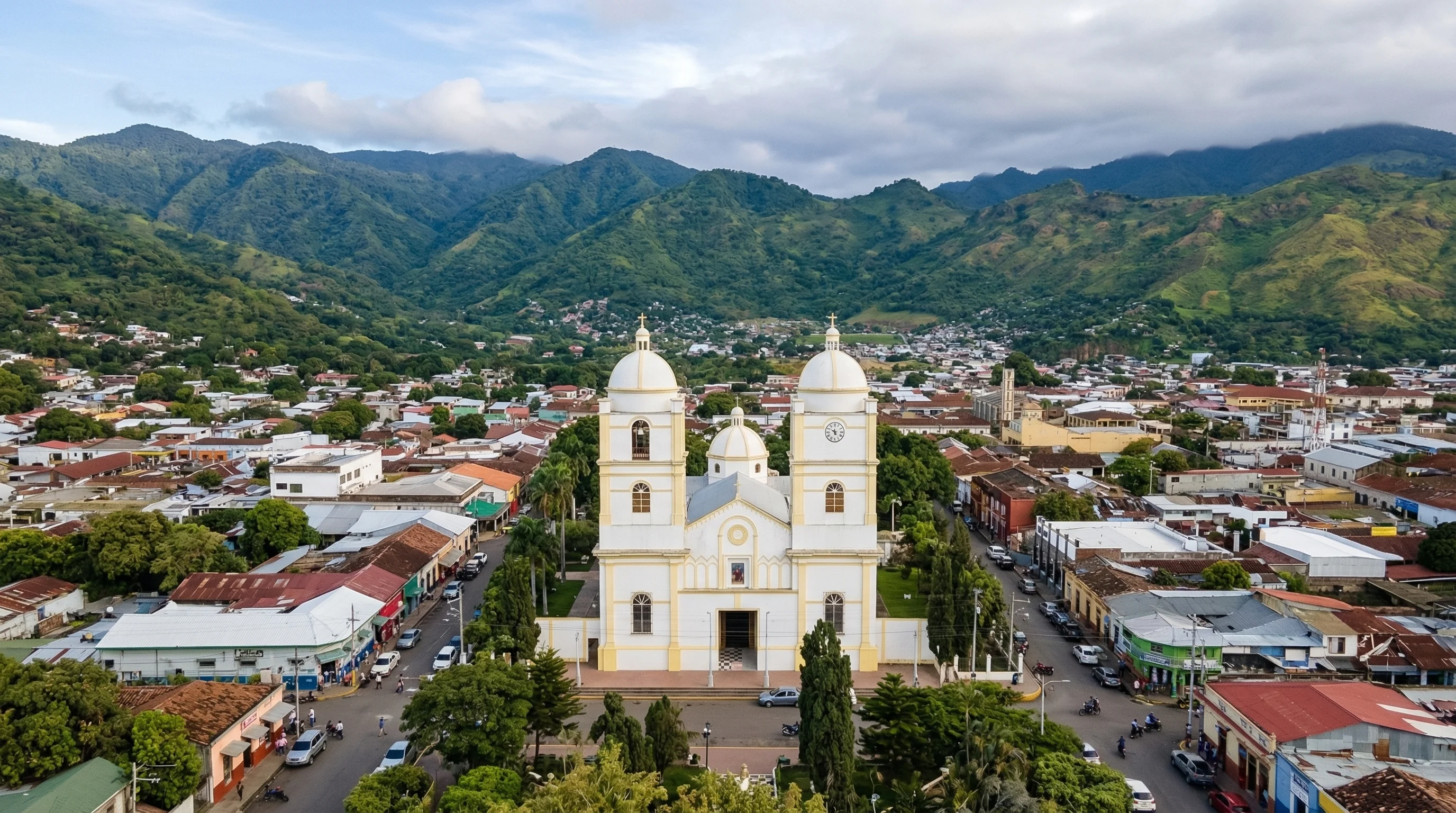
Jinotega, situated in the northern highlands of Nicaragua, is a strategic logistics origin due to its status as the nation's primary coffee-producing region, often called the 'Capital of Coffee.' Its elevation and climate are ideal for high-quality arabica beans, making it a pivotal hub for agricultural exports. The local economy is deeply rooted in agribusiness, with coffee, vegetables, and livestock as key sectors. The department's infrastructure is centered on road networks that connect its mountainous municipalities to major highways. The RN-3 provides a direct link to the capital, Managua, and the Pan-American Highway (CA-1), which serves as the primary north-south artery for international freight exiting Nicaragua toward Honduras and the rest of Central America. This connectivity transforms Jinotega from an agricultural zone into a critical launch point for long-haul international supply chains.
 Destination
Richmond
Richmond, Virginia, is a strategic logistics destination on the U.S. East Coast, offering exceptional connectivity to national and international markets. Its central location within the Mid-Atlantic provides direct access to the I-95 corridor, the primary interstate highway linking the Southeast to major Northeastern consumer markets. The city is a historic industrial and manufacturing center, with a modern economy diversified across sectors such as chemicals, plastics, advanced manufacturing, and distribution. The presence of the Port of Virginia (Norfolk) approximately 100 miles southeast provides vital intermodal options, though the corridor focuses on door-to-door trucking. Richmond's infrastructure includes extensive warehouse and distribution center capacity, well-developed highway interchanges, and rail facilities, making it a consolidation and final-mile delivery point for goods arriving from Latin America. Its business environment attracts companies requiring reliable inbound freight for production and outbound finished goods distribution.










