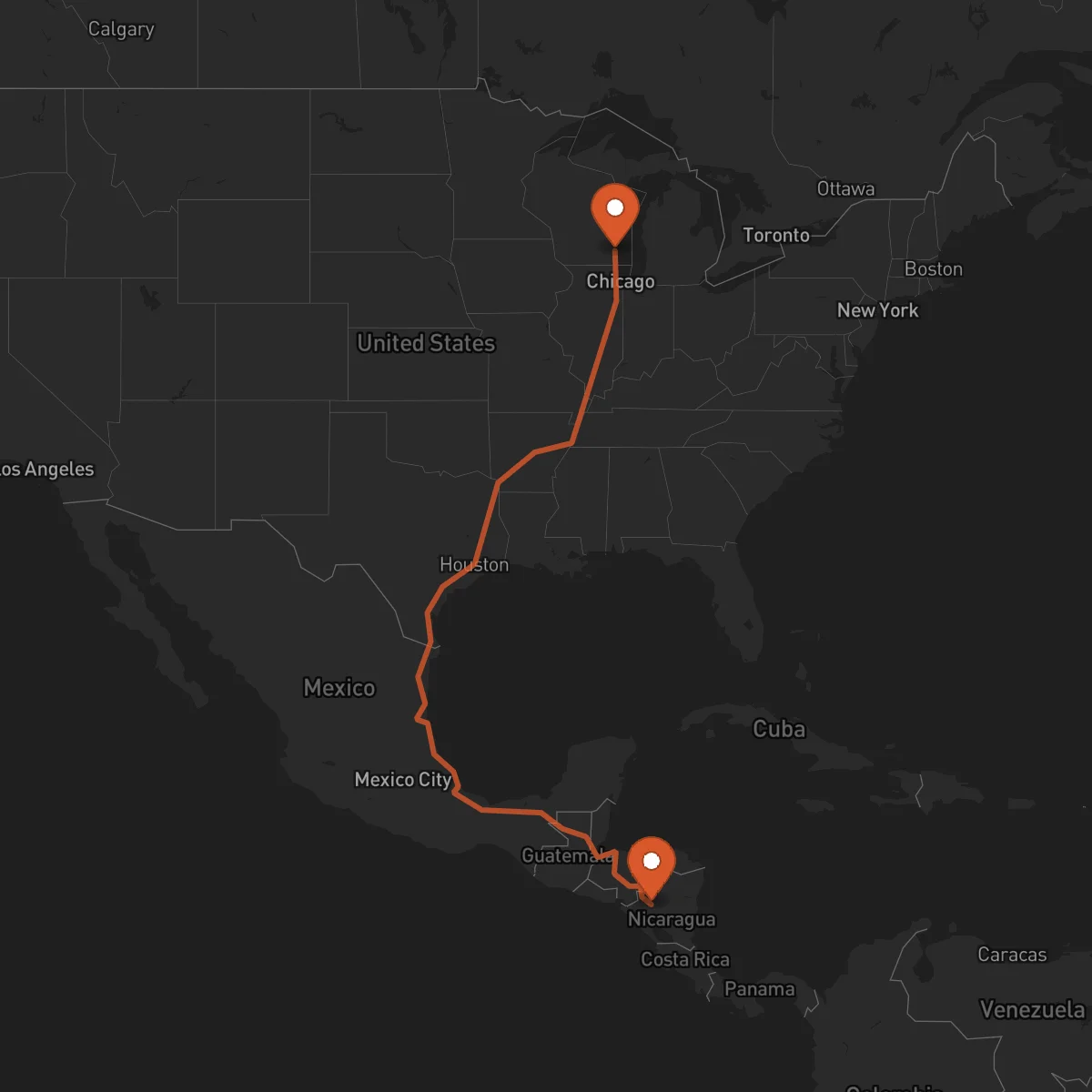
Jinotega to Milwaukee
Milwaukee → JinotegaFTL freight transportation service between Jinotega and Milwaukee. Reliable logistics solutions for your business.
Route Description
Everything you need to know about the corridor Jinotega - Milwaukee
The Jinotega to Milwaukee corridor represents a vital North-South trade artery connecting Central America's agricultural heartland with the industrial Midwest of the United States. Strategically, it bridges Nicaraguan production zones with a major U.S. consumer and manufacturing market, facilitating efficient cross-continental supply chains. This route is critical for moving time-sensitive agricultural goods, manufactured components, and specialized cargo that require reliable, full truckload (FTL) transit without consolidation delays.
Economically, the corridor serves regions with complementary industrial profiles. Jinotega is a cornerstone of Nicaragua's agricultural export economy, while Milwaukee is a diversified manufacturing and distribution hub. The primary industries leveraging this lane include coffee and agricultural processors from Jinotega shipping to U.S. roasters and distributors, and Nicaraguan textile/apparel manufacturers sending goods to U.S. apparel brands and Midwest distribution centers. Conversely, the corridor supports the inbound flow of U.S.-manufactured machinery, automotive parts, and packaged goods to Nicaraguan importers and regional distribution centers.
Transportation infrastructure relies on a sequence of major highways. The journey begins on Nicaragua's Carretera a Jinotega (RN-3), connecting to the Pan-American Highway (RN-1) south towards Managua for border processing. After crossing into Honduras at Guasaule/El Amatillo, the route utilizes the CA-1 highway through Honduras and El Salvador, rejoining the Pan-American in Guatemala. The Mexican segment depends on the route through Tapachula, typically using Mexican Federal Highway 190 and 200 to connect with the major north-south corridor of Federal Highway 15. This highway provides a direct path to the U.S. border at Nogales, Arizona. From there, the interstate system—primarily I-10, I-20, and I-94—carries freight through Texas, New Mexico, Arizona, and across the central U.S. to Milwaukee.
Key border crossings are at Guasaule (Nicaragua/Honduras), the Honduras/El Salvador and El Salvador/Guatemala borders (often processed via the CA-1 corridor), and the Guatemala/Mexico border at Ciudad Tecún Umán/El Carmen. The final and most complex crossing is the Mexico/U.S. border, with Nogales, Arizona, being a primary gateway for this corridor, requiring rigorous customs clearance. Control Terrestre facilitates seamless operations on this complex multi-national corridor through our alliance of certified providers. Our partners hold essential credentials like C-TPAT, FAST, and BASC, which streamline customs procedures and enhance security clearance. We manage the entire door-to-door process, coordinating cross-border documentation, customs brokerage integration, and dedicated equipment—including dry vans, reefers, and flatbeds for specialized cargo—ensuring a single point of contact for our clients' FTL shipments from origin to destination.
Services for this Route
Available services for the corridor Jinotega - Milwaukee
 Origin
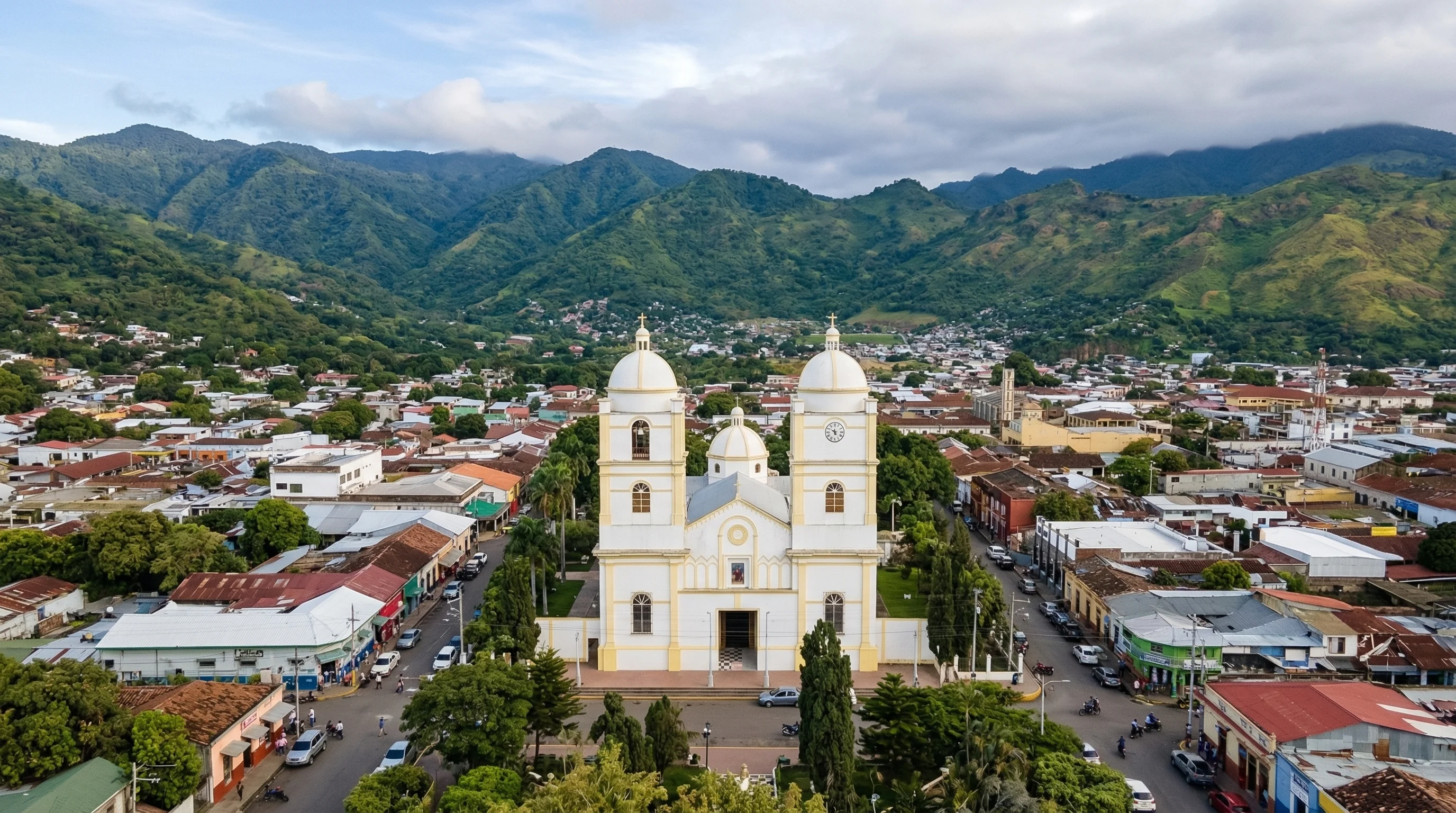
Jinotega, Nicaragua, is a strategically significant inland logistics hub located in the northern highlands, approximately 150 km northeast of Managua. Its position provides direct access to the country's most fertile agricultural regions and a crucial gateway to the Caribbean coast via port connections. The city and surrounding department are the epicenter of Nicaragua's coffee industry, producing a significant portion of the nation's high-quality Arabica beans for global export. Beyond coffee, the region's economy is robustly supported by agriculture (vegetables, flowers), livestock, and a growing textile manufacturing sector that serves international markets.
Transportation infrastructure centers on the Carretera a Jinotega (RN-3), a paved highway that connects the city directly to Managua and the main Pan-American Highway (RN-1). This road is the primary artery for moving goods to and from the capital's port facilities (Corinto on the Pacific) and international airport for export. While the local road network serves agricultural estates and industrial parks, all long-haul freight converges on the RN-3 for southbound transit. The corridor's efficiency depends on the condition and capacity of this highway and its connection points to the national network leading to the southern border crossings with Honduras.
 Destination
Milwaukee
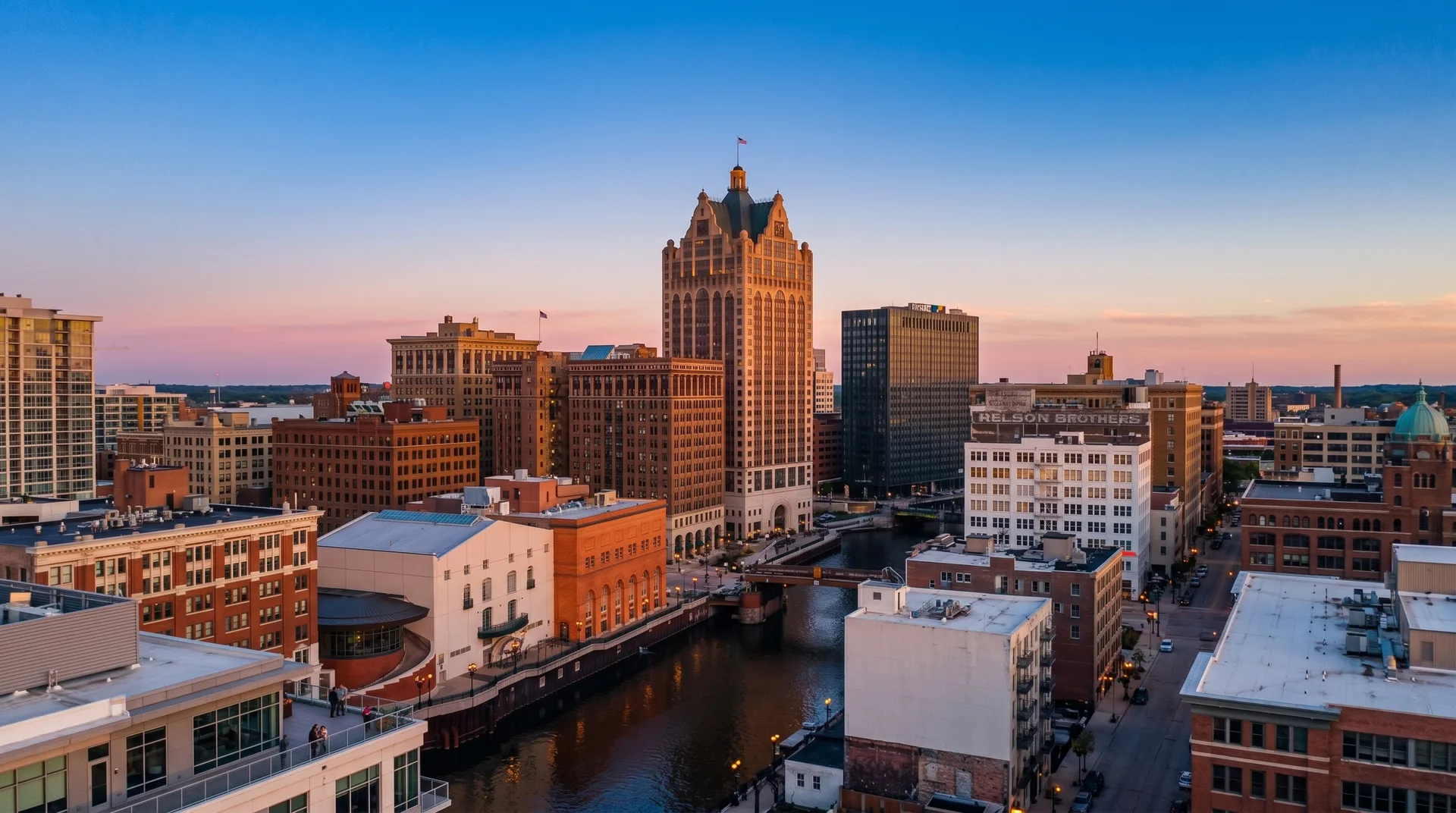
Milwaukee, Wisconsin, is a premier logistics and industrial destination in the U.S. Midwest, strategically positioned on the western shore of Lake Michigan. Its location offers exceptional multimodal connectivity: it is a major rail hub, home to the Port of Milwaukee (providing Great Lakes shipping access), and sits at the crossroads of several interstate highways (I-94, I-43, I-41). This infrastructure makes it a critical distribution center for the Upper Midwest and a gateway for international trade via the Great Lakes/St. Lawrence Seaway system. The city anchors a massive metropolitan area with a deep industrial heritage and a modern, diversified economy.
Milwaukee's primary industries driving freight demand include advanced manufacturing (machinery, equipment, automotive parts), food and beverage processing (including a major presence of global brewing and snack food companies), healthcare and medical device manufacturing, and a strong logistics and distribution sector itself. The region hosts numerous corporate headquarters and large-scale industrial parks that generate consistent volume for inbound raw materials and outbound finished goods. The availability of multiple transportation modes—especially the direct interstate highway access—makes it an ideal final-mile destination for FTL shipments from various origins, including international corridors like the one from Central America.










