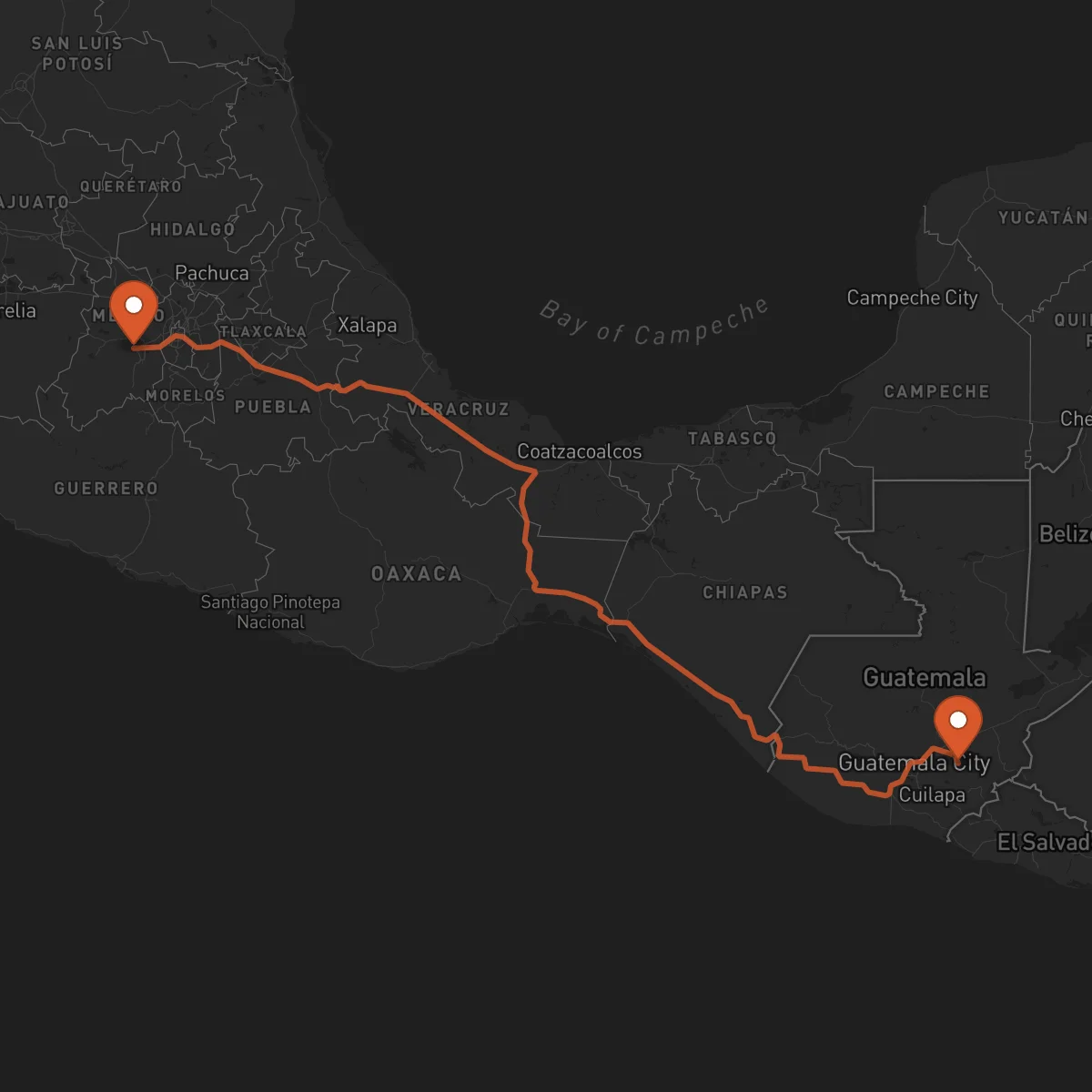
Jalapa to Toluca
Toluca → JalapaFTL freight transportation service between Jalapa and Toluca. Reliable logistics solutions for your business.
Route Description
Everything you need to know about the corridor Jalapa - Toluca
The Jalapa, Guatemala to Toluca, Mexico corridor is a critical cross-border logistics artery spanning approximately 1150 km, linking Central American production centers with Mexico's industrial heartland. This route is strategically vital for enabling efficient trade flows, supporting supply chain integration between Guatemala's export-oriented economy and Toluca's manufacturing powerhouse, with onward connectivity to U.S. markets. It underscores the economic synergy of the region, reducing transit dependencies and fostering bilateral commerce.
Economically, the corridor serves dynamic sectors: Guatemala's Jalapa region exports agricultural commodities like coffee, bananas, and sugarcane, while Toluca's industrial base—dominated by automotive assembly (e.g., Nissan, GM), electronics, pharmaceuticals, and consumer goods—requires steady inbound raw materials and distributes finished products. High FTL freight volumes characterize this lane, driven by time-sensitive manufacturing needs and agricultural seasonality. The infrastructure relies on key highways: from Jalapa via Guatemala's CA-9 to CA-1 towards the border, then through Mexico's federal highways such as Mexico 190 and 15D, depending on the crossing. Primary border points like Tecún Umán/ Ciudad Hidalgo handle substantial freight, with customs processes influenced by bilateral agreements; certifications such as C-TPAT and FAST are leveraged for expedited clearance, though congestion and regulatory compliance remain considerations.
Control Terrestre facilitates seamless operations on this corridor through our dedicated FTL services and strategic provider alliances. We offer tailored solutions including dedicated fleets for consistent shippers, expedited options for urgent cargo, and specialized equipment for oversized or hazardous materials. Our expertise in cross-border documentation, customs coordination, and real-time tracking ensures reliable transit, while our providers' certifications (C-TPAT, FAST, BASC) enhance security and efficiency. By focusing on full truckload exclusivity, we minimize handling delays and provide end-to-end visibility, optimizing supply chains for industries reliant on this route.
Services for this Route
Available services for the corridor Jalapa - Toluca
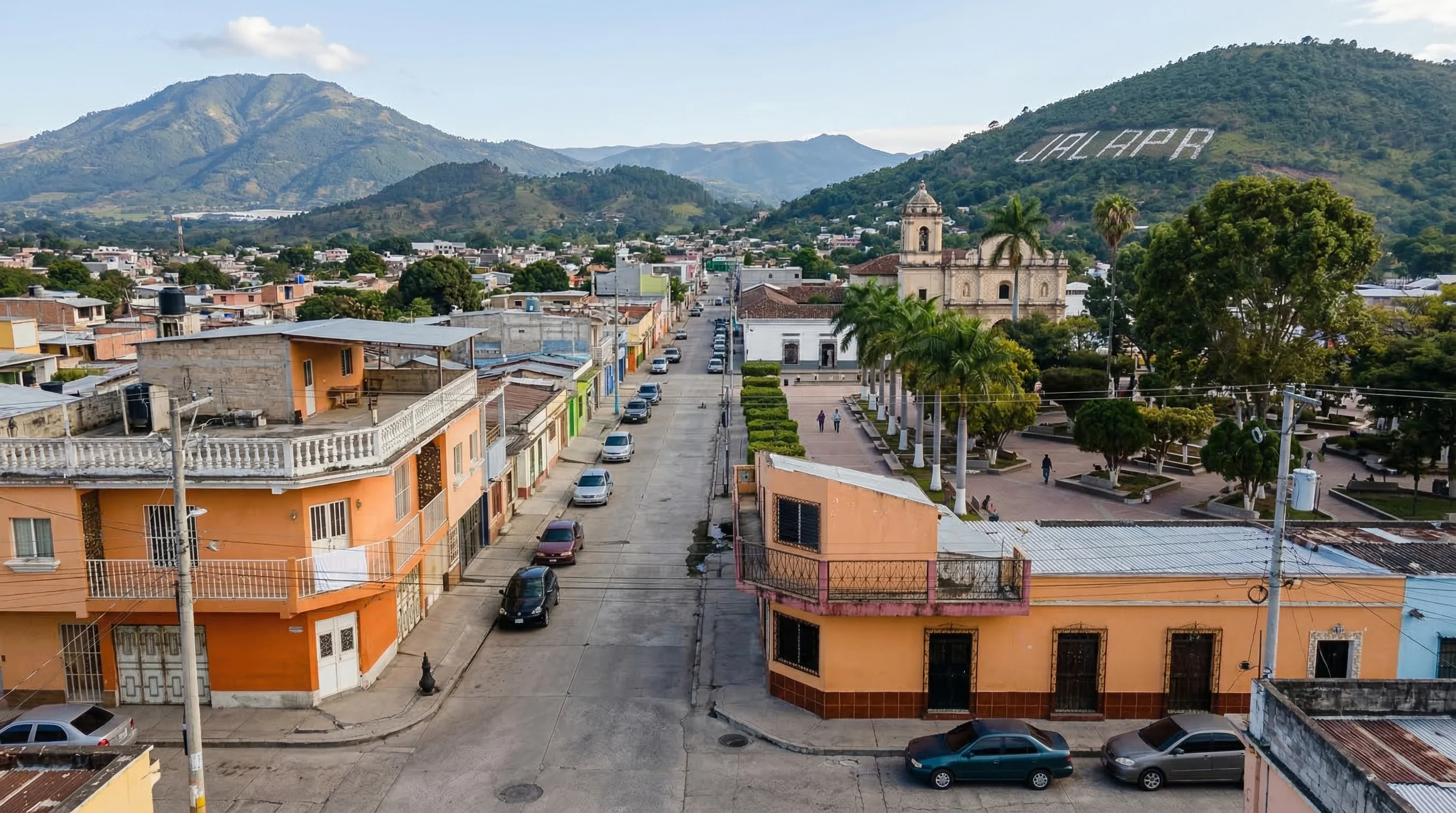 Origin
Jalapa, Guatemala, is strategically located in the country's southeastern region, serving as a pivotal logistics gateway. Its proximity to the Pacific port of Puerto Quetzal and the Mexican border makes it an ideal hub for both maritime and land-based freight, facilitating exports and imports across Central America and North America. The city's infrastructure includes well-maintained paved roads, such as CA-9 connecting to Guatemala City and CA-1 extending westward, enabling efficient access to border crossings like Tecún Umán. Economically, Jalapa thrives on agriculture—notably coffee, sugarcane, and bananas—alongside livestock, food processing, and light textile manufacturing. These sectors generate consistent FTL demand for outbound raw materials and inbound inputs, supported by local warehousing and distribution networks that integrate with regional supply chains.
 Destination
Toluca
Toluca, Estado de México, is a strategic logistics nexus due to its location in central Mexico, adjacent to Mexico City—the nation's largest consumer market. This positioning offers unparalleled access to industrial corridors, ports (e.g., Veracruz, Manzanillo), and northern border gateways, making it a distribution epicenter for national and international trade. The city's economy is heavily industrialized, with major sectors including automotive manufacturing (hosting plants for Nissan and General Motors), electronics, pharmaceuticals, and food production. Transportation infrastructure is robust, featuring key highways like Mexico 15D and 55, which connect to Mexico City, coastal ports, and the U.S. border. Additionally, rail links and Toluca's international airport support multimodal freight, though the corridor primarily relies on road networks for FTL services, ensuring direct door-to-door delivery for diverse cargo types.










