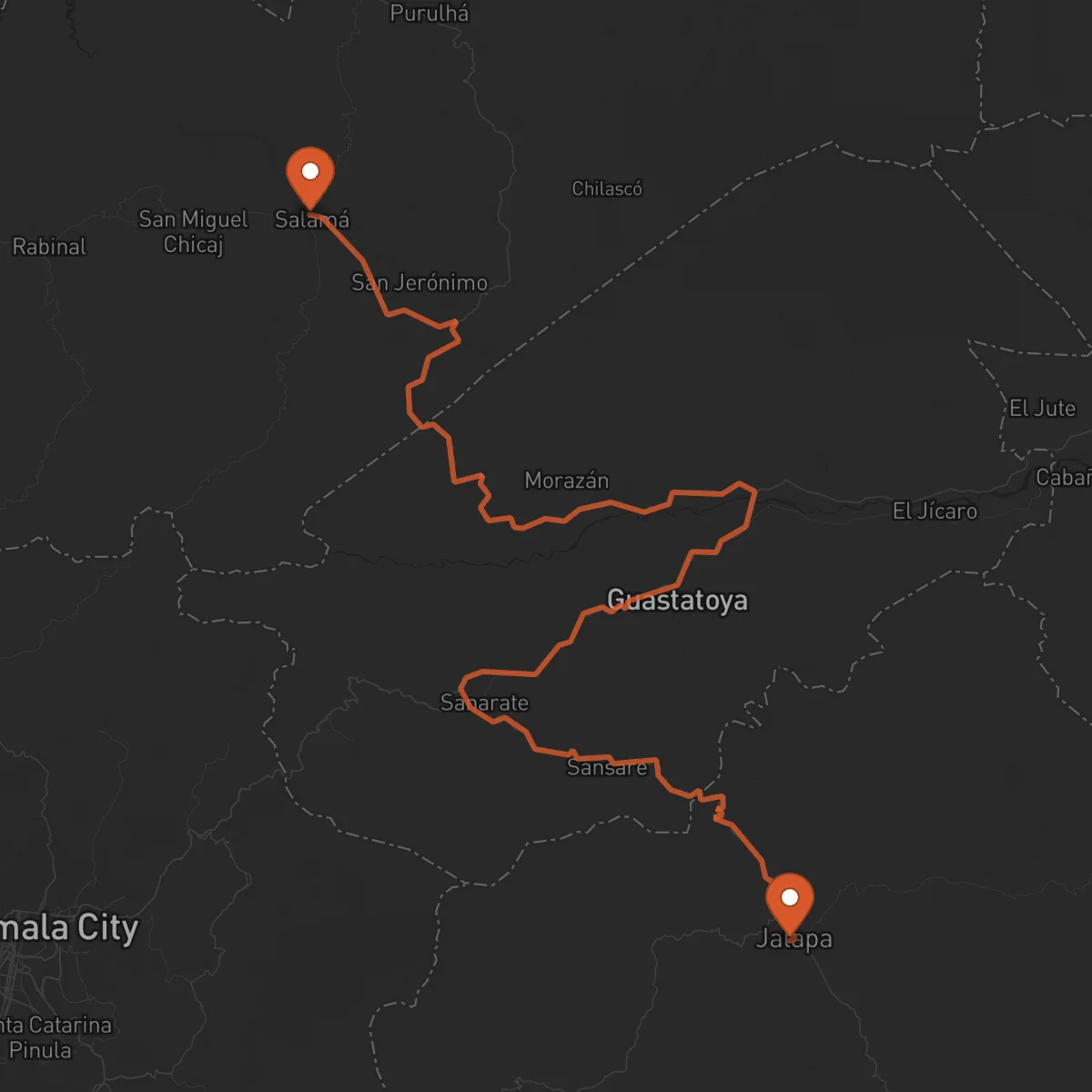
Jalapa to Salamá
Salamá → JalapaFTL freight transportation service between Jalapa and Salamá. Reliable logistics solutions for your business.
Route Description
Everything you need to know about the corridor Jalapa - Salamá
The logistics corridor between Jalapa and Salamá represents a vital connection in Guatemala's interior transportation network, spanning approximately 63 kilometers through the country's diverse landscape. This domestic route serves as a crucial link between two important economic regions, facilitating the movement of goods that support Guatemala's agricultural and industrial sectors. The corridor primarily follows the CA-10 highway, a well-maintained route that provides reliable access between these municipalities.
The region surrounding this corridor is characterized by significant agricultural activity, with Jalapa known for its production of staple crops and Salamá serving as an important commercial center for the surrounding agricultural communities. This route plays a fundamental role in connecting producers with markets and distribution centers, enabling the efficient flow of agricultural products, manufactured goods, and other commercial cargo throughout Guatemala's interior.
Control Terrestre specializes in providing full truckload (FTL) transportation services along this corridor, offering dedicated solutions for businesses requiring reliable and efficient freight movement. Our strategic alliance of experienced carriers ensures that cargo moves safely and efficiently between Jalapa and Salamá, with equipment options including dry vans and refrigerated units to accommodate various cargo types. Whether transporting agricultural products that require temperature control or general freight for industrial clients, our services are designed to meet the specific needs of businesses operating along this important domestic route.
Services for this Route
Available services for the corridor Jalapa - Salamá
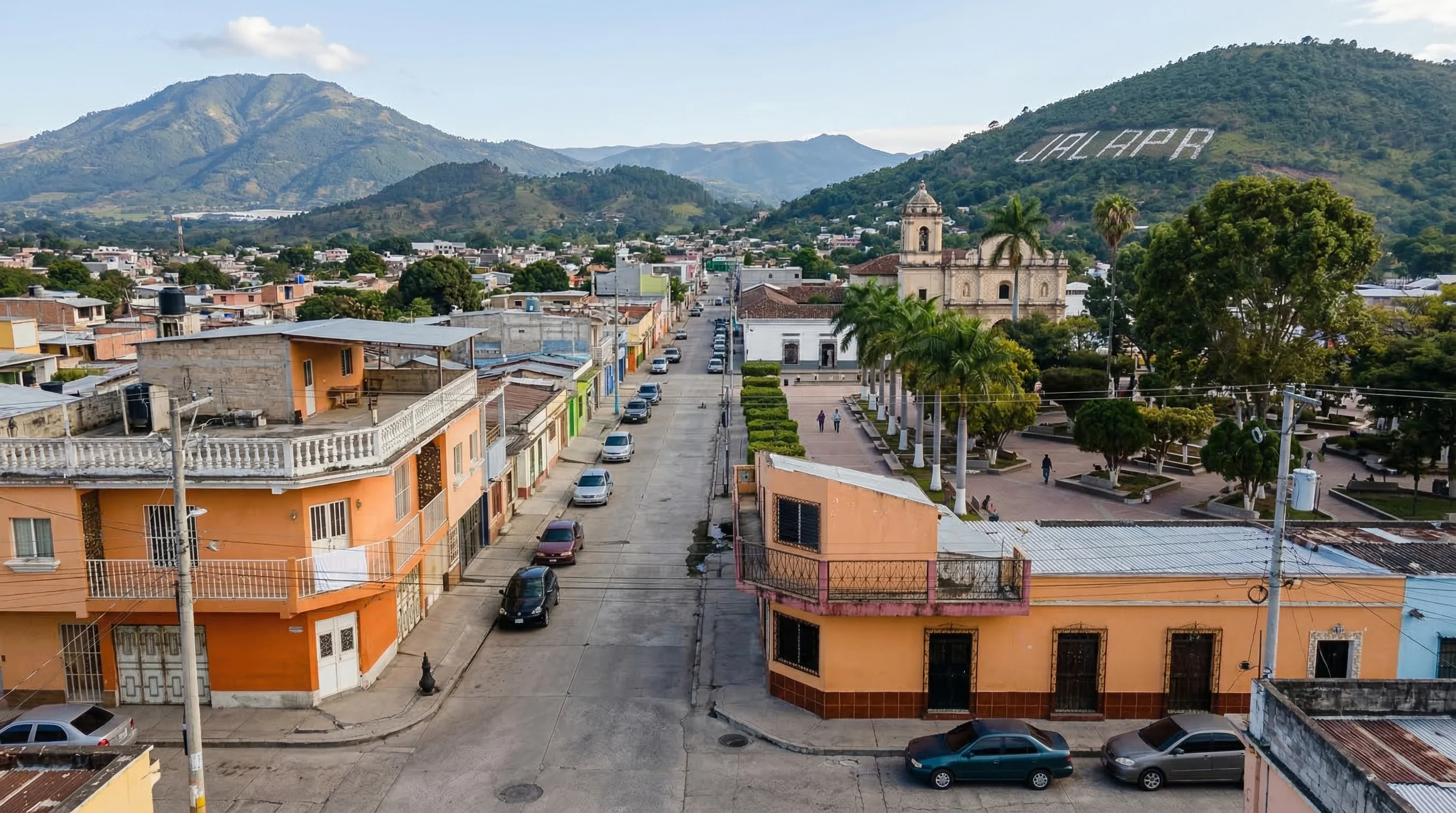 Origin
Jalapa serves as a strategic logistics hub in eastern Guatemala, positioned advantageously to connect with both coastal and interior regions of the country. The city's location provides excellent access to Guatemala's agricultural heartland, making it a natural distribution point for products destined for both domestic consumption and export. Jalapa's economy is primarily driven by agriculture, with significant production of corn, beans, and other staple crops, along with growing commercial and industrial activity that supports the surrounding rural communities.
The transportation infrastructure in Jalapa is well-developed, with access to major highways including the CA-10 that connects to the capital and other important regions. The city's logistics capabilities are enhanced by its proximity to secondary roads that provide access to smaller communities and agricultural areas. This comprehensive network of transportation options makes Jalapa an ideal origin point for freight movements throughout Guatemala, particularly for agricultural products and manufactured goods that require reliable transportation to markets and distribution centers.
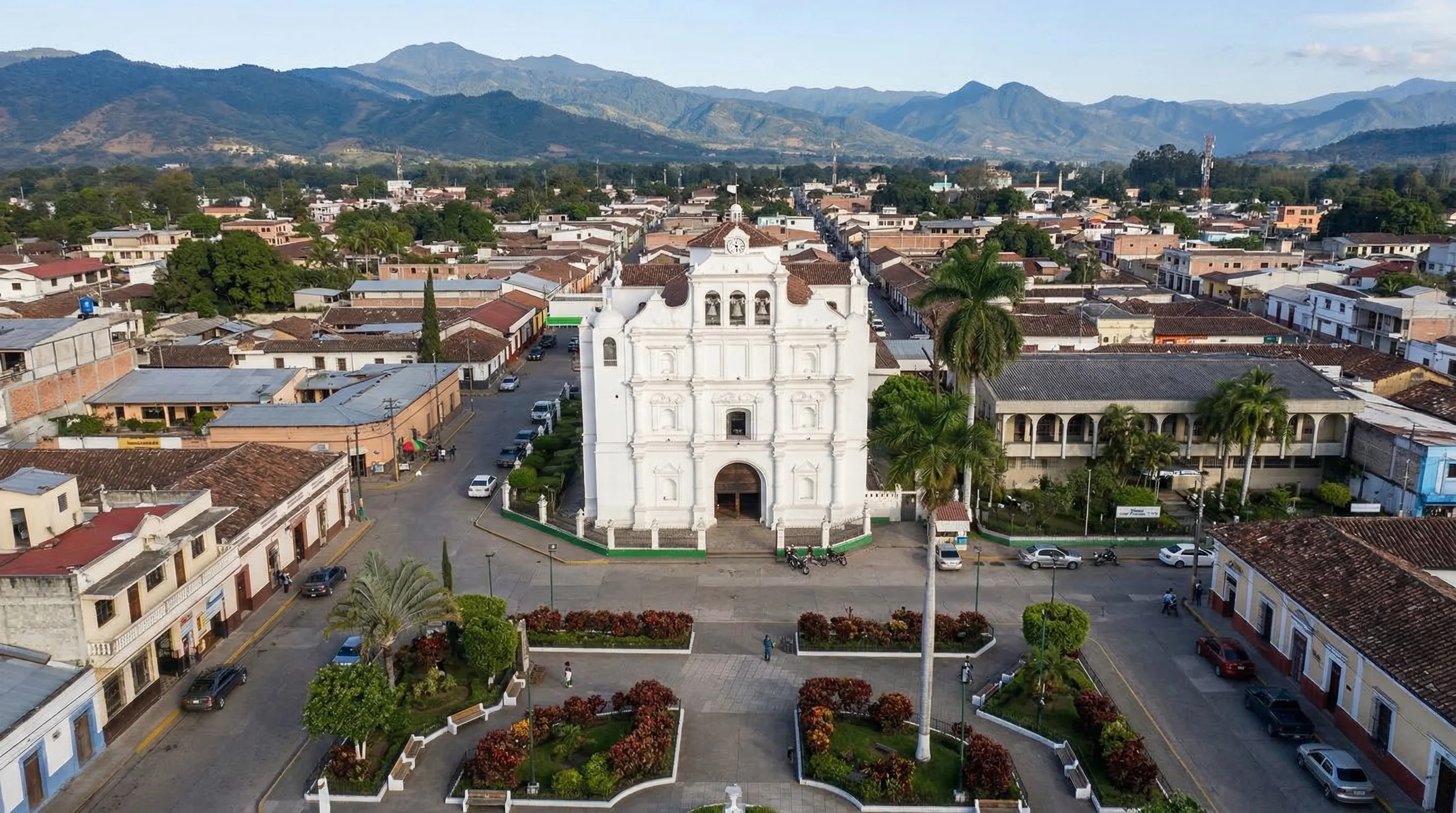 Destination
Salamá
Salamá, the capital of Baja Verapaz department, occupies a strategic position in Guatemala's central highlands, serving as a commercial and administrative center for the surrounding region. The city's location provides excellent connectivity to both the capital and eastern regions of Guatemala, making it an important node in the country's logistics network. Salamá's economy is diverse, with significant activity in commerce, services, and light manufacturing, supported by the agricultural production of the surrounding valleys and mountains.
The transportation infrastructure in Salamá is robust, with the city serving as a key junction for several important routes that connect the highlands with the lowlands. The CA-10 highway provides direct access to Jalapa and other eastern destinations, while secondary roads offer connections to nearby communities and agricultural areas. This well-developed infrastructure, combined with Salamá's central location, makes it an ideal destination for freight movements, particularly for businesses that need to distribute goods throughout Guatemala's interior regions or connect with major markets in the capital and beyond.










