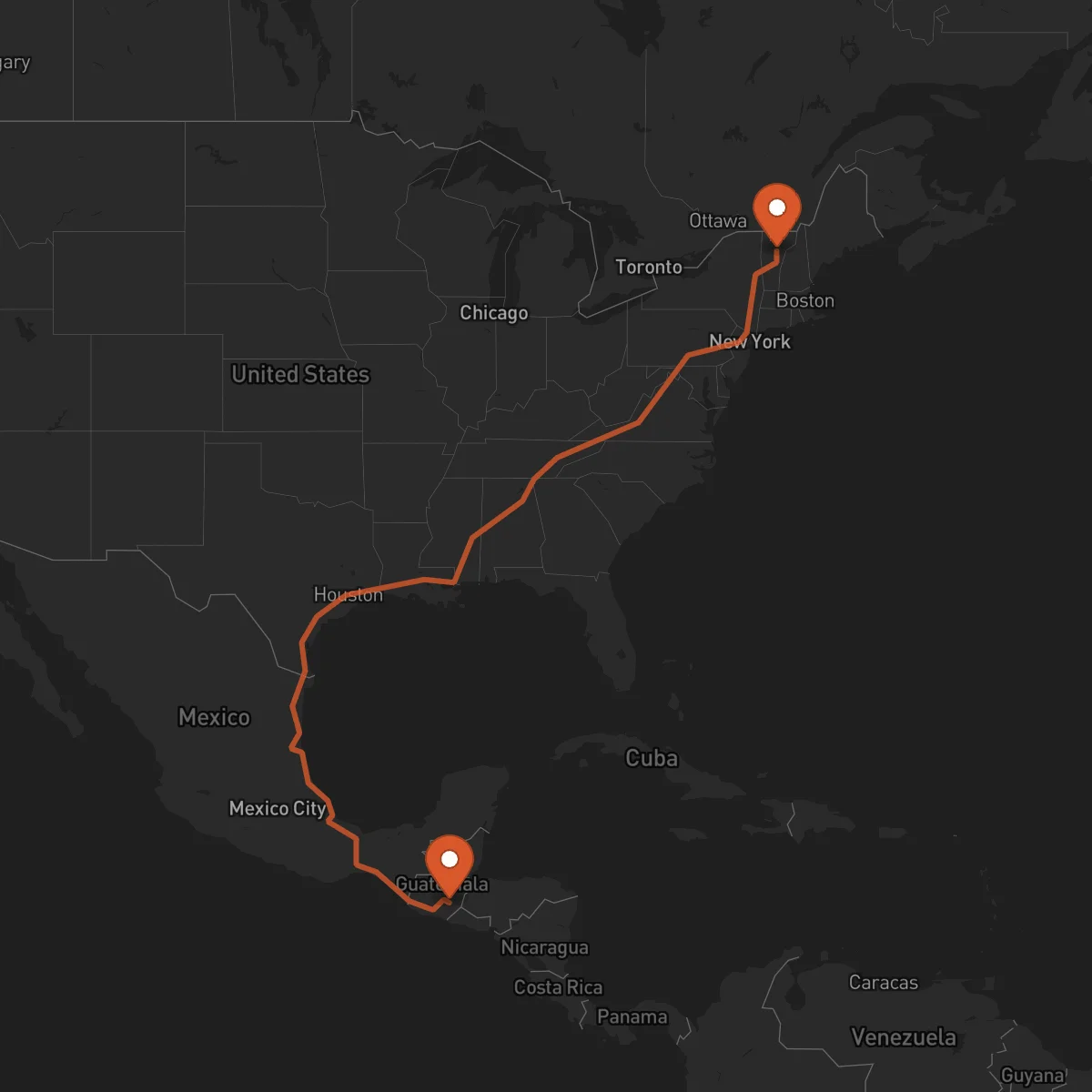
Jalapa to Montpelier
Montpelier → JalapaFTL freight transportation service between Jalapa and Montpelier. Reliable logistics solutions for your business.
Route Description
Everything you need to know about the corridor Jalapa - Montpelier
The Jalapa, Guatemala to Montpelier, Vermont corridor represents a critical North-South trade artery connecting Central America's agricultural heartland with the Northeastern United States' consumer and industrial markets. This cross-border route traverses approximately 3,683 kilometers, integrating diverse economies and requiring sophisticated logistical coordination to navigate multiple national jurisdictions. The strategic importance of this corridor lies in its role as a conduit for exporting perishable goods, manufactured items, and raw materials from Guatemala to a high-value market, while facilitating the inbound flow of finished goods and equipment.
Economically, the corridor bridges Guatemala's robust agricultural sector—a global leader in coffee, bananas, and vegetable exports—with Vermont's specialized economy known for dairy products, maple syrup, and precision manufacturing. The primary industries leveraging this route include agribusiness, food and beverage processing, and retail distribution. Companies require reliable, temperature-controlled transport for fresh produce and secure logistics for manufactured goods, making full truckload (FTL) capacity essential for maintaining supply chain integrity and speed.
Transportation infrastructure relies on a sequential highway network: from Jalapa via Guatemala's CA-1 to the Mexican border, then through Mexico's federal highway system (typically routes 190 and 200) to a primary U.S. border crossing such as Laredo/El Paso. Upon entry into the United States, the route utilizes the Interstate system, primarily I-35 north to I-90 east, concluding with I-89 into Vermont. Key border crossings demand rigorous compliance with customs and security regulations. Control Terrestre facilitates seamless operations on this corridor by leveraging our alliance of certified providers. Our partners hold C-TPAT, FAST, and BASC certifications, ensuring pre-clearance readiness and streamlined customs processing. We manage all cross-border documentation, coordinate dedicated FTL equipment—including refrigerated units for perishables—and provide end-to-end visibility, transforming a complex multinational transit into a predictable, managed solution for our clients.
Our expertise in cross-border freight eliminates typical friction points. We source carriers with proven experience on this specific lane, ensuring drivers are familiar with the route's unique challenges and regulatory requirements. From Jalapa's production facilities to Montpelier's distribution centers, we offer a single point of contact for the entire journey, backed by providers committed to safety and responsible care protocols. This allows shippers to optimize their supply chain with a human-centric, environmentally conscious partner who handles the complexities of international ground transportation.
Services for this Route
Available services for the corridor Jalapa - Montpelier
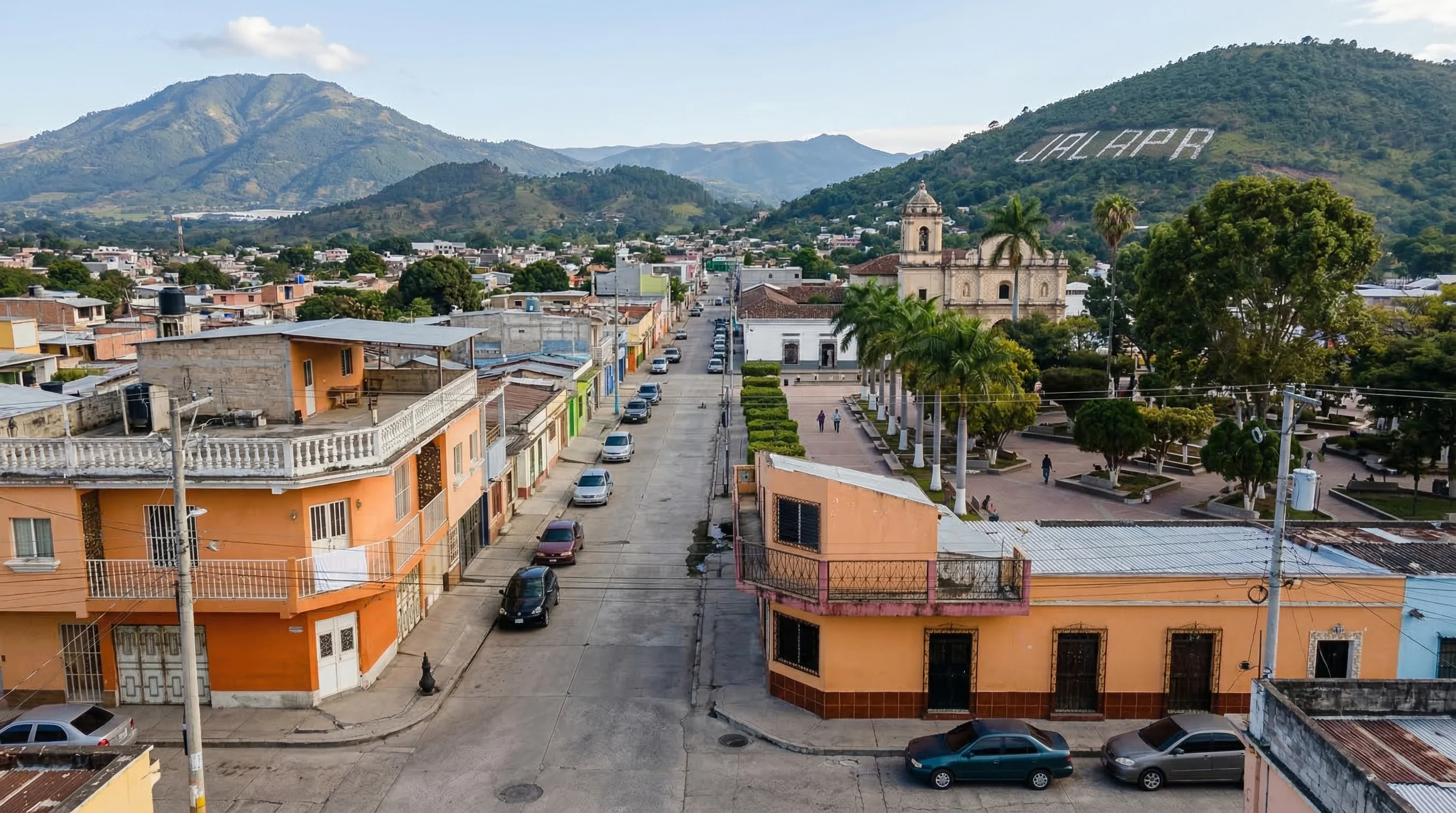 Origin
Jalapa, the capital of Guatemala's Jalapa department, serves as a pivotal agricultural and commercial hub in southeastern Guatemala. Its strategic location lies at the crossroads of major routes connecting the capital, Guatemala City, to the eastern borders with El Salvador and Honduras. This positioning makes it a natural logistics origin point for exports bound for North America. The region's economy is dominated by high-value agriculture, including coffee, sugar cane, and a variety of fruits and vegetables, alongside textile manufacturing and livestock. The available transportation infrastructure is centered on the CA-1 highway (Carretera al Atlántico), which provides a direct, paved link to Guatemala City and the primary southern border crossing with Mexico at Ciudad Hidalgo/La Mesilla. This highway is crucial for moving goods from Jalapa's farms and factories to the Mexican border, initiating the long-haul journey north. The city also has access to rail spurs and nearby port facilities on the Caribbean coast, though for this specific corridor, road transport via the CA-1 is the primary mode for initial consolidation and movement.
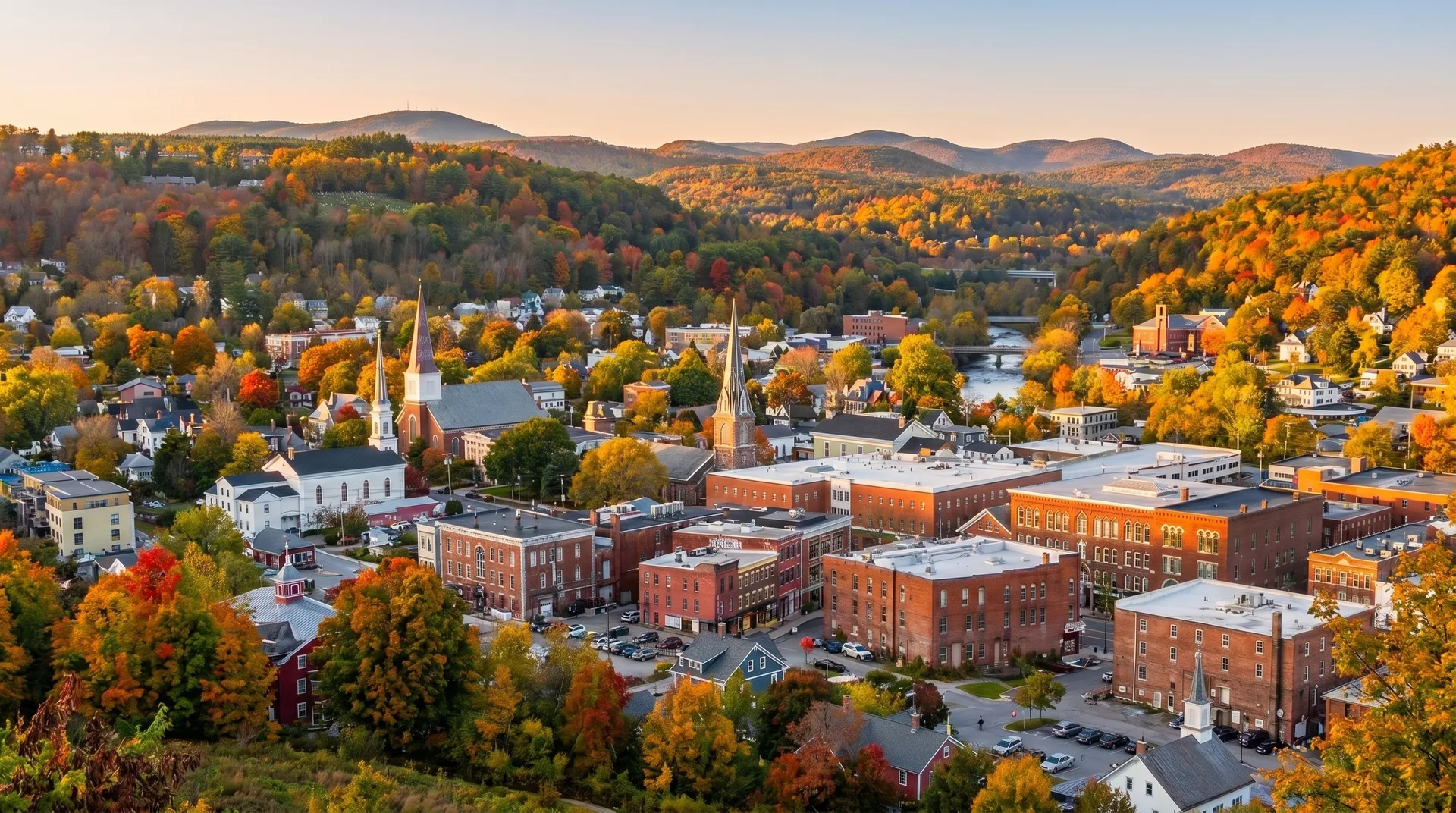 Destination
Montpelier
Montpelier, the capital of Vermont, functions as a key logistics and distribution center for the state and the broader Northeastern U.S. region. Its strategic value is derived from its central location within Vermont, situated at the intersection of U.S. Route 2 and Vermont Route 12, and its immediate access to Interstate 89. This highway provides a direct, efficient connection to major markets in New Hampshire, Massachusetts, and ultimately the broader I-90 corridor to New York and Canada. Montpelier's economy is characterized by specialized industries: it is a national leader in dairy production and maple syrup processing, with significant sectors in government services, healthcare, and niche manufacturing (such as granite and artisanal foods). The available infrastructure includes well-maintained interstates for FTL transport, a regional airport for time-sensitive air freight integration, and proximity to the Port of Montreal for potential intermodal options. For land-based freight, I-89 is the critical artery, enabling reliable door-to-door delivery from the U.S.-Mexico border directly into the city's industrial parks and distribution facilities.










