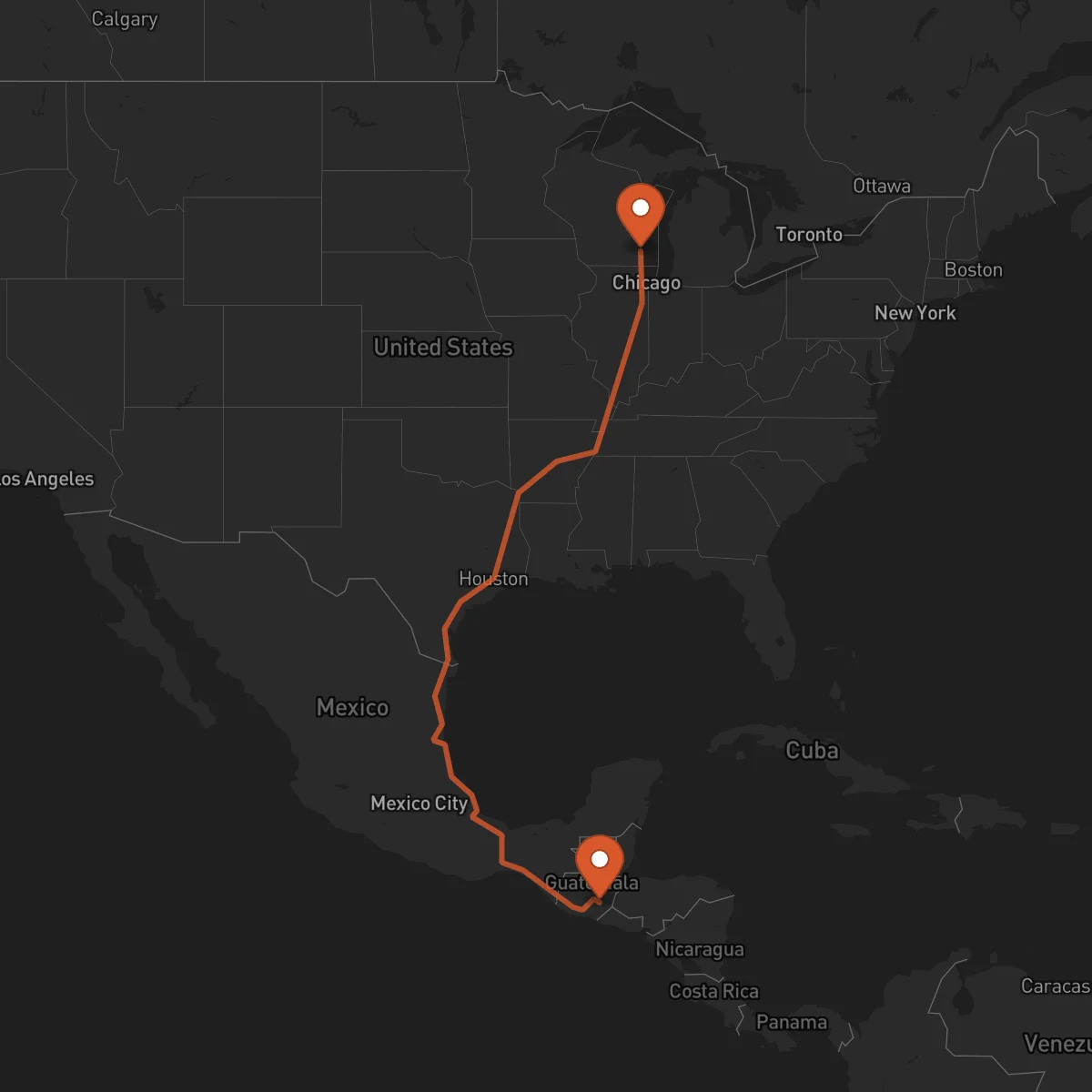
Jalapa to Milwaukee
Milwaukee → JalapaFTL freight transportation service between Jalapa and Milwaukee. Reliable logistics solutions for your business.
Route Description
Everything you need to know about the corridor Jalapa - Milwaukee
The Jalapa, Guatemala to Milwaukee, Wisconsin corridor is a critical north-south artery connecting Central American production with the industrial heartland of the U.S. Midwest. This strategic cross-border route facilitates the essential flow of goods, leveraging a robust network of highways to bridge two vibrant economic zones. The corridor primarily serves industries requiring reliable, full truckload (FTL) solutions for time-sensitive and high-volume shipments.
Economically, the corridor links Guatemala's significant agricultural and manufacturing output with Wisconsin's diverse industrial base, including food processing, heavy machinery, and automotive sectors. Key infrastructure includes Guatemala's CA-1 highway, which connects to major Mexican routes like the Arco Norte and eventually feeds into the U.S. Interstate system, predominantly I-94, providing a direct path into Milwaukee. The primary formal border crossing for this corridor is typically at the Guatemala-Mexico border (e.g., Ciudad Hidalgo/Tecún Umán), followed by the Mexico-U.S. border at Laredo/El Paso, before the final leg through the American Midwest.
Navigating the complex customs and regulatory environments of three countries requires expertise. Control Terrestre streamlines this process through our alliance of certified transportation providers. Our partners hold key accreditations including C-TPAT and FAST, which expedite clearance at the U.S. border, and BASC for security standards. We manage the entire cross-border sequence, ensuring seamless transitions and compliance, transforming a multi-national challenge into a single-point-of-contact FTL solution for your supply chain.
Main industries utilizing this corridor include fresh produce and coffee exporters from Guatemala, U.S. manufacturers shipping components and finished goods south, and companies engaged in reverse logistics. We facilitate dedicated, expedited, and specialized cargo movements—including refrigerated and oversized loads—tailored to the specific demands of this long-haul lane. Our focus is on providing the human expertise and green logistics options necessary to make this vital corridor a predictable and efficient part of your operations.
Services for this Route
Available services for the corridor Jalapa - Milwaukee
 Origin
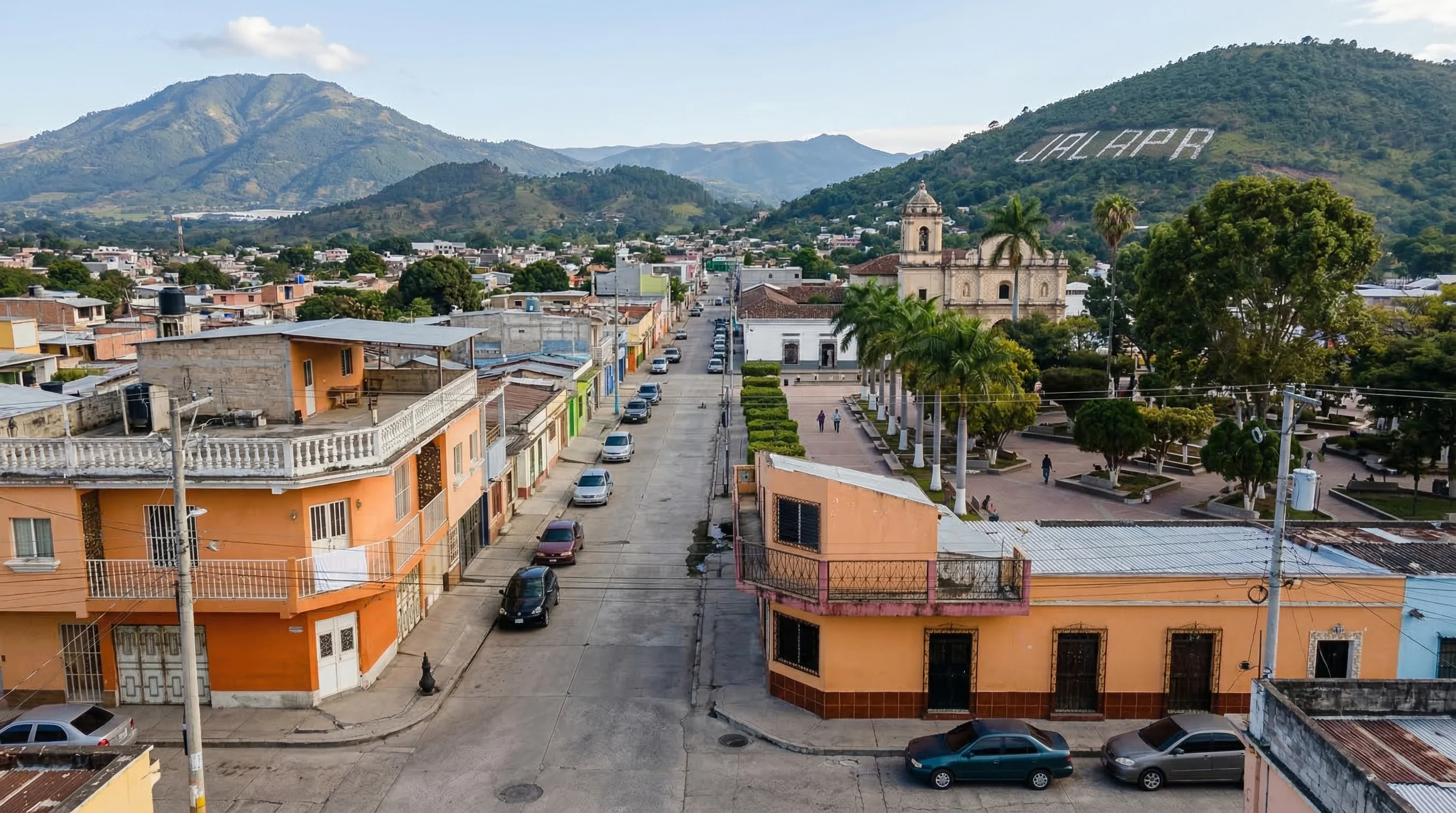
Jalapa, Guatemala, serves as a pivotal logistical hub in Central America, strategically positioned along the CA-1 highway that forms the backbone of the country's transportation network. This location provides efficient access to the major ports on Guatemala's Pacific coast (like Puerto Quetzal) and the key border crossing with Mexico at Tecún Umán. The regional economy is dominated by high-value agriculture, particularly coffee and cardamom, alongside growing light manufacturing and textile sectors. These industries generate consistent demand for outbound FTL freight, requiring reliable connections to international markets. The existing infrastructure supports heavy truck traffic, making it a natural origin point for cross-border corridors heading north through Mexico and into the United States.
 Destination
Milwaukee
Milwaukee, Wisconsin, is a major industrial and distribution center in the U.S. Midwest, offering exceptional strategic value for logistics. Its location provides direct access to the Great Lakes via the Port of Milwaukee and is intersected by critical interstate highways, primarily I-94 running east-west and I-43 connecting north-south. This network enables efficient distribution to a vast regional market and connects seamlessly to other major U.S. corridors. Milwaukee's economy is powered by robust manufacturing (food and beverage, machinery, automotive), healthcare, and brewing industries, all of which are significant consumers of inbound FTL freight and producers of goods for export. The city's infrastructure is well-adapted to handle high volumes of commercial truck traffic, including specialized equipment for refrigerated and bulk goods.










