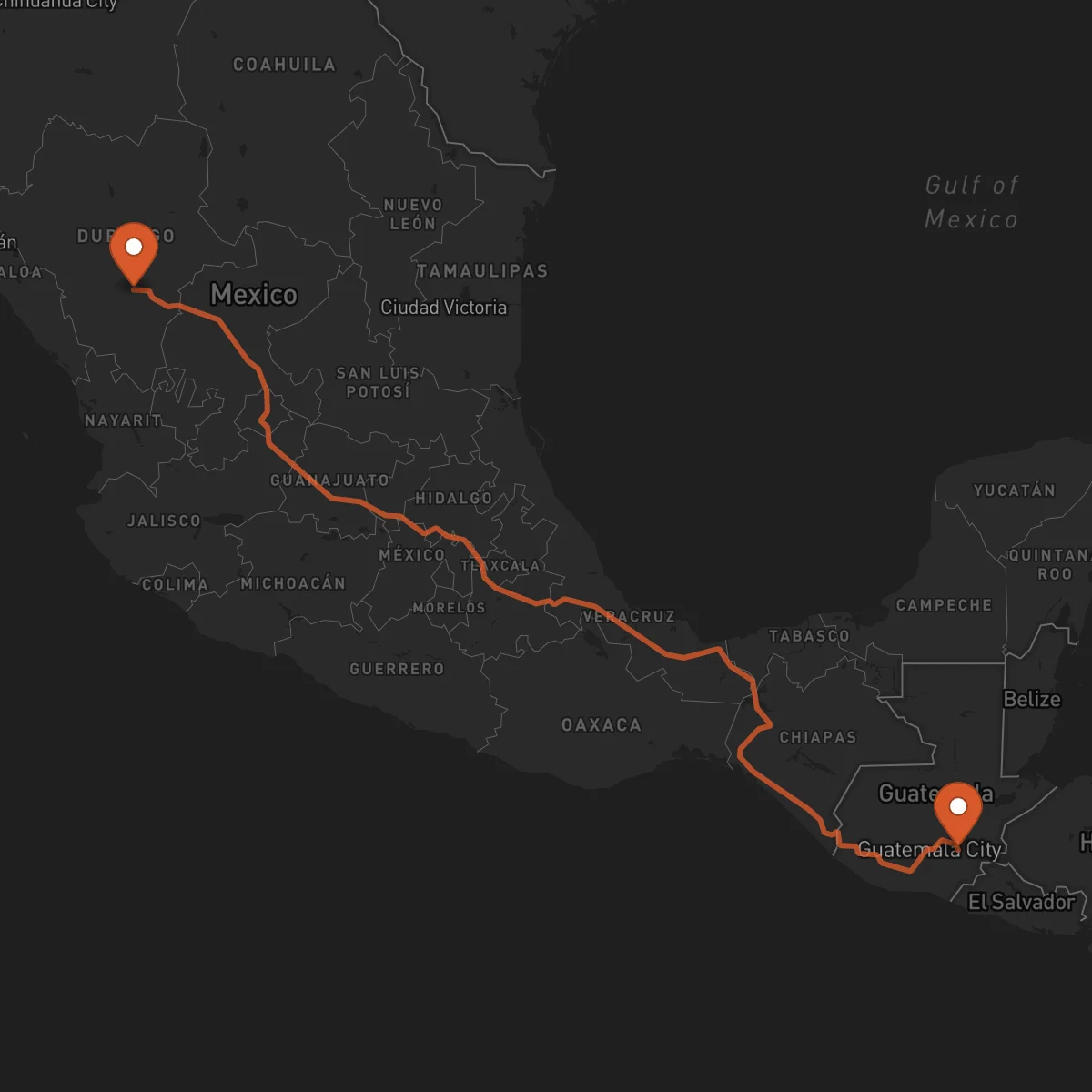
Jalapa to Durango
Durango → JalapaFTL freight transportation service between Jalapa and Durango. Reliable logistics solutions for your business.
Route Description
Everything you need to know about the corridor Jalapa - Durango
The Jalapa, Guatemala to Durango, México corridor is a vital cross-border artery connecting Central America's agricultural heartland with México's industrial northern corridor. This approximately 1,858 km route facilitates the movement of goods critical to both regional economies, serving as a bridge for exports heading north and manufactured goods moving south. The economic context is defined by Guatemala's strong agro-industrial sector and Durango's diverse manufacturing and mining base, creating a consistent demand for reliable full truckload (FTL) freight solutions. Key industries leveraging this corridor include coffee and produce exporters from the Jalapa region and automotive parts, furniture, and general manufacturing industries in Durango's established industrial parks.
Transportation infrastructure relies primarily on a network of major highways. In Guatemala, the route typically begins on the CA-1 highway, connecting through key cities towards the Mexico-Guatemala border. Upon crossing into México, the journey continues on the Mexican Federal Highway network, notably FH 190 and FH 57D, which provide efficient access to the Durango metropolitan area and its surrounding industrial zones. The principal border crossing for this corridor is at Ciudad Hidalgo, Chiapas (México) / El Carmen, San Marcos (Guatemala). Navigating customs and compliance here is a critical operational phase, requiring expertise in documentation, regulations, and protocols to ensure seamless transit.
Control Terrestre facilitates operations on this corridor through our strategic alliance of certified transportation providers. Our network includes carriers equipped with the necessary certifications—such as C-TPAT and FAST—to expedite secure cross-border movements. We exclusively manage FTL shipments, offering dedicated, expedited, and specialized cargo options (including refrigerated and flatbed equipment) tailored to the specific needs of goods moving between these regions. Our model focuses on providing a single point of contact to coordinate the entire door-to-door journey, leveraging local expertise on both sides of the border to manage complexities and optimize your supply chain efficiency without compromising on our human and green operational values.
Services for this Route
Available services for the corridor Jalapa - Durango
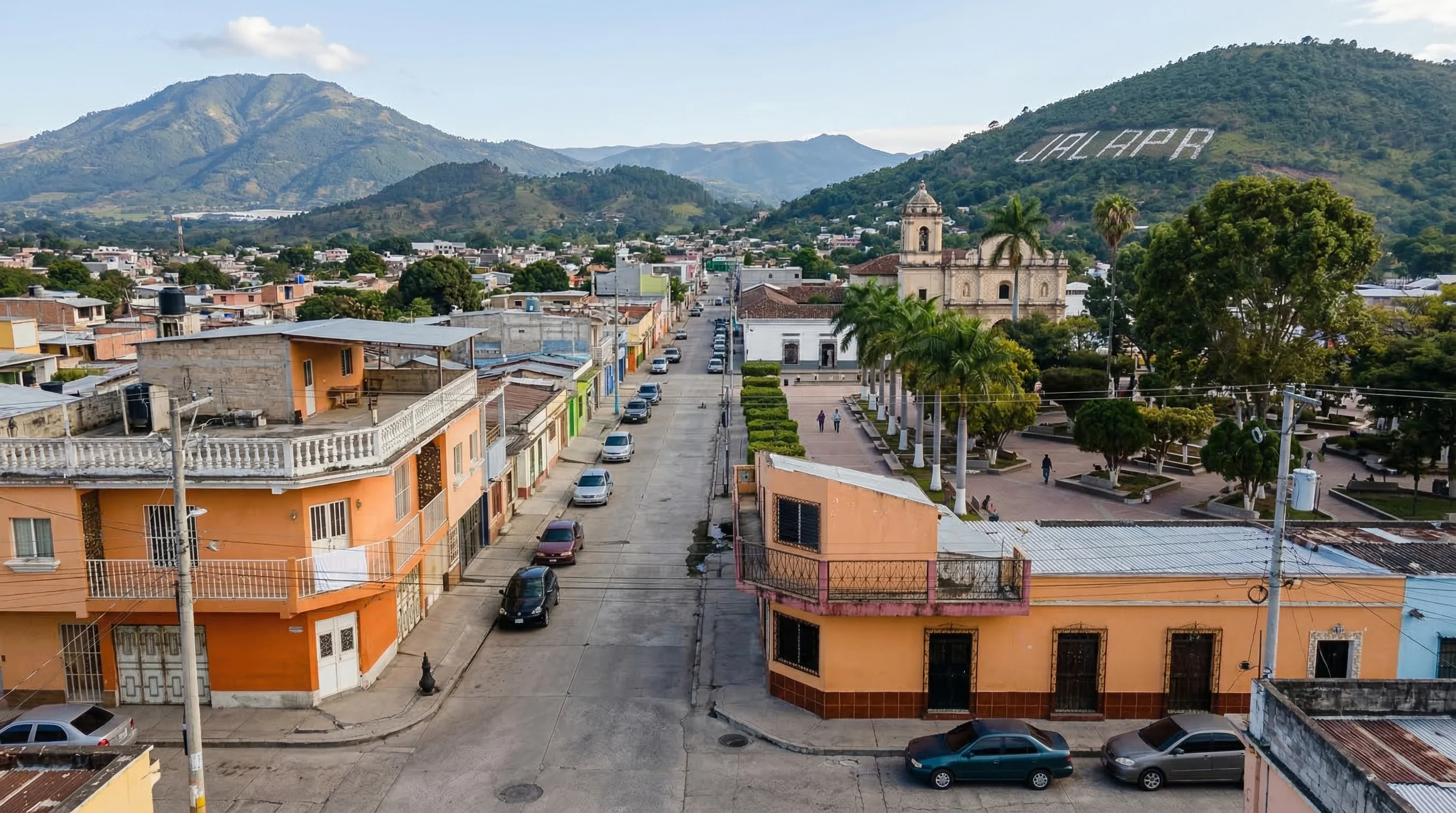 Origin
Jalapa, the capital of the department of Jalapa in southeastern Guatemala, holds a strategic location for logistics, serving as a gateway between Guatemala's interior and the Pacific coast. It sits at a crucial junction on the CA-1 highway, which is the primary east-west artery connecting the capital, Guatemala City, to the border with El Salvador and providing north-south links to the Mexican border. The region's economy is predominantly agricultural, with Jalapa being a significant producer of coffee, sugarcane, and tropical fruits. This agricultural strength drives consistent demand for outbound freight, particularly refrigerated transportation for perishable goods. The available transportation infrastructure is centered on the CA-1 highway network, supporting both domestic distribution and international cross-border movements north into México. The city's logistics ecosystem is geared towards supporting agribusiness, with facilities for storage and consolidation that feed directly into long-haul FTL corridors like the one to Durango.
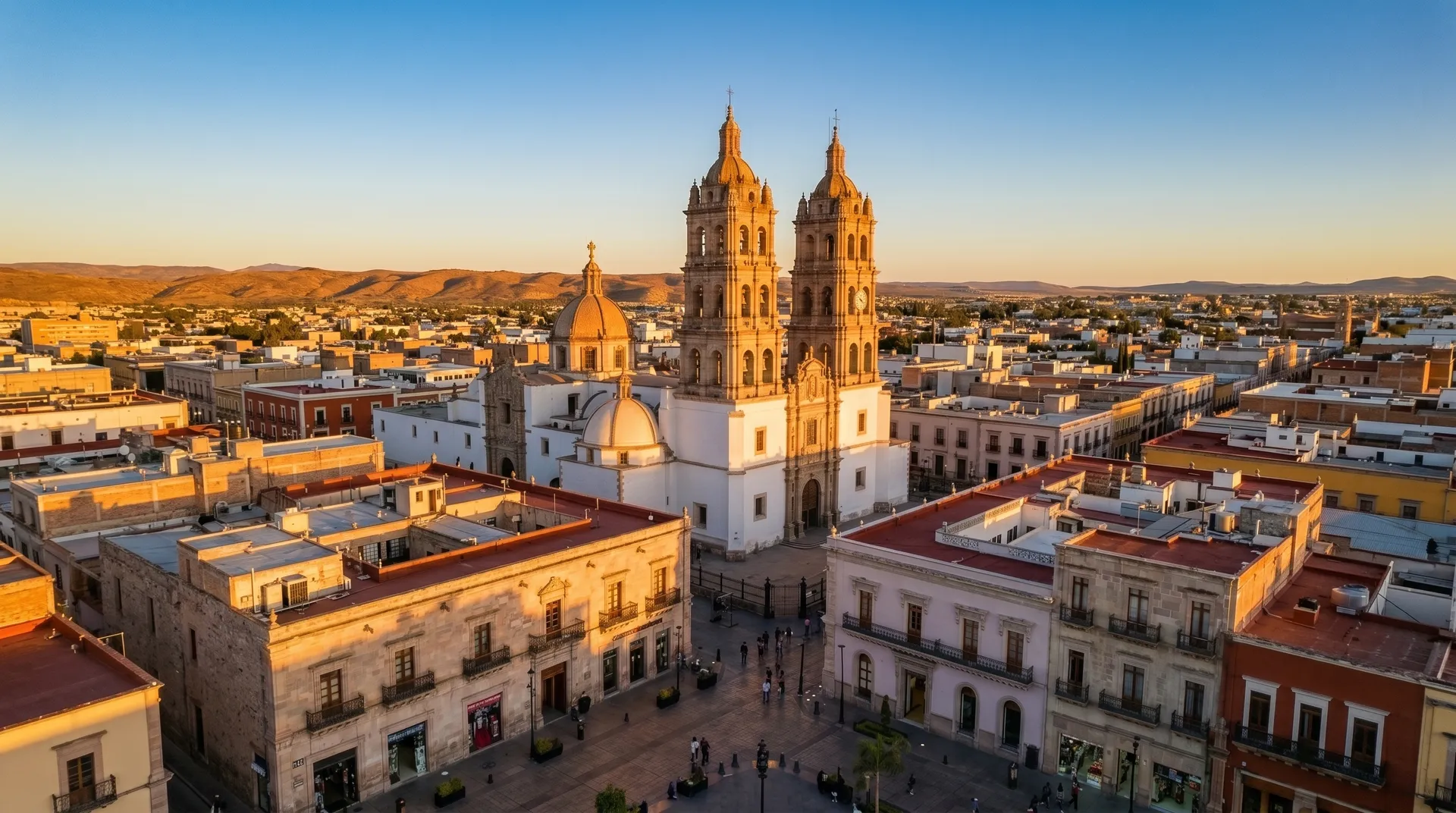 Destination
Durango, the capital of the state of Durango in northern México, is a strategic logistics hub with excellent connectivity to the U.S. border and the heart of México. Its location provides direct access to major north-south corridors, including Federal Highway 57, which is part of the crucial trade route connecting México City to the U.S. border at Ciudad Juárez/El Paso. Economically, Durango is an industrial and mining powerhouse. Key industries include automotive manufacturing (with a major Ford plant), furniture production, food processing, and extensive mining operations for silver, gold, and other minerals. This industrial diversity generates significant inbound freight for raw materials and outbound shipments of finished goods. The transportation infrastructure is robust, featuring the aforementioned federal highways, railway connections, and the Durango International Airport, creating a multi-modal environment. For FTL freight, the city is well-served by a network of carriers with equipment ranging from dry vans and flatbeds to tankers, making it a versatile origin or destination point within our North American coverage.










