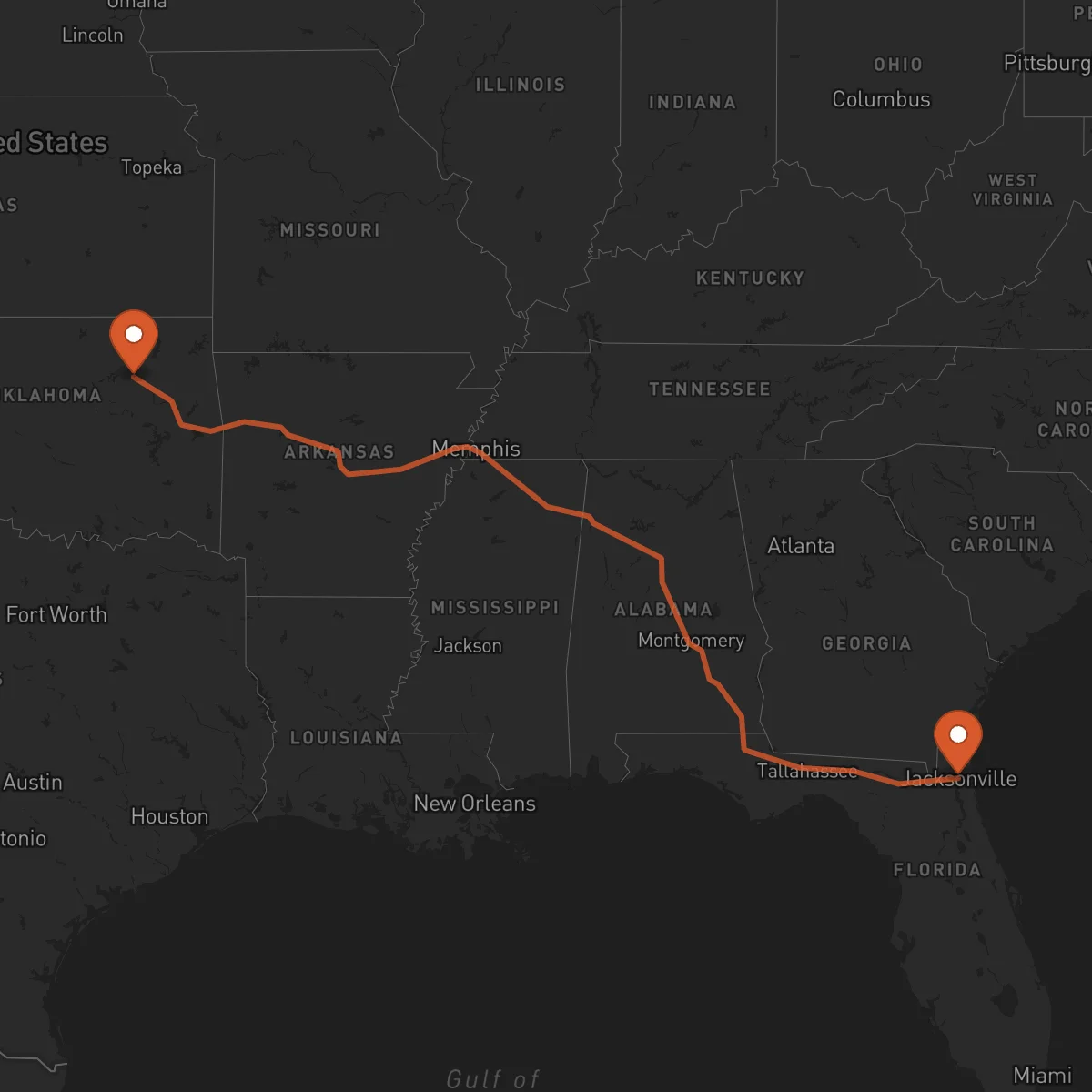
Jacksonville to Tulsa
Tulsa → JacksonvilleFTL freight transportation service between Jacksonville and Tulsa. Reliable logistics solutions for your business.
Route Description
Everything you need to know about the corridor Jacksonville - Tulsa
The Jacksonville to Tulsa corridor represents a vital transportation link connecting the Atlantic coast of Florida with the heart of Oklahoma. This approximately 1,480-kilometer route traverses diverse terrain and crosses multiple states, serving as a crucial artery for freight movement between the southeastern United States and the central plains. The corridor's strategic importance stems from its ability to connect major economic hubs, facilitating the flow of goods between coastal ports and inland industrial centers.
The Jacksonville metropolitan area, with its deep-water port and extensive transportation infrastructure, serves as a gateway for international trade, while Tulsa functions as a key distribution center for the Midwest and beyond. This route enables efficient movement of cargo between these complementary economic regions, supporting various industries including automotive, manufacturing, energy, and consumer goods. The corridor's significance is further enhanced by its connection to major interstate highways, including I-10, I-20, and I-44, which provide seamless access to other major markets across the country.
Control Terrestre specializes in optimizing freight transportation along this corridor, leveraging our extensive network of certified carriers and deep industry expertise. We understand the unique challenges and requirements of this route, from managing cross-state regulations to ensuring timely deliveries across diverse weather conditions. Our dedicated team works closely with clients to develop customized transportation solutions that maximize efficiency and minimize transit times, ensuring that your cargo reaches its destination safely and on schedule.
Services for this Route
Available services for the corridor Jacksonville - Tulsa
 Origin
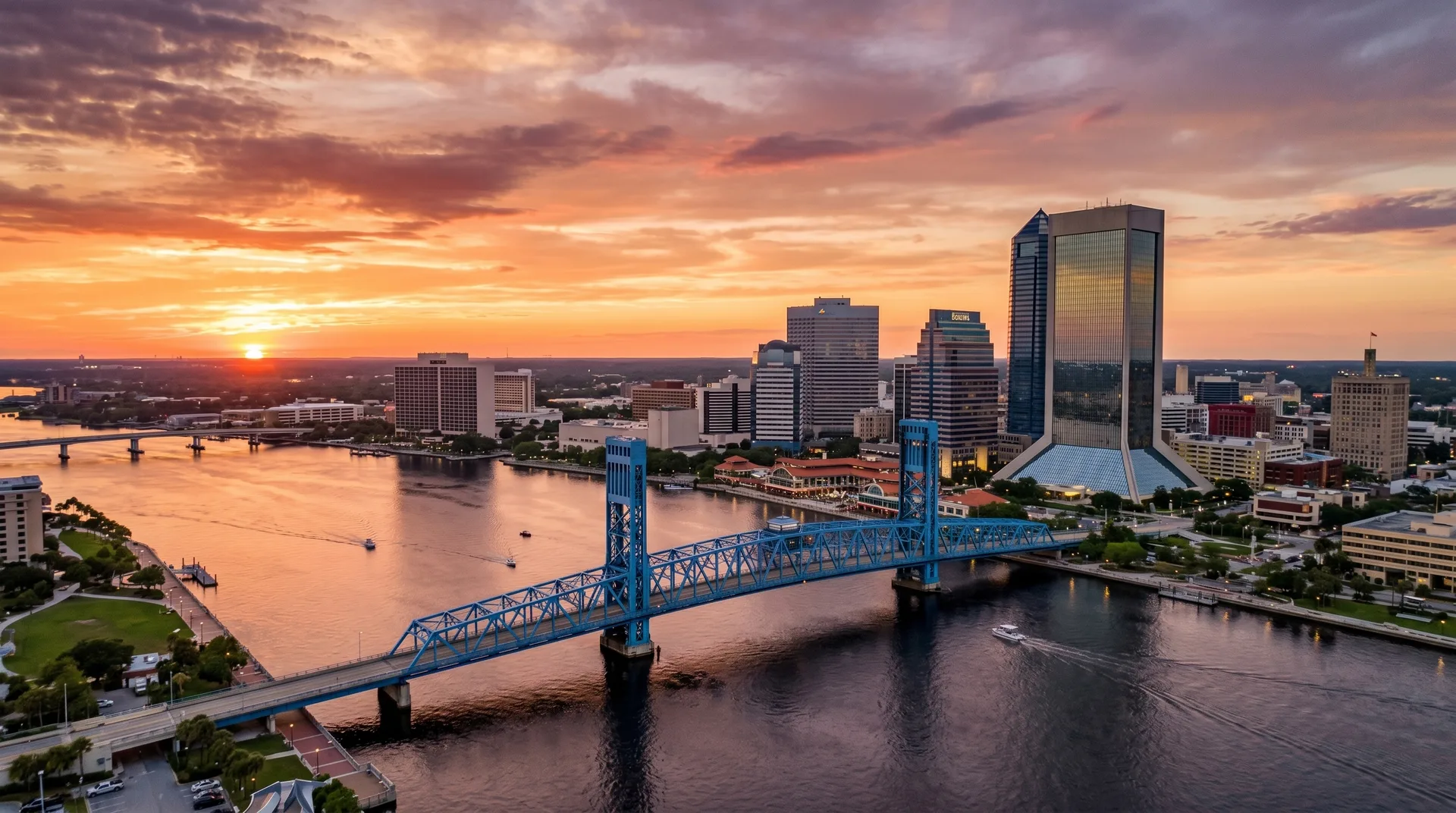
Jacksonville
Jacksonville, Florida, stands as a major logistics hub on the Atlantic coast, offering unparalleled access to both domestic and international markets. The city's strategic location is enhanced by the Jacksonville Port Authority (JAXPORT), one of the busiest ports in the United States, which handles a significant volume of containerized cargo and provides direct access to major shipping routes. Jacksonville's extensive transportation infrastructure includes multiple interstate highways, a major international airport, and an extensive rail network, making it an ideal origin point for freight distribution across the country.
The region's economy is diverse, with strong presence in sectors such as logistics, manufacturing, financial services, and healthcare. Jacksonville's proximity to major population centers in the Southeast, combined with its favorable business climate and lower operational costs compared to other coastal cities, makes it an attractive location for companies seeking efficient distribution solutions. The city's well-developed industrial parks and warehousing facilities further support its role as a critical logistics center.
 Destination
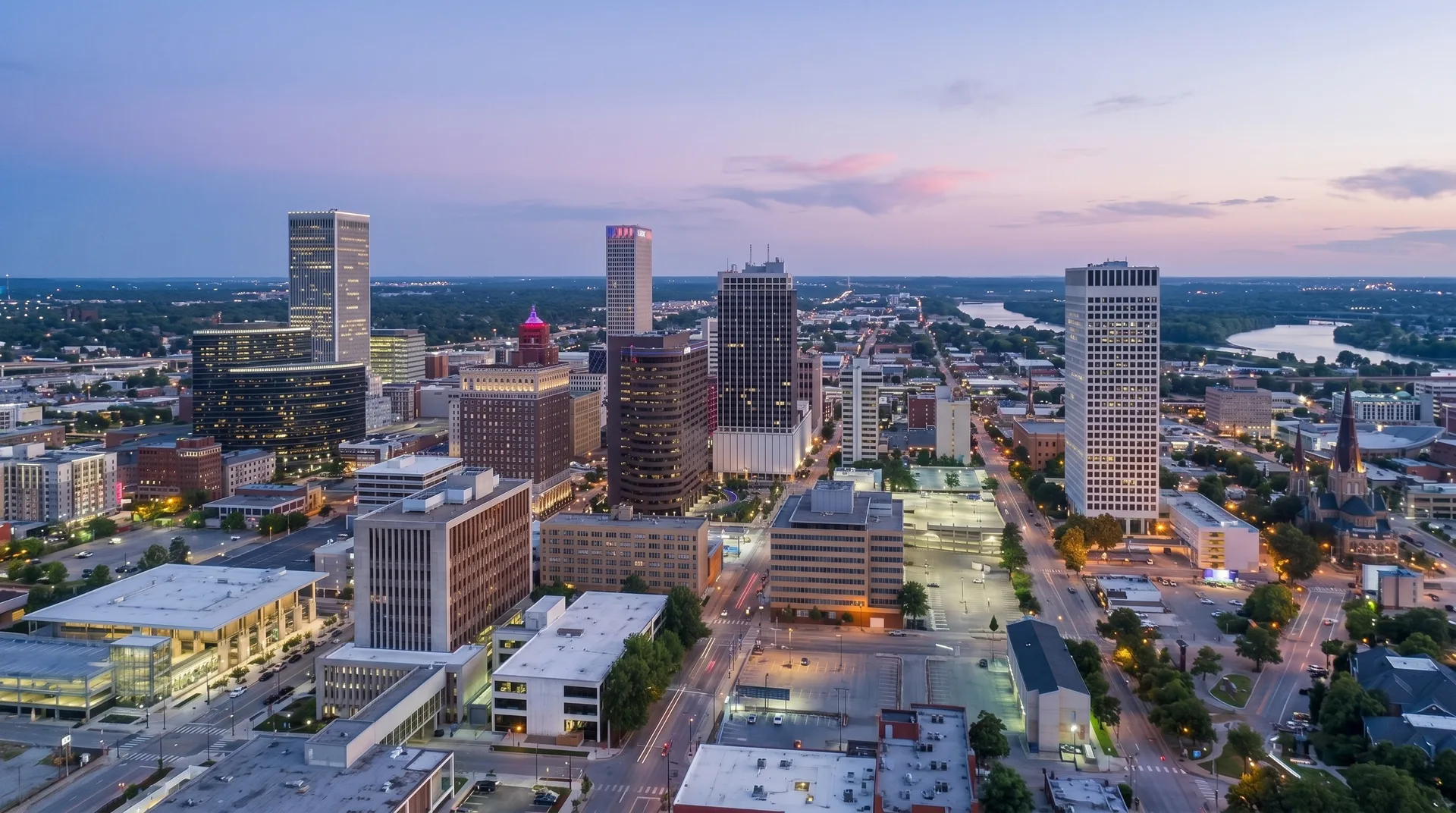
Tulsa
Tulsa, Oklahoma, serves as a strategic distribution center in the heart of the United States, offering excellent connectivity to major markets across the Midwest and beyond. The city's location at the crossroads of several major interstate highways, including I-44, I-35, and I-40, provides efficient access to key economic regions. Tulsa International Airport and the Tulsa Port of Catoosa, an inland river port connected to the Mississippi River via the McClellan-Kerr Arkansas River Navigation System, further enhance the city's transportation capabilities.
The Tulsa metropolitan area is home to a diverse economic base, with strong representation in energy, aerospace, manufacturing, and technology sectors. The region's central location makes it an ideal distribution point for companies serving the central United States, while its lower operational costs and business-friendly environment attract companies seeking to optimize their supply chain operations. Tulsa's extensive network of industrial parks and modern warehousing facilities supports its growing role as a logistics hub, making it a key destination for freight moving through the central corridor.










