Jacksonville to Tepic
Tepic → JacksonvilleFTL freight transportation service between Jacksonville and Tepic. Reliable logistics solutions for your business.
Route Description
Everything you need to know about the corridor Jacksonville - Tepic
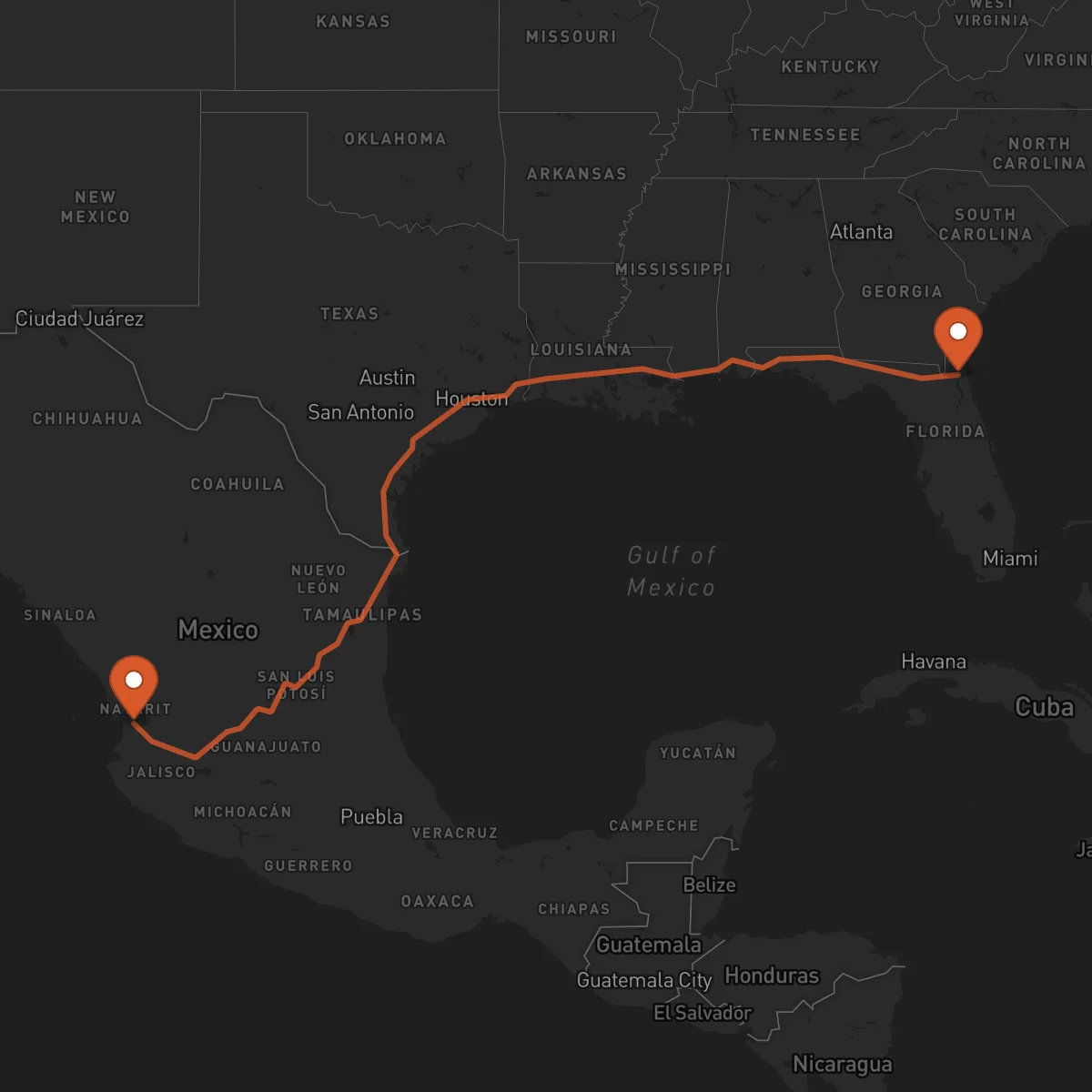
The Jacksonville to Tepic corridor represents a vital cross-border freight transportation route connecting the southeastern United States with western Mexico. This 2,516 km journey traverses diverse landscapes and economic regions, facilitating crucial trade between two dynamic markets. The corridor serves as a strategic link for companies seeking to optimize their supply chain operations between North America's major economic zones.
The route follows a well-established path through key transportation hubs, beginning in Jacksonville's bustling port and industrial areas before crossing through the southeastern United States. The journey continues through Texas, utilizing major border crossings such as Laredo or El Paso, before entering Mexico's efficient highway network. From there, freight moves through northern Mexican states before reaching Nayarit's capital, Tepic, a growing industrial center in western Mexico.
This corridor is particularly significant for industries including automotive manufacturing, electronics, agricultural products, and consumer goods. The route accommodates both regular scheduled shipments and specialized freight movements, with Control Terrestre providing dedicated full truckload services that ensure cargo moves efficiently and securely. Our strategic partnerships with certified carriers and deep understanding of cross-border documentation requirements help streamline the shipping process, reducing transit times and minimizing potential delays at border crossings.
Services for this Route
Available services for the corridor Jacksonville - Tepic
 Origin
Jacksonville
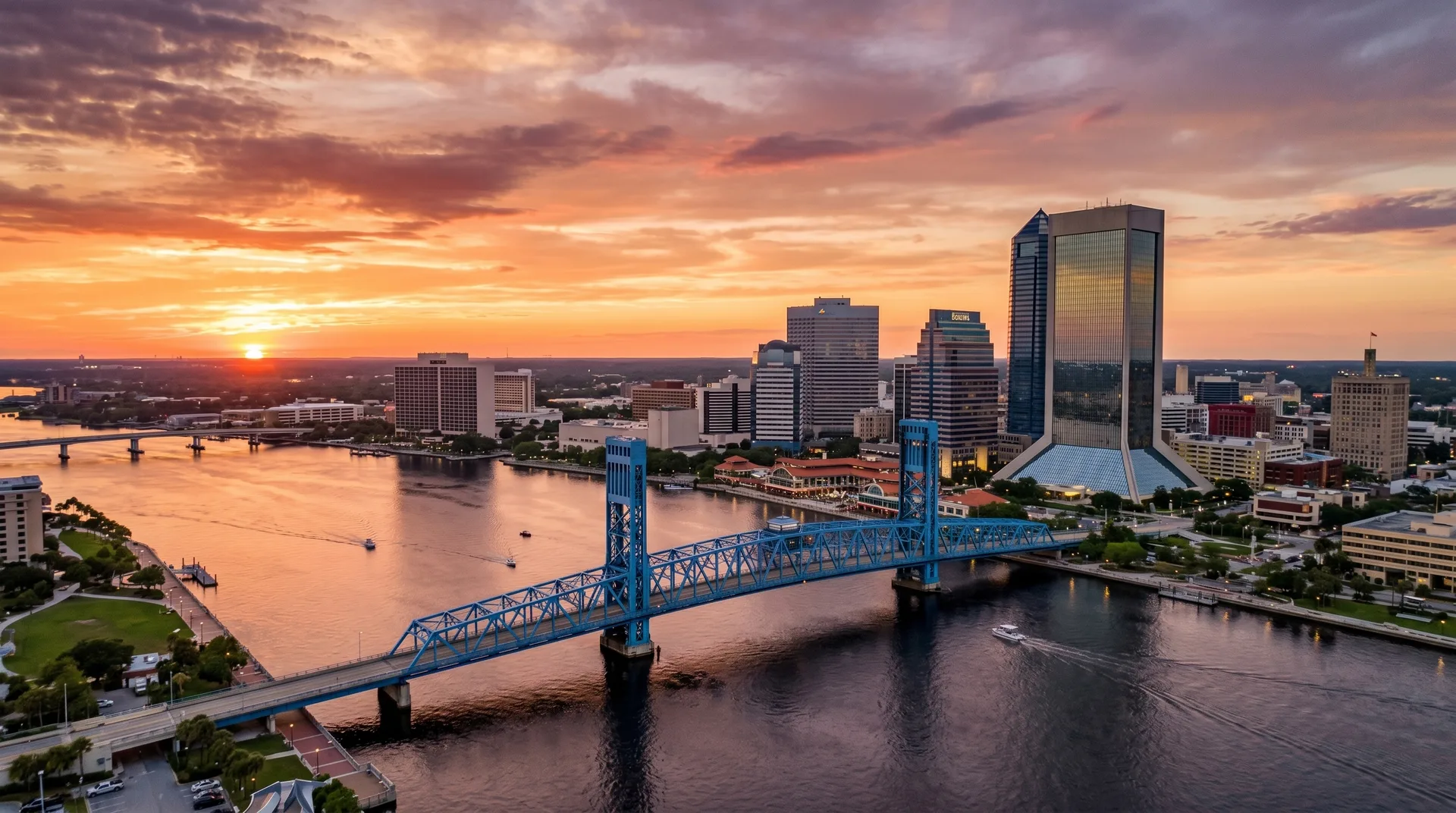
Jacksonville, Florida serves as a strategic logistics hub on the Atlantic coast, offering exceptional connectivity for freight transportation. The city boasts one of the busiest ports in the southeastern United States, the Port of Jacksonville, which handles significant cargo volumes and provides direct access to international shipping lanes. Jacksonville's extensive rail network, including major Class I railroad connections, and its proximity to major interstate highways (I-95, I-10) create a multimodal transportation infrastructure that facilitates efficient cargo movement in all directions.
The region's economy is diverse, with strong presence in aerospace, defense, logistics, and manufacturing sectors. Jacksonville's industrial parks and distribution centers are equipped to handle various types of freight, from containerized goods to specialized cargo. The city's strategic location, just south of the Georgia border and with direct highway access to major southeastern markets, makes it an ideal origin point for cross-border shipments to Mexico and beyond.
 Destination
Tepic, the capital city of Nayarit, Mexico, occupies a strategic position in western Mexico's logistics network. Located in the foothills of the Sierra Madre Occidental, Tepic serves as a crucial distribution point for the Pacific region and central Mexico. The city's growing industrial sector benefits from its proximity to major transportation routes, including Federal Highway 15, which connects to Guadalajara and the broader Mexican highway system.
The region around Tepic has seen significant industrial development, particularly in manufacturing, agriculture, and food processing. The city's logistics infrastructure includes modern warehousing facilities and distribution centers that accommodate various types of freight. Tepic's location provides excellent connectivity to Mexico's Pacific ports, including Puerto Vallarta and Mazatlán, creating a comprehensive logistics triangle that enhances supply chain efficiency for companies operating in western Mexico.










