Jackson to Vancouver
Vancouver → JacksonFTL freight transportation service between Jackson and Vancouver. Reliable logistics solutions for your business.
Route Description
Everything you need to know about the corridor Jackson - Vancouver
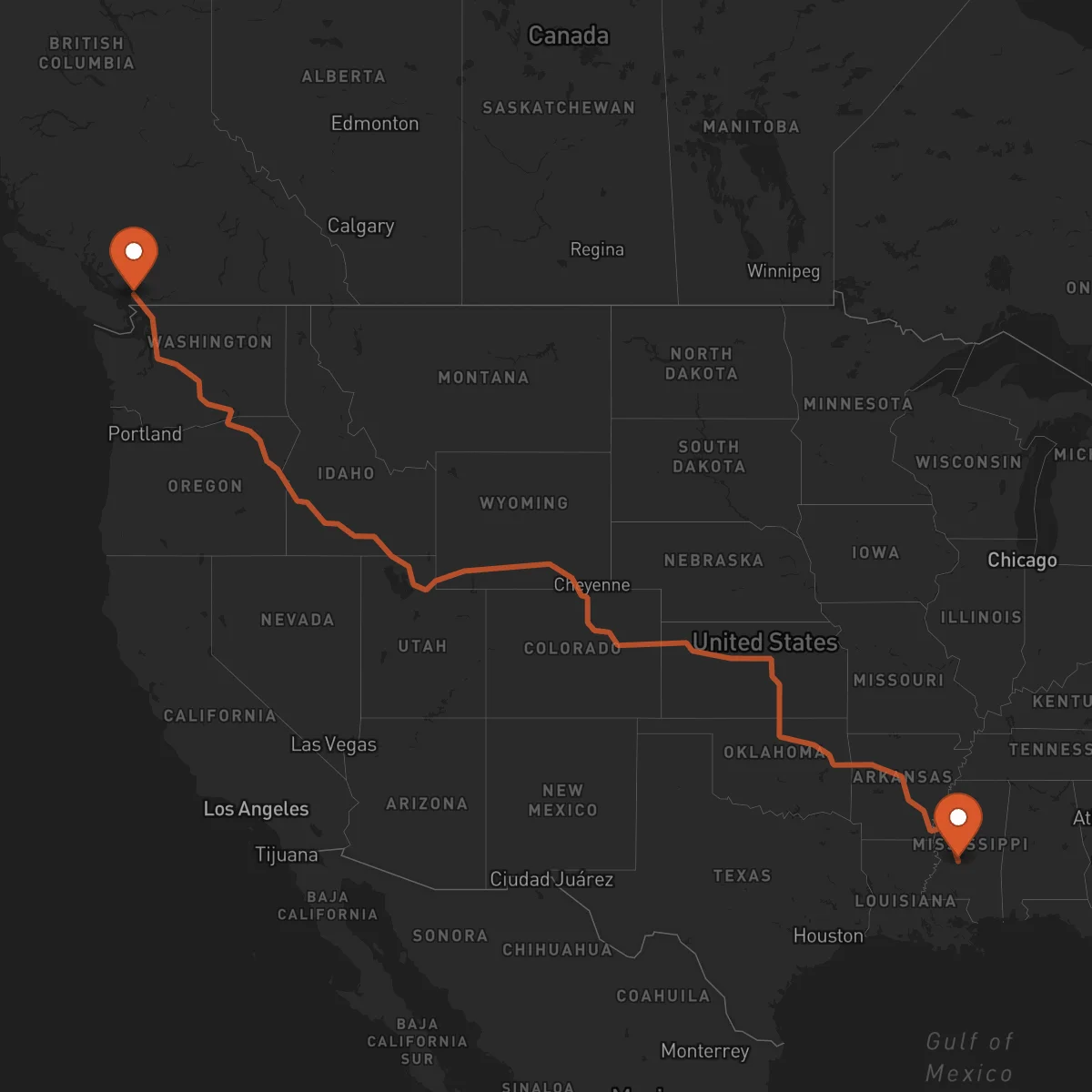
The logistics corridor connecting Jackson, Mississippi, to Vancouver, British Columbia, represents a vital cross-border transportation route spanning approximately 3,314 kilometers. This corridor links the southern United States with Canada's Pacific gateway, traversing diverse terrain and crossing multiple state and provincial lines. Control Terrestre specializes in facilitating seamless freight movement along this extensive route, ensuring efficient cargo transport between these strategic locations.
The corridor passes through key economic regions including the American Midwest and Western Canada, connecting major industrial centers. Along the route, freight typically utilizes Interstate highways such as I-55, I-90, and I-5, providing reliable infrastructure for full truckload (FTL) transportation. The journey crosses the U.S.-Canada border, most commonly at major ports of entry like Blaine-Huntingdon or Sumas, where Control Terrestre's expertise in customs procedures ensures smooth clearance processes.
This transportation corridor serves numerous industries including automotive, manufacturing, technology, and retail sectors. Companies in Jackson's industrial base ship products northward to meet demand in Vancouver's bustling port economy and surrounding regions. Control Terrestre's comprehensive service includes door-to-door delivery, cross-border documentation handling, and specialized equipment options to accommodate various cargo types. Our strategic partnerships with certified carriers along the entire route guarantee reliable service and adherence to all regulatory requirements for both domestic and international segments of the journey.
Services for this Route
Available services for the corridor Jackson - Vancouver
 Origin
Jackson
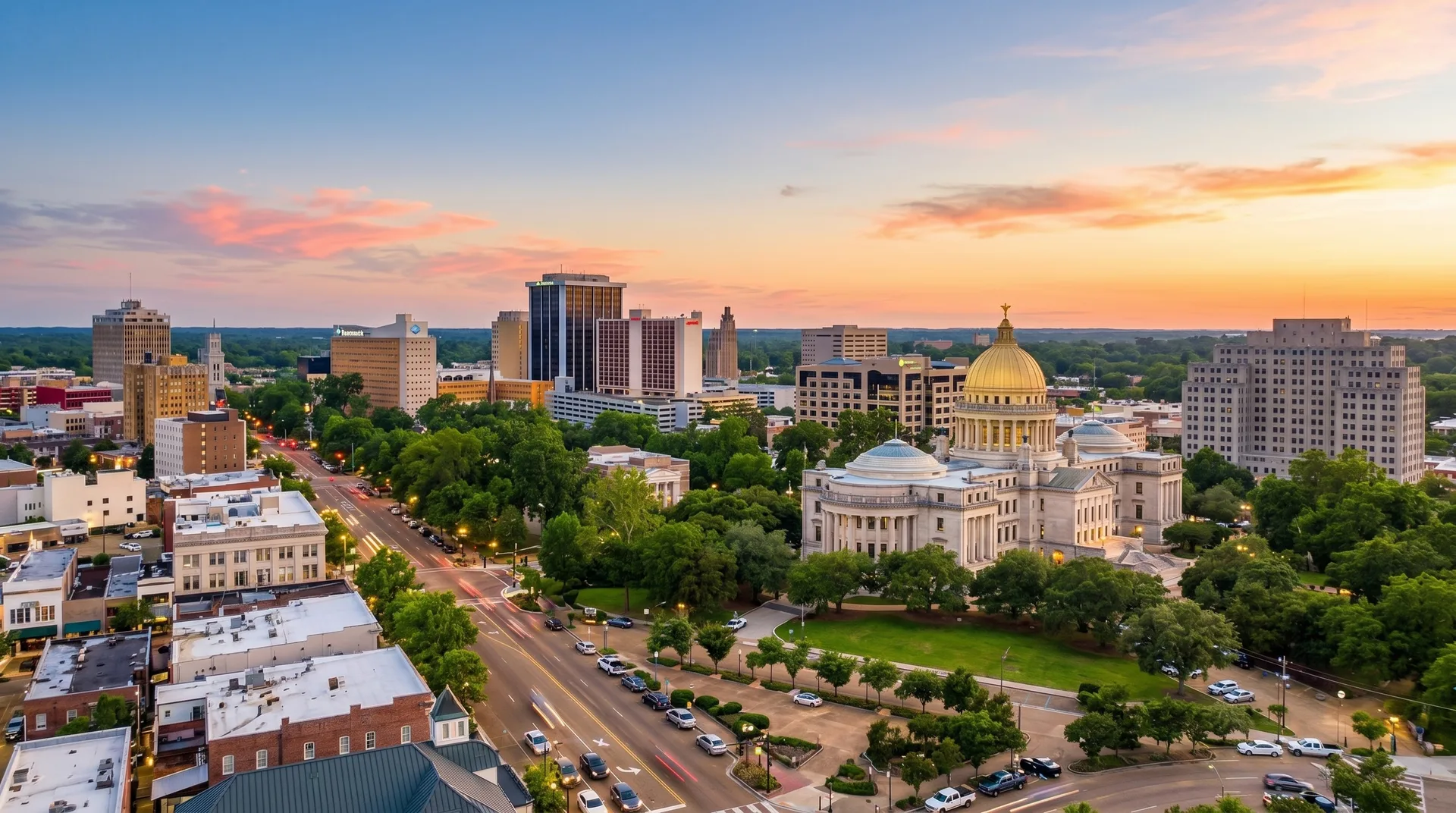
Jackson, Mississippi, serves as a strategic logistics hub in the southeastern United States, offering excellent connectivity for freight transportation. The city's location provides access to major transportation networks including Interstate 55, which runs north-south through the city, connecting to national freight corridors. Jackson's central position in Mississippi allows for efficient distribution throughout the southeastern region and beyond.
The city's economy features diverse industries including automotive manufacturing, with Nissan's assembly plant nearby, as well as food processing, healthcare, and government services. These sectors generate substantial freight volume requiring reliable transportation solutions. Jackson's transportation infrastructure includes multiple rail connections, the Jackson-Medgar Wiley Evers International Airport for air cargo, and the Port of Jackson on the Pearl River, though trucking remains the primary mode for most freight movements. The city's logistics ecosystem supports both inbound raw materials and outbound finished goods, making it an ideal origin point for cross-border shipments to Canada.
 Destination
Vancouver
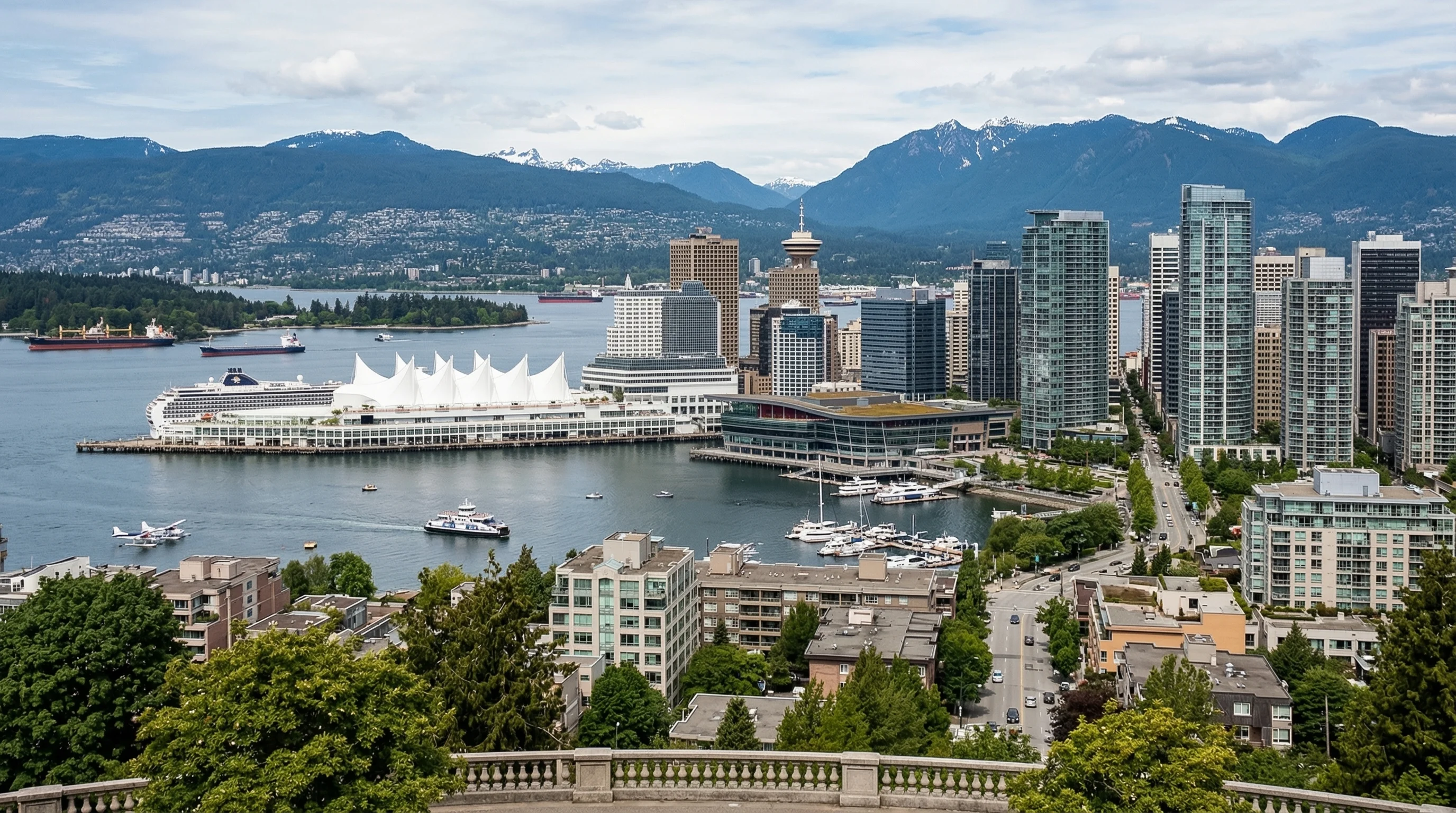
Vancouver, British Columbia, stands as Canada's premier Pacific port city and a critical gateway for international trade. Located on the country's west coast, Vancouver provides strategic access to Asian markets and serves as a vital distribution center for goods throughout Western Canada and the Pacific Northwest. The city's port facilities handle millions of containers annually, making it North America's largest port by tonnage and a key node in global supply chains.
The Vancouver metropolitan area boasts a diverse economy encompassing technology, film and television production, tourism, and natural resources processing. Major industries including forestry products, mining equipment, and agricultural goods generate substantial freight volumes requiring efficient transportation solutions. Vancouver's transportation infrastructure is world-class, featuring the Port of Vancouver, Vancouver International Airport, extensive rail connections including CP and CN mainlines, and a comprehensive highway network anchored by Highways 1, 99, and the Trans-Canada Highway. This robust infrastructure, combined with proximity to the U.S. border, makes Vancouver an ideal destination for cross-border freight shipments from the southern United States.










