Jackson to Tulsa
Tulsa → JacksonFTL freight transportation service between Jackson and Tulsa. Reliable logistics solutions for your business.
Route Description
Everything you need to know about the corridor Jackson - Tulsa
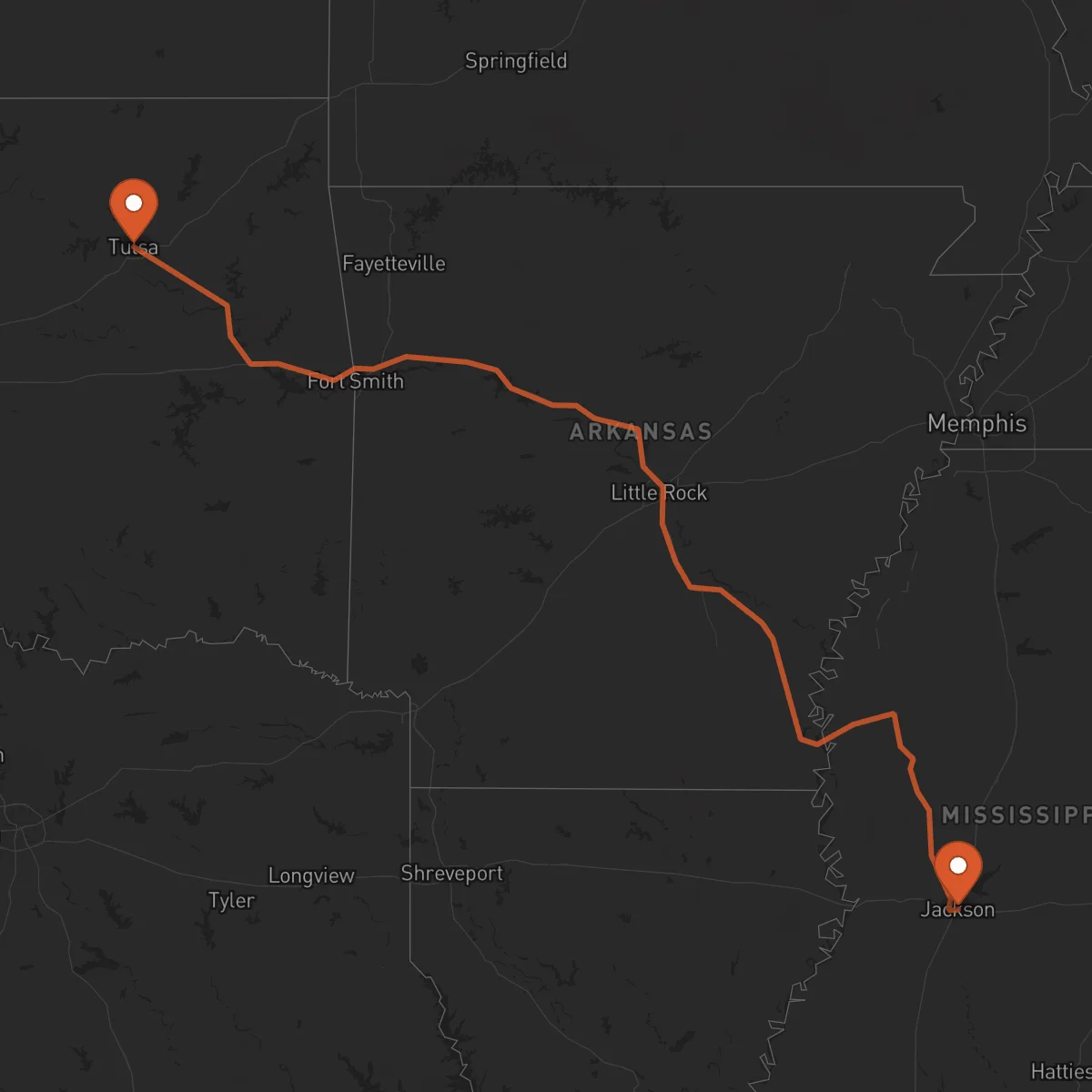
The Jackson to Tulsa corridor connects the heart of Mississippi with the economic hub of Oklahoma, spanning approximately 685 kilometers through the central United States. This domestic freight route traverses key states including Mississippi, Arkansas, and Oklahoma, providing critical connectivity between the southeastern and south-central regions of the country. The corridor serves as a vital link for businesses operating across state lines, facilitating the movement of goods between these strategically important economic centers.
The region along this corridor is characterized by diverse industrial activity, with Jackson serving as a major distribution center for agricultural products and manufacturing goods, while Tulsa functions as a prominent energy and logistics hub. The route passes through several metropolitan areas and industrial zones, supporting the transportation needs of various sectors including automotive, energy, agriculture, and retail distribution. This corridor benefits from its central location, enabling efficient access to major markets across the southern United States.
Control Terrestre provides comprehensive FTL transportation services along this corridor, leveraging our extensive network of certified carriers and specialized equipment. Our team coordinates seamless door-to-door freight movement, ensuring timely delivery of full truckload shipments between Jackson and Tulsa. We understand the specific requirements of each industry served by this route and tailor our services accordingly, whether handling standard freight, refrigerated goods, or specialized cargo. Our commitment to reliability and efficiency makes us the preferred transportation partner for businesses operating along this strategic corridor.
Services for this Route
Available services for the corridor Jackson - Tulsa
 Origin
Jackson
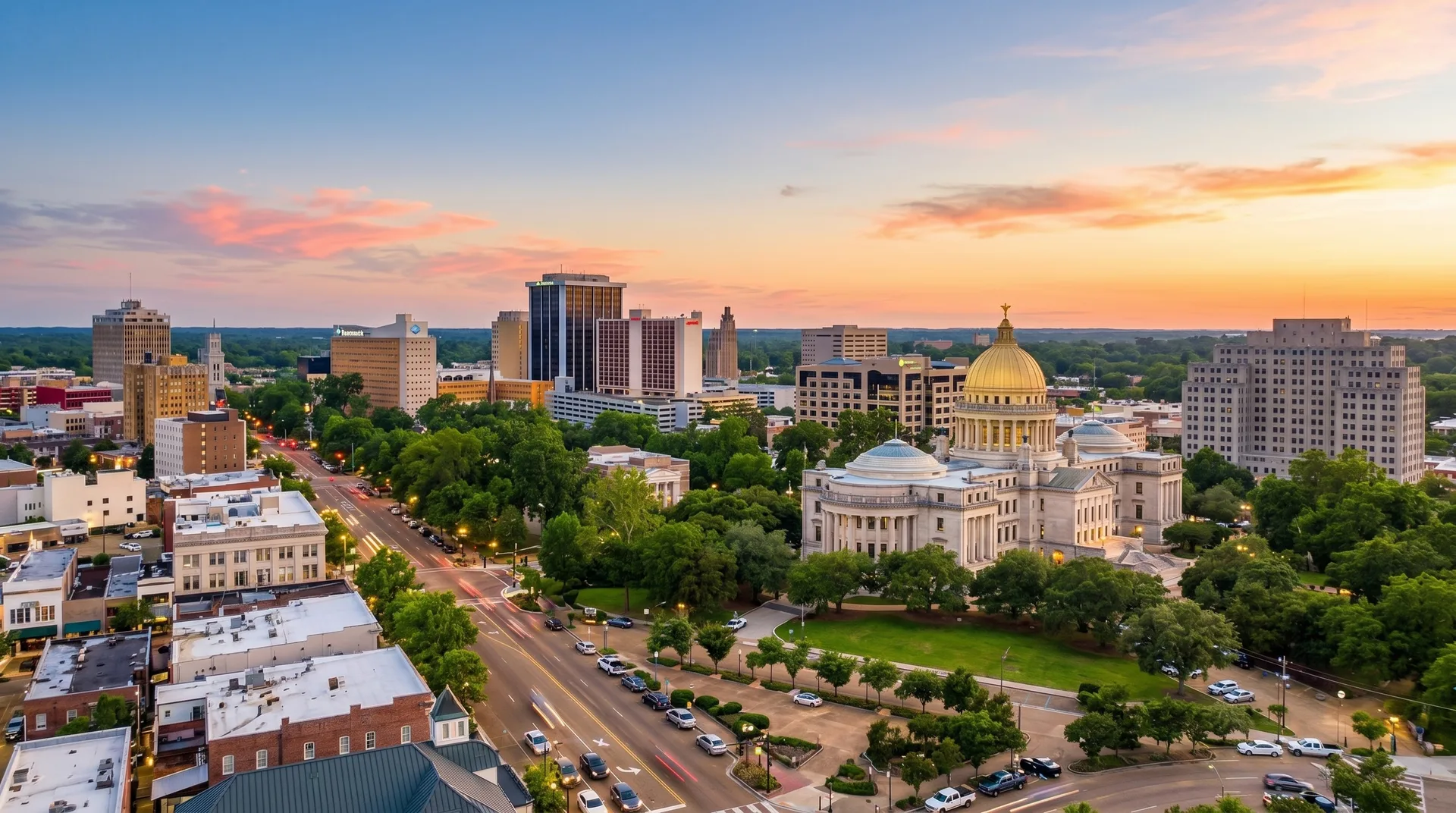
Jackson, Mississippi serves as a strategic logistics hub in the southeastern United States, positioned at the crossroads of major transportation networks. The city's location provides excellent connectivity to regional distribution centers and manufacturing facilities throughout the South. Jackson's transportation infrastructure includes access to major highways such as I-55 and I-20, as well as the Jackson-Medgar Wiley Evers International Airport and the Port of Jackson on the Pearl River, creating a multimodal logistics environment that supports diverse freight operations.
The economic landscape of Jackson is anchored by several key industries including automotive manufacturing, food processing, healthcare, and government services. The region is home to major employers in the automotive sector, with assembly plants and parts manufacturers requiring efficient transportation solutions. Additionally, Jackson's agricultural heritage continues to influence its economy, with food processing facilities and agricultural product distribution representing significant freight movement through the area.
 Destination
Tulsa
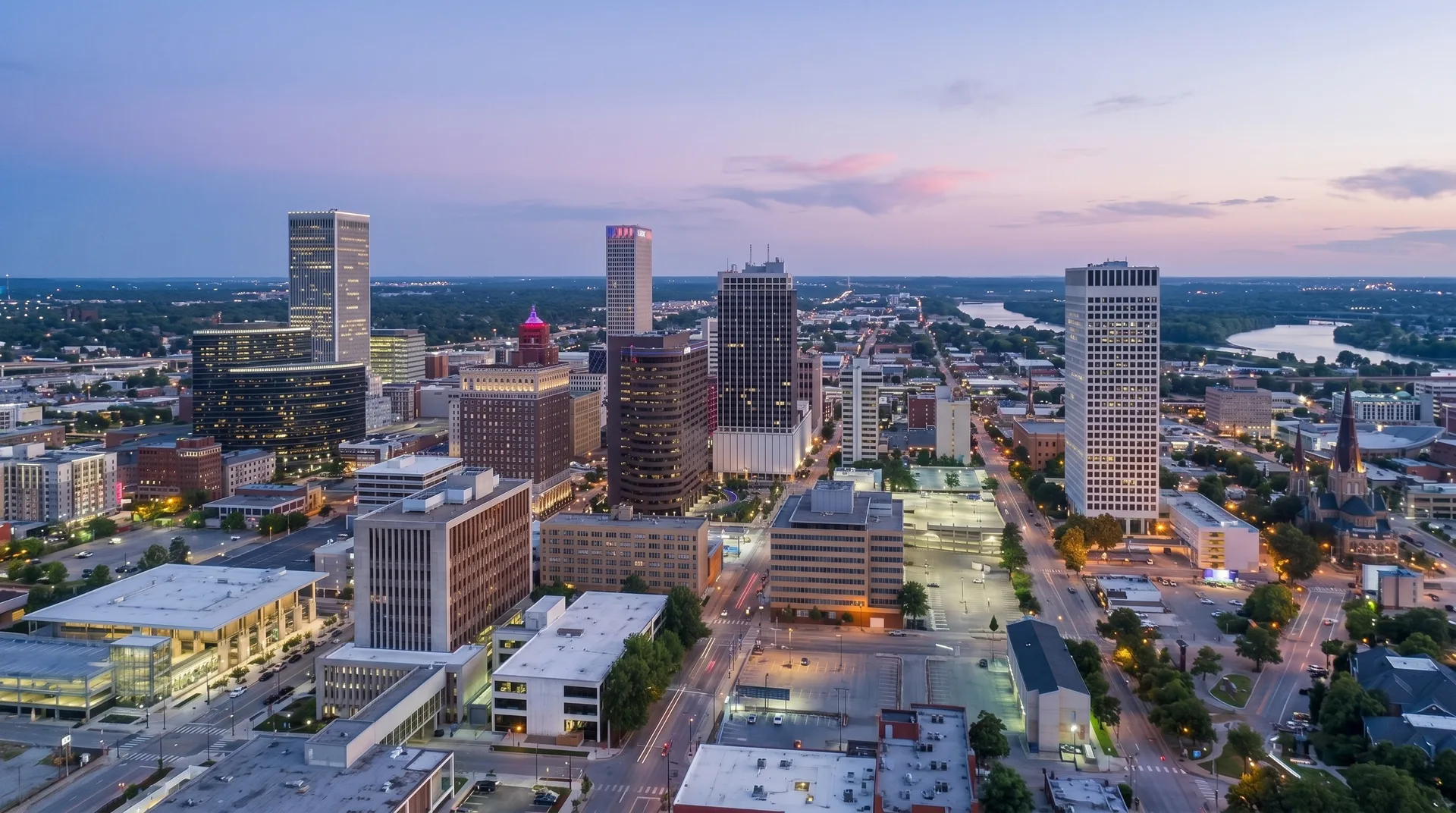
Tulsa, Oklahoma stands as a premier logistics and distribution center in the south-central United States, strategically positioned to serve both regional and national markets. The city's location at the intersection of major transportation corridors, including I-44 and I-244, provides exceptional connectivity for freight movement across the Midwest and beyond. Tulsa International Airport and the Tulsa Port of Catoosa on the McClellan-Kerr Arkansas River Navigation System further enhance the city's multimodal transportation capabilities, making it an ideal destination for freight operations.
The economic foundation of Tulsa is strongly rooted in the energy sector, with numerous oil and gas companies headquartered in the city, alongside growing industries in aerospace, healthcare, and manufacturing. The region's industrial base includes energy equipment manufacturing, aviation maintenance and repair operations, and distribution centers for major retailers. These diverse economic activities create substantial freight transportation demand, particularly for specialized equipment and materials essential to the energy and aerospace industries.










