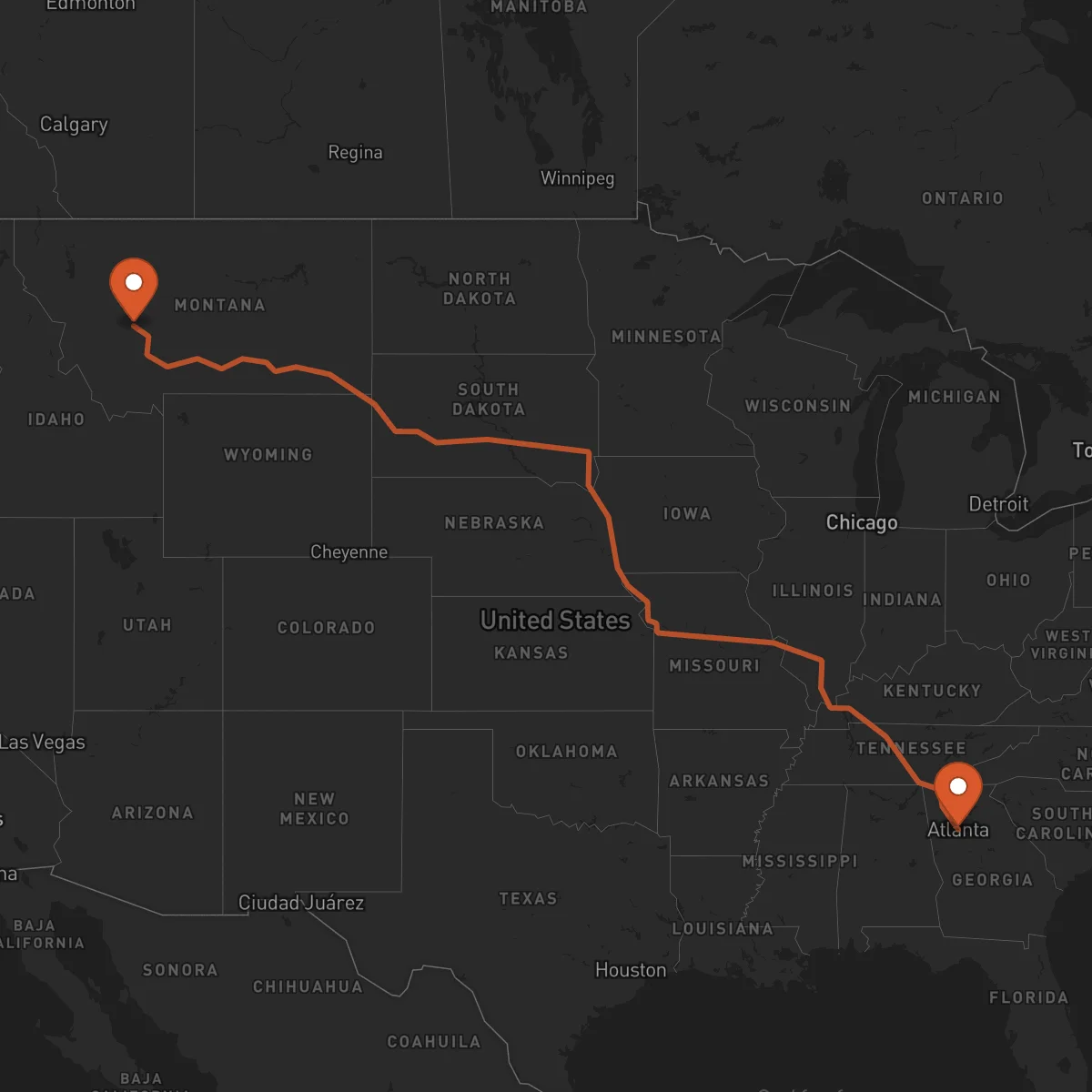
Helena to Atlanta
Atlanta → HelenaFTL freight transportation service between Helena and Atlanta. Reliable logistics solutions for your business.
Route Description
Everything you need to know about the corridor Helena - Atlanta
The logistics corridor connecting Helena, Montana to Atlanta, Georgia represents a vital transportation link spanning approximately 2,728 kilometers across the United States. This east-west route traverses diverse terrain and crosses multiple state lines, connecting the Mountain West with the Southeast. The corridor serves as a crucial artery for freight movement between Montana's resource-rich regions and Georgia's industrial and commercial hubs. Control Terrestre specializes in providing reliable full truckload (FTL) services along this extensive route, ensuring seamless cargo transportation through experienced carriers and strategic partnerships.
Services for this Route
Available services for the corridor Helena - Atlanta
 Origin
Helena
Helena, Montana serves as a strategic origin point for logistics operations in the Northern Rockies region. As Montana's capital city, Helena benefits from its central location within the state and proximity to major transportation routes including Interstate 15. The city's economy is supported by government services, healthcare, and a growing technology sector. Helena's location provides access to Montana's abundant natural resources, including timber, minerals, and agricultural products. The region's transportation infrastructure includes rail connections and highway access that facilitate efficient freight movement to major distribution centers across the country.
 Destination
Atlanta
Atlanta, Georgia stands as a premier logistics and distribution hub in the southeastern United States. The city's strategic location at the intersection of major interstate highways (I-20, I-75, I-85) and its status as home to the world's busiest airport make it an ideal destination for freight transportation. Atlanta's diverse economy encompasses logistics, professional services, information technology, and advanced manufacturing. The metropolitan area hosts numerous Fortune 500 companies and serves as a major distribution center for retailers and manufacturers. Atlanta's extensive transportation infrastructure, including multiple rail terminals and trucking facilities, ensures efficient cargo handling and distribution throughout the region.










