Hartford to Seattle
Seattle → HartfordFTL freight transportation service between Hartford and Seattle. Reliable logistics solutions for your business.
Route Description
Everything you need to know about the corridor Hartford - Seattle
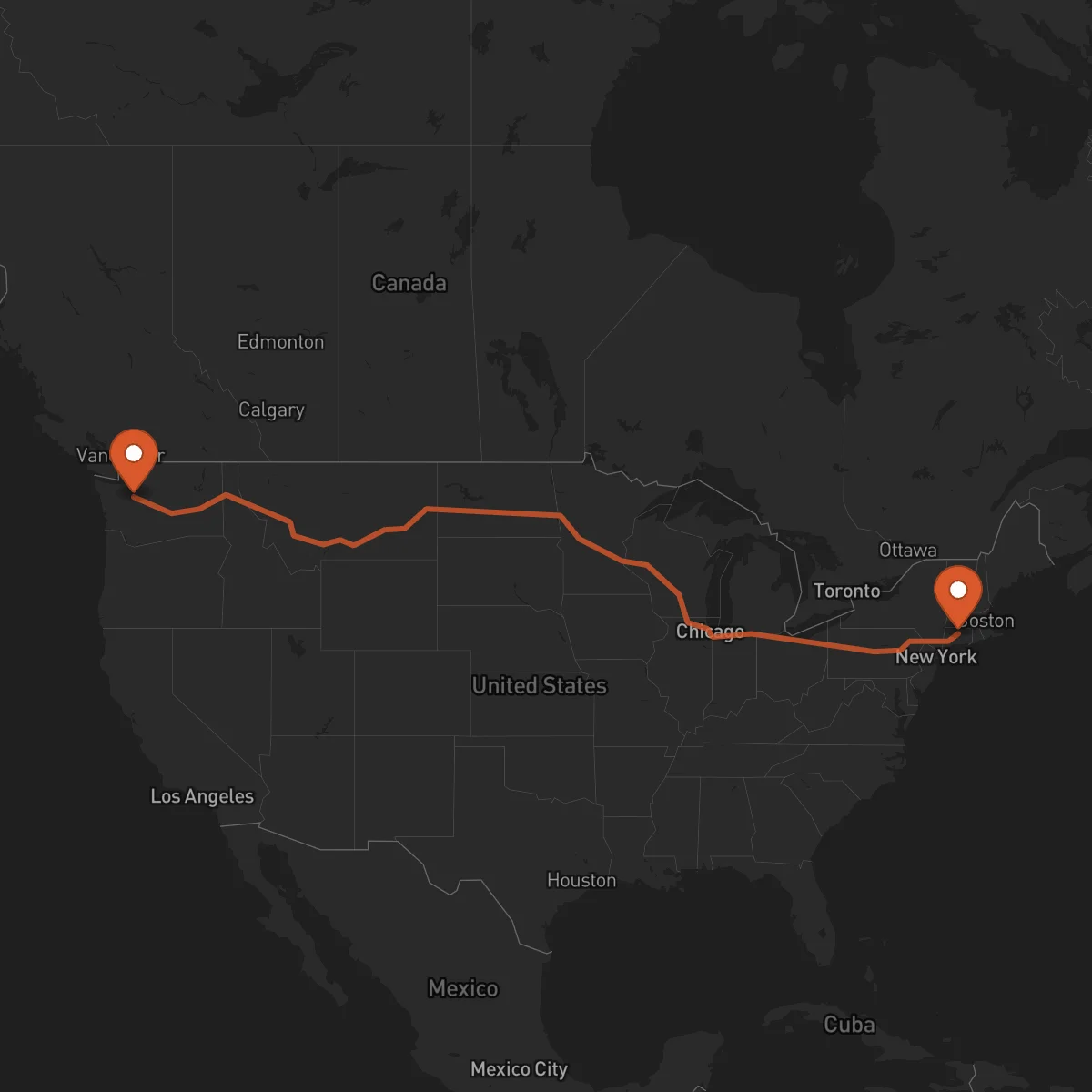
The freight transportation corridor between Hartford, Connecticut, and Seattle, Washington, spans approximately 3,911 kilometers across the United States, connecting the East Coast with the Pacific Northwest. This transcontinental route is a vital artery for commerce, linking major industrial and economic centers across diverse geographical regions. The corridor traverses multiple states and time zones, crossing through key logistics hubs that facilitate the movement of goods between the country's most productive regions.
This route serves as a critical link for numerous industries, including aerospace, technology, automotive, pharmaceuticals, and agriculture. Seattle's position as a major port city and technology hub complements Hartford's strengths in insurance, healthcare, and manufacturing. The corridor facilitates the distribution of specialized equipment, raw materials, and finished products that drive both regional and national economies. Companies along this route benefit from the ability to move large volumes of freight efficiently across the country's vast interior.
Major transportation infrastructure along this corridor includes Interstate 90, which runs from Boston to Seattle, and Interstate 84, which connects Hartford to the Midwest. These highways provide reliable access to key logistics centers and distribution facilities. Control Terrestre leverages this extensive infrastructure network to provide seamless full truckload (FTL) transportation services, ensuring that cargo moves efficiently and securely from origin to destination. Our strategic partnerships with certified carriers and our expertise in managing complex cross-country shipments make us the ideal logistics partner for companies operating along this important corridor.
Services for this Route
Available services for the corridor Hartford - Seattle
 Origin
Hartford
Hartford, Connecticut, serves as a strategic logistics hub in the Northeast, offering excellent connectivity to major markets along the East Coast and beyond. The city's location provides access to Interstate 91 and Interstate 84, facilitating efficient distribution throughout the region. Hartford's proximity to major ports, including those in New York and New Jersey, enhances its role in international trade and import/export operations. The area's robust transportation infrastructure includes Bradley International Airport and rail connections, creating multiple options for multimodal freight solutions.
The region's economy is anchored by the insurance industry, with Hartford earning its reputation as the 'Insurance Capital of the World.' Additionally, the area hosts significant healthcare, education, and advanced manufacturing sectors. These industries generate substantial freight volumes, requiring reliable transportation of specialized equipment, medical supplies, and industrial components. The presence of numerous corporate headquarters and research facilities creates consistent demand for full truckload services to move high-value cargo across the country.
 Destination
Seattle
Seattle, Washington, stands as a premier logistics gateway on the West Coast, offering unparalleled access to international markets through the Port of Seattle and its connections to the Pacific Rim. The city's strategic location provides direct access to major transportation corridors, including Interstate 5, which runs north-south along the West Coast, and Interstate 90, connecting to the eastern United States. Seattle-Tacoma International Airport further enhances the region's logistics capabilities, supporting time-sensitive and high-value shipments.
The Seattle metropolitan area is a global center for technology, aerospace, and maritime industries. Home to major corporations like Amazon, Microsoft, and Boeing, the region generates significant freight volumes in e-commerce, cloud computing, and aviation sectors. The presence of the Port of Seattle, one of the largest container ports in North America, creates substantial cross-border trade opportunities. Seattle's thriving economy, driven by technology innovation and international commerce, requires efficient full truckload transportation solutions to move goods between the coast and inland markets, making it a critical endpoint for transcontinental freight operations.










