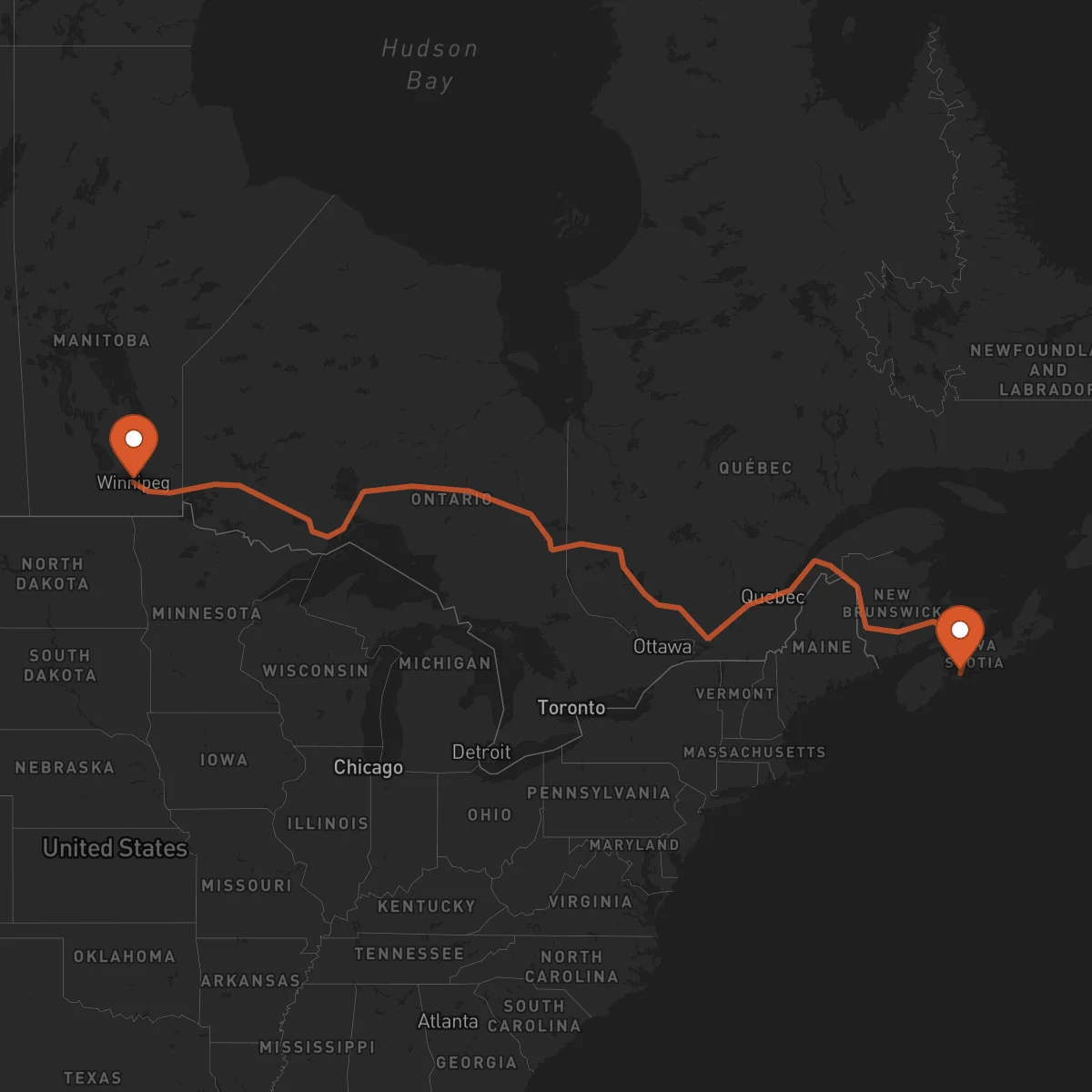
Halifax to Winnipeg
Winnipeg → HalifaxFTL freight transportation service between Halifax and Winnipeg. Reliable logistics solutions for your business.
Route Description
Everything you need to know about the corridor Halifax - Winnipeg
The Halifax to Winnipeg corridor represents a vital east-west transportation link across Canada, spanning approximately 2,574 kilometers through the heart of the country. This domestic route connects the Atlantic port city of Halifax to the central hub of Winnipeg, facilitating the movement of goods between Canada's eastern maritime provinces and the central prairies. The corridor traverses diverse Canadian landscapes, from coastal regions through the Canadian Shield and into the agricultural heartland of Manitoba.
The economic significance of this corridor extends beyond simple transportation, serving as a backbone for interprovincial trade and supply chain integration. Halifax's status as a major Atlantic port creates substantial inbound freight volumes that require efficient inland distribution to central and western Canadian markets. Conversely, Winnipeg's position as a distribution center for prairie products and manufactured goods necessitates reliable outbound transportation to Atlantic Canada and international markets via Halifax.
Key industries utilizing this corridor include manufacturing, agricultural products, retail distribution, and industrial equipment. The route particularly benefits from Halifax's container port operations and Winnipeg's role as a regional logistics hub. Major transportation infrastructure along this corridor includes the Trans-Canada Highway (Highway 1), which provides the primary trucking route, supplemented by rail freight services that parallel the highway through much of the journey.
Control Terrestre facilitates seamless operations on this corridor through our network of certified transportation providers, offering dedicated full truckload services that ensure your cargo moves efficiently across this vast distance. Our expertise in managing cross-country shipments means your freight benefits from optimized routing, reliable scheduling, and the highest standards of cargo handling throughout the entire journey from Halifax to Winnipeg.
Services for this Route
Available services for the corridor Halifax - Winnipeg
 Origin
Halifax
Halifax, located on Canada's Atlantic coast, serves as a strategic gateway for international trade and domestic distribution throughout the eastern provinces. As home to the Port of Halifax, one of Canada's busiest container ports, the city handles significant volumes of import and export cargo, creating substantial demand for inland transportation services. The port's deep-water facilities accommodate the largest vessels, making Halifax a crucial entry point for goods destined for central and western Canada.
The Halifax region's economy encompasses diverse sectors including ocean technology, aerospace and defense, information technology, and financial services. The presence of major universities and research institutions further strengthens the knowledge-based economy. Transportation infrastructure in Halifax includes the port facilities, Halifax Stanfield International Airport, and comprehensive highway connections including Highway 104 and Highway 102, which provide direct access to the Trans-Canada Highway system for inland freight movement.
 Destination
Winnipeg, known as the 'Gateway to the West,' occupies a strategic central location in Canada that makes it a crucial logistics and distribution hub. The city's position at the confluence of the Red and Assiniboine rivers has evolved into a modern transportation nexus where major east-west and north-south freight corridors intersect. Winnipeg's central location provides optimal distribution access to both Canadian coasts within reasonable trucking distances, making it an ideal consolidation and redistribution center.
The Winnipeg economy is anchored by manufacturing, aerospace, transportation, and agricultural processing sectors. The city hosts major distribution centers for national retailers and serves as a key point for agricultural products from the surrounding prairies. Transportation infrastructure includes the Winnipeg James Armstrong Richardson International Airport, extensive rail yards operated by Canadian National and Canadian Pacific railways, and major highway connections including the Trans-Canada Highway (Highway 1), Perimeter Highway, and Highway 75, providing comprehensive access to regional and national markets.










