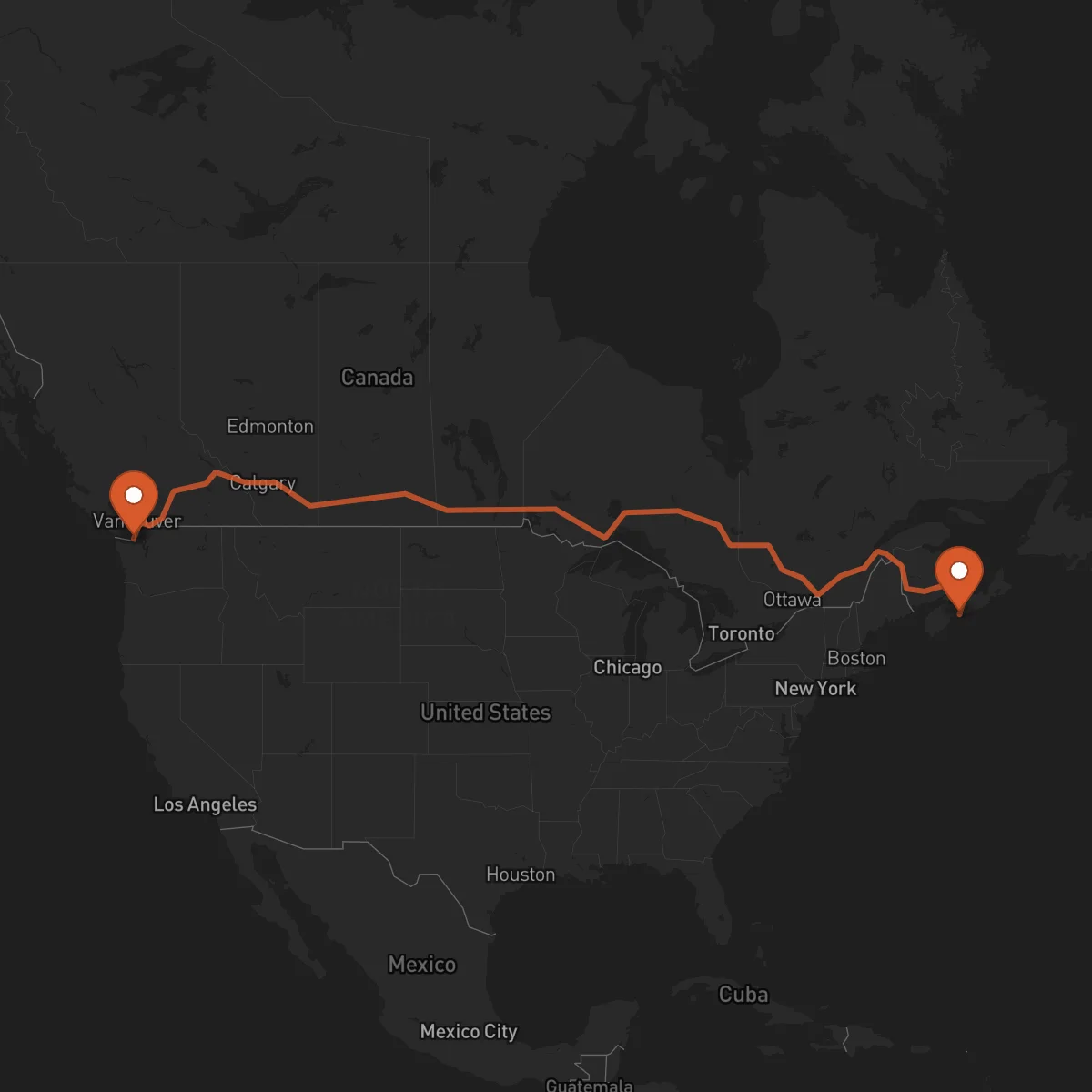
Halifax to Victoria
Victoria → HalifaxFTL freight transportation service between Halifax and Victoria. Reliable logistics solutions for your business.
Route Description
Everything you need to know about the corridor Halifax - Victoria
The logistics corridor between Halifax, Nova Scotia and Victoria, British Columbia represents one of Canada's most strategic transcontinental freight routes, spanning approximately 4,474 kilometers across the country's diverse landscape. This east-west corridor connects the Atlantic to the Pacific, traversing six provinces and serving as a vital artery for Canada's interprovincial trade and economic integration.
The corridor passes through major economic centers including Quebec City, Montreal, Toronto, Winnipeg, and Calgary, each contributing to the corridor's significance. The route follows the Trans-Canada Highway (Highway 1), Canada's primary east-west transportation artery, which provides reliable infrastructure for freight movement across the country's vast geography.
This corridor serves diverse industries including manufacturing, automotive, technology, agriculture, and natural resources. The route facilitates the movement of finished goods from Atlantic manufacturing centers to Western markets, while also supporting the export of Western Canadian commodities to Eastern provinces. Additionally, it enables the efficient distribution of goods between major port facilities in Halifax and Vancouver, supporting Canada's international trade.
Control Terrestre optimizes operations on this corridor through our specialized FTL services, ensuring reliable full truckload transportation across Canada's vast distances. Our strategic partnerships with certified carriers and our commitment to safety and efficiency make us the ideal partner for companies requiring consistent, high-quality freight transportation between Halifax and Victoria.
Services for this Route
Available services for the corridor Halifax - Victoria
 Origin
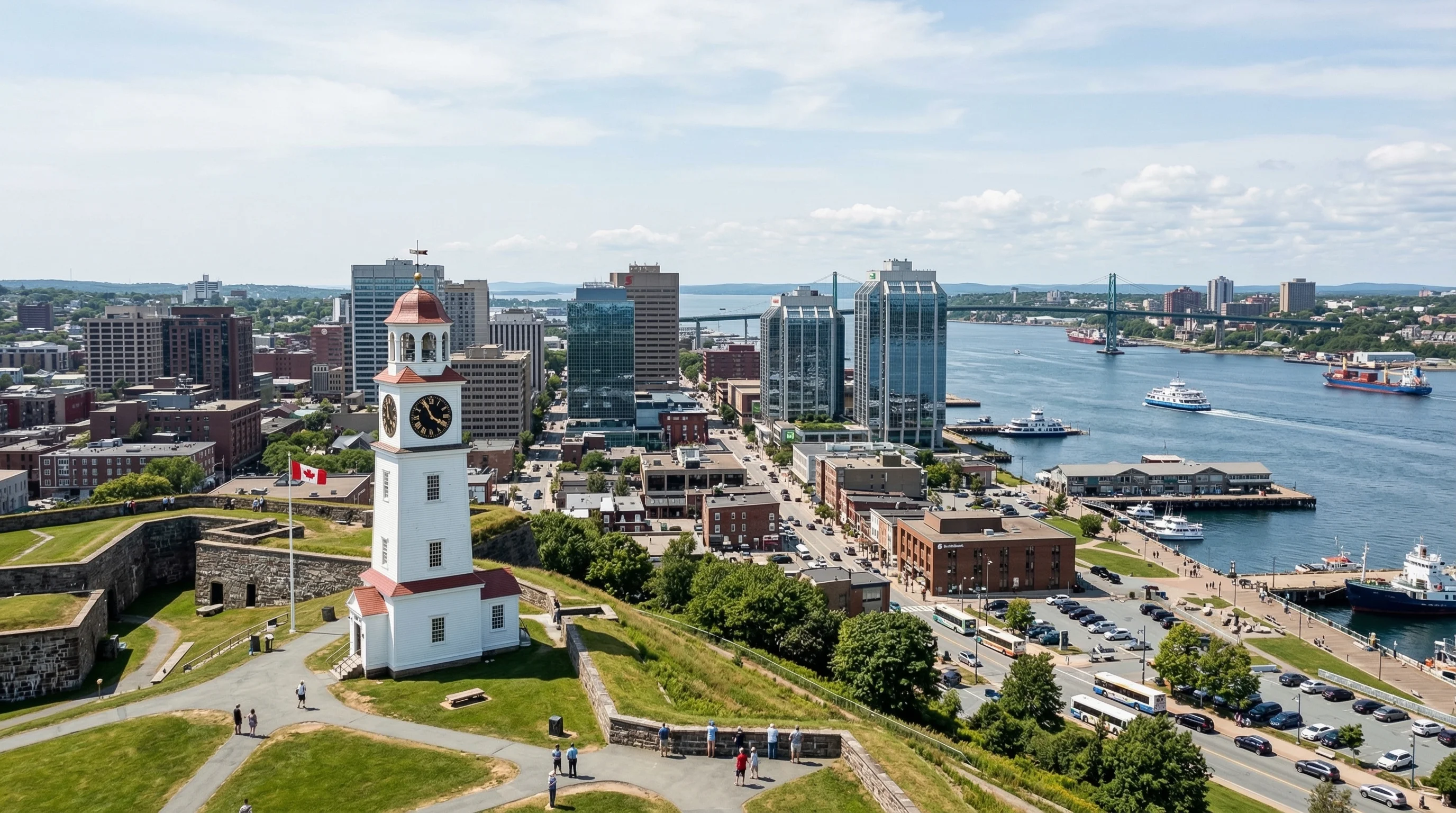
Halifax
Halifax, located on Canada's Atlantic coast, serves as a critical logistics hub for Eastern Canada and international trade. As the capital of Nova Scotia and home to the Port of Halifax, one of North America's deepest and ice-free natural harbors, the city provides year-round access for ocean freight. The region's economy is driven by maritime industries, advanced manufacturing, information technology, and a growing aerospace sector.
The city benefits from excellent transportation infrastructure, including the Halifax Stanfield International Airport and extensive highway connections. Highway 104 (Trans-Canada Highway) provides direct access to the national freight network, while the port's strategic location offers efficient connections to European and American markets. Halifax's position as Atlantic Canada's largest city and its concentration of research institutions and government services further enhance its importance as a logistics origin point.
 Destination
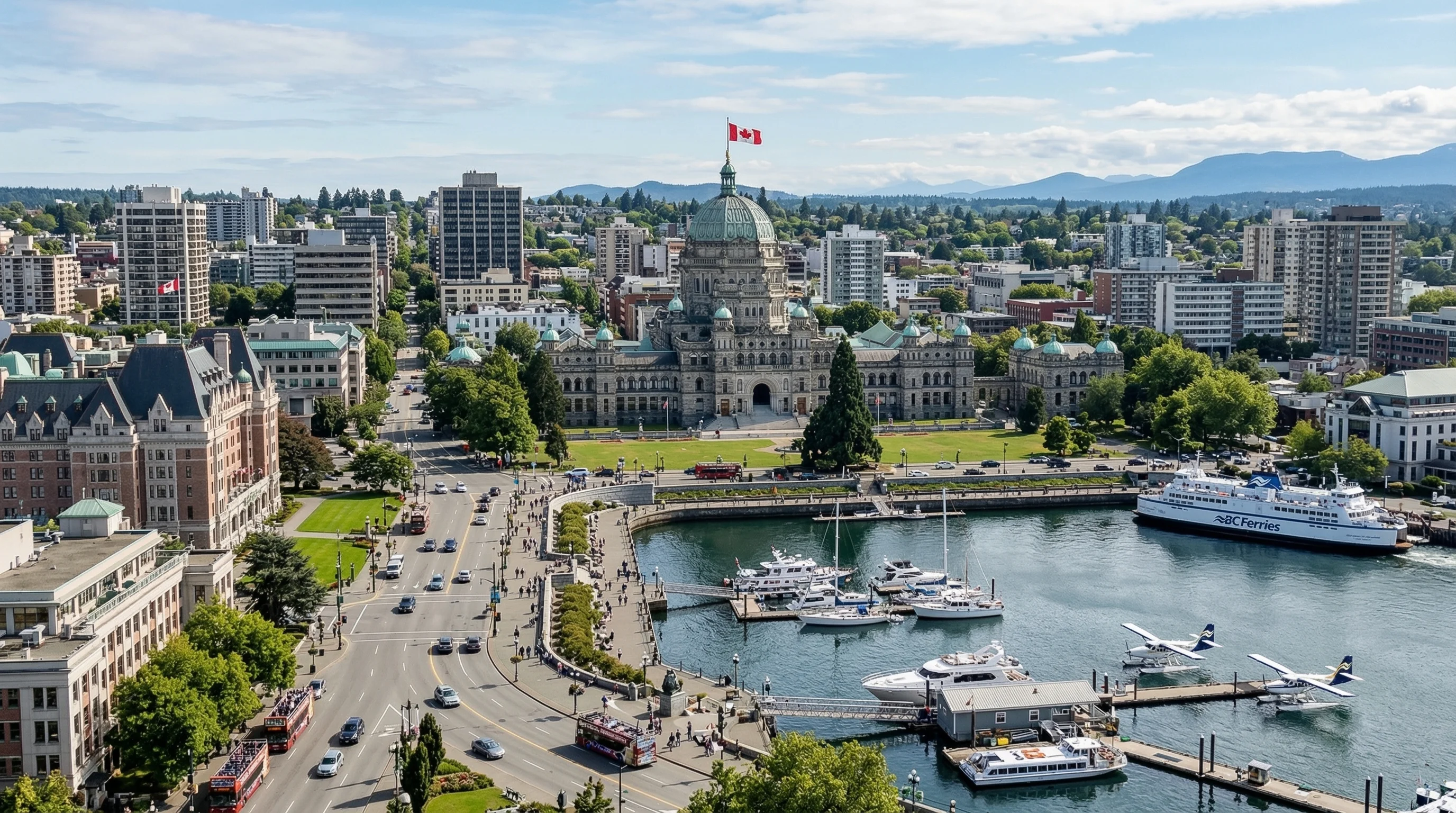
Victoria
Victoria, the capital city of British Columbia, occupies a strategic position on Vancouver Island's southern tip, serving as a gateway to the Pacific Northwest. The city's economy is anchored by government services, tourism, technology, and education, with a growing emphasis on sustainable industries and green technology. Victoria's proximity to the Port of Vancouver and its location near the U.S. border make it an important node in Western Canada's logistics network.
The region benefits from comprehensive transportation infrastructure, including the Victoria International Airport and ferry connections to mainland British Columbia and Washington State. Highway 1 connects Victoria to the Trans-Canada Highway system, providing access to mainland Canada and the United States. The city's mild climate and strategic location support year-round freight operations, while its position within the Cascadia Innovation Corridor enhances its importance for technology and trade.










