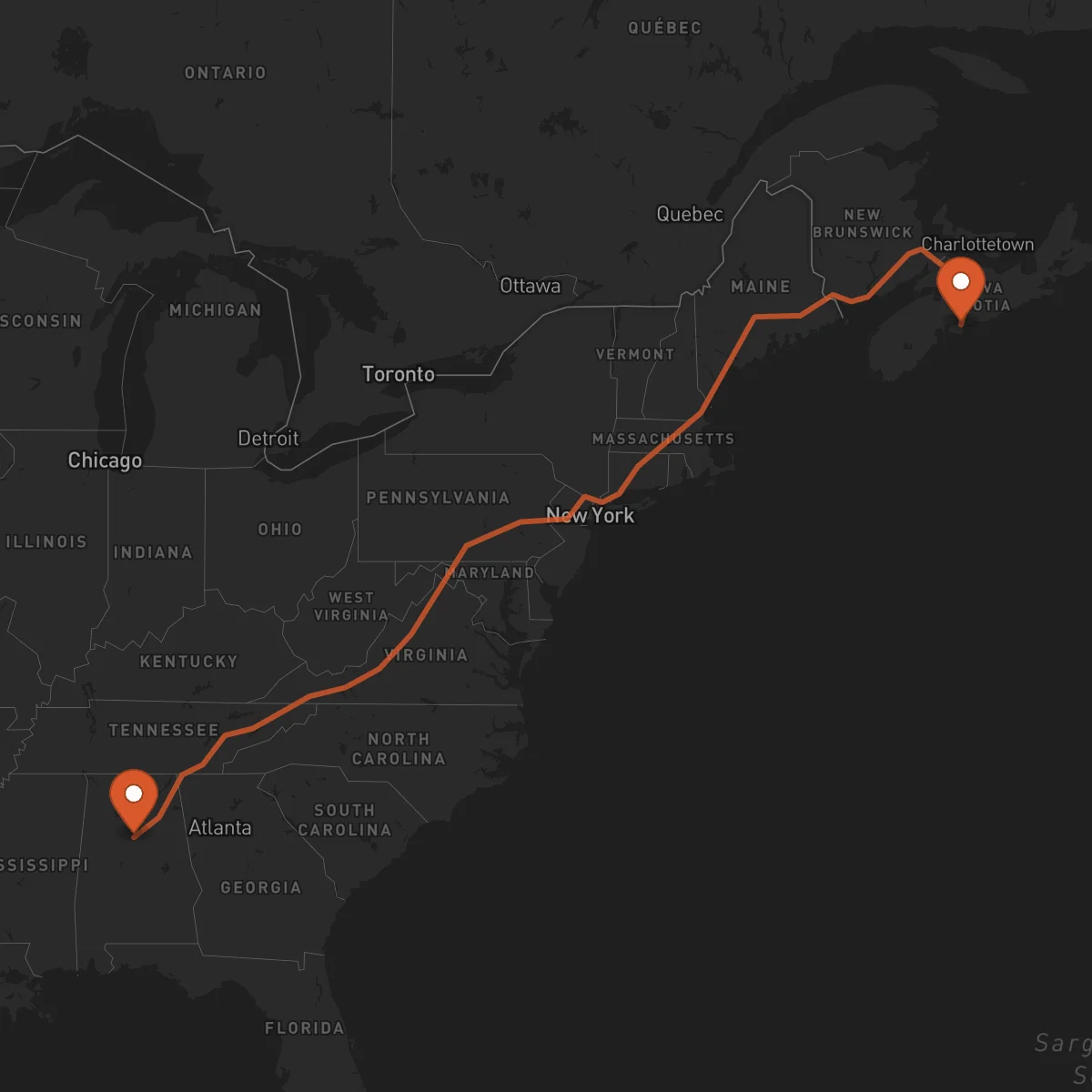
Halifax to Birmingham
Birmingham → HalifaxFTL freight transportation service between Halifax and Birmingham. Reliable logistics solutions for your business.
Route Description
Everything you need to know about the corridor Halifax - Birmingham
The logistics corridor connecting Halifax, Nova Scotia to Birmingham, Alabama represents a vital cross-border freight transportation route spanning approximately 2,343 kilometers. This corridor links Canada's Atlantic port city with one of the southeastern United States' key industrial hubs, facilitating the movement of goods between two major economic regions. The route traverses diverse terrain and crosses international borders, requiring expertise in cross-border logistics and customs compliance.
The corridor serves as a critical link for industries requiring efficient transportation between Atlantic Canada and the southeastern US. Halifax's strategic position as a major Atlantic port connects to Birmingham's established manufacturing and industrial base, creating opportunities for just-in-time supply chains and integrated logistics solutions. The route primarily utilizes major highway networks including Interstate 95 South through the northeastern US, connecting to Interstate 81 South through Virginia and Tennessee, before transitioning to Interstate 65 South into Alabama.
Control Terrestre specializes in managing the complexities of this cross-border corridor, ensuring seamless freight movement from origin to destination. Our expertise includes navigating customs requirements at key border crossings, coordinating with trusted transportation partners, and providing reliable full truckload (FTL) services throughout the journey. We understand the unique challenges of this route, from seasonal weather considerations to varying regulatory requirements across jurisdictions, and have developed proven processes to maintain consistent delivery schedules for our clients.
Services for this Route
Available services for the corridor Halifax - Birmingham
 Origin
Halifax
Halifax, Nova Scotia serves as a strategic gateway for Atlantic Canada's logistics operations. As a major port city on the eastern coast, Halifax provides crucial access to international shipping routes and connects to extensive rail and road networks throughout the region. The city's deep-water port facilities handle significant volumes of containerized cargo, raw materials, and manufactured goods, making it an essential node in North American supply chains. Halifax's economic base includes maritime industries, technology, healthcare, and education sectors, with growing importance in aerospace and defense manufacturing.
The transportation infrastructure in Halifax includes the Halifax Stanfield International Airport for air freight, extensive port facilities capable of handling various cargo types, and well-maintained highway connections to other Canadian provinces. The city's position on the Trans-Canada Highway network provides reliable road access to major markets across Canada and into the United States. Additionally, Halifax benefits from rail connections through CN Rail, offering intermodal transportation options that complement truck-based logistics solutions.
 Destination
Birmingham
Birmingham, Alabama stands as a major logistics and industrial center in the southeastern United States. Located in the heart of Alabama, the city serves as a transportation hub with access to multiple interstate highways, rail networks, and air cargo facilities. Birmingham's strategic location provides efficient distribution capabilities to reach major markets throughout the southeastern US within a day's drive. The region has evolved from its historical industrial base to encompass modern manufacturing, healthcare, education, and technology sectors, maintaining strong ties to automotive, steel, and aerospace industries.
The city benefits from extensive transportation infrastructure including Birmingham-Shuttlesworth International Airport, which offers air freight services, and multiple rail yards operated by major carriers providing intermodal capabilities. Birmingham's position at the intersection of Interstate 20, Interstate 65, and Interstate 59 creates a central logistics node for the region. The surrounding area features numerous warehousing and distribution centers, supporting the city's role as a key distribution point for both regional and national supply chains.










