Guanajuato to Moncton
Moncton → GuanajuatoFTL freight transportation service between Guanajuato and Moncton. Reliable logistics solutions for your business.
Route Description
Everything you need to know about the corridor Guanajuato - Moncton
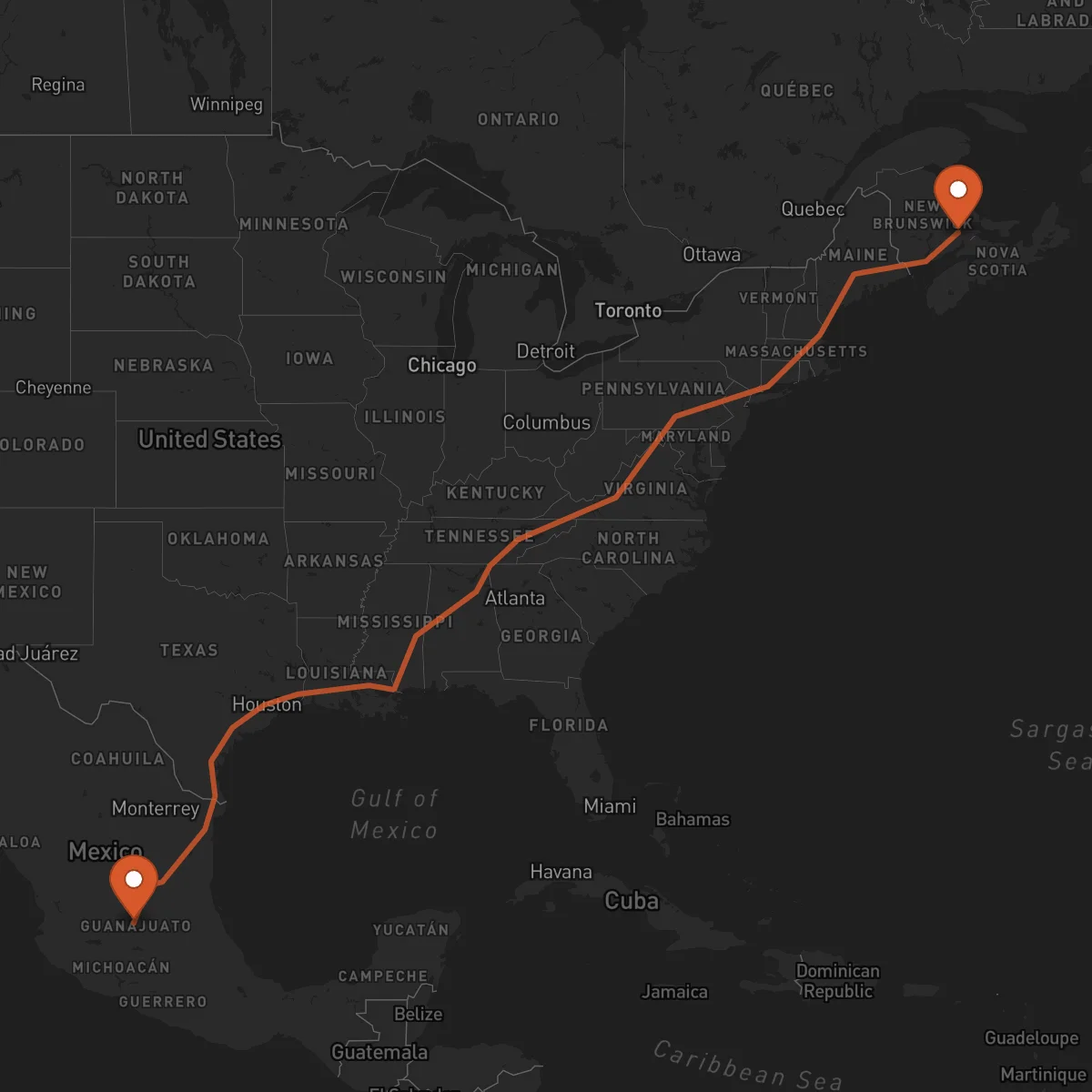
The logistics corridor connecting Guanajuato, Mexico to Moncton, Canada represents a vital trade route spanning approximately 4,318 kilometers across North America. This cross-border corridor serves as a crucial link between Mexico's industrial heartland and Canada's Atlantic gateway, facilitating the movement of diverse cargo types through a complex network of transportation infrastructure. The route traverses multiple states and provinces, crossing international borders and connecting major economic regions along the way.
The corridor's strategic importance lies in its ability to connect Mexico's manufacturing powerhouse with Canada's maritime ports and distribution centers. Guanajuato, located in the central highlands of Mexico, serves as a major industrial hub, while Moncton functions as a key logistics center in Atlantic Canada. This route enables businesses to leverage the manufacturing capabilities of Mexico while accessing Canadian markets and international shipping through the Port of Halifax.
Key industries utilizing this corridor include automotive manufacturing, electronics, aerospace components, and consumer goods. The route primarily follows major highways such as Mexico's Federal Highway 45, which connects to the United States through Laredo, then continues through the U.S. Interstate system before entering Canada via New Brunswick. Control Terrestre specializes in managing the complexities of this cross-border operation, ensuring seamless freight movement through customs clearance, documentation compliance, and temperature-controlled transportation when required for sensitive cargo.
Services for this Route
Available services for the corridor Guanajuato - Moncton
 Origin
Guanajuato
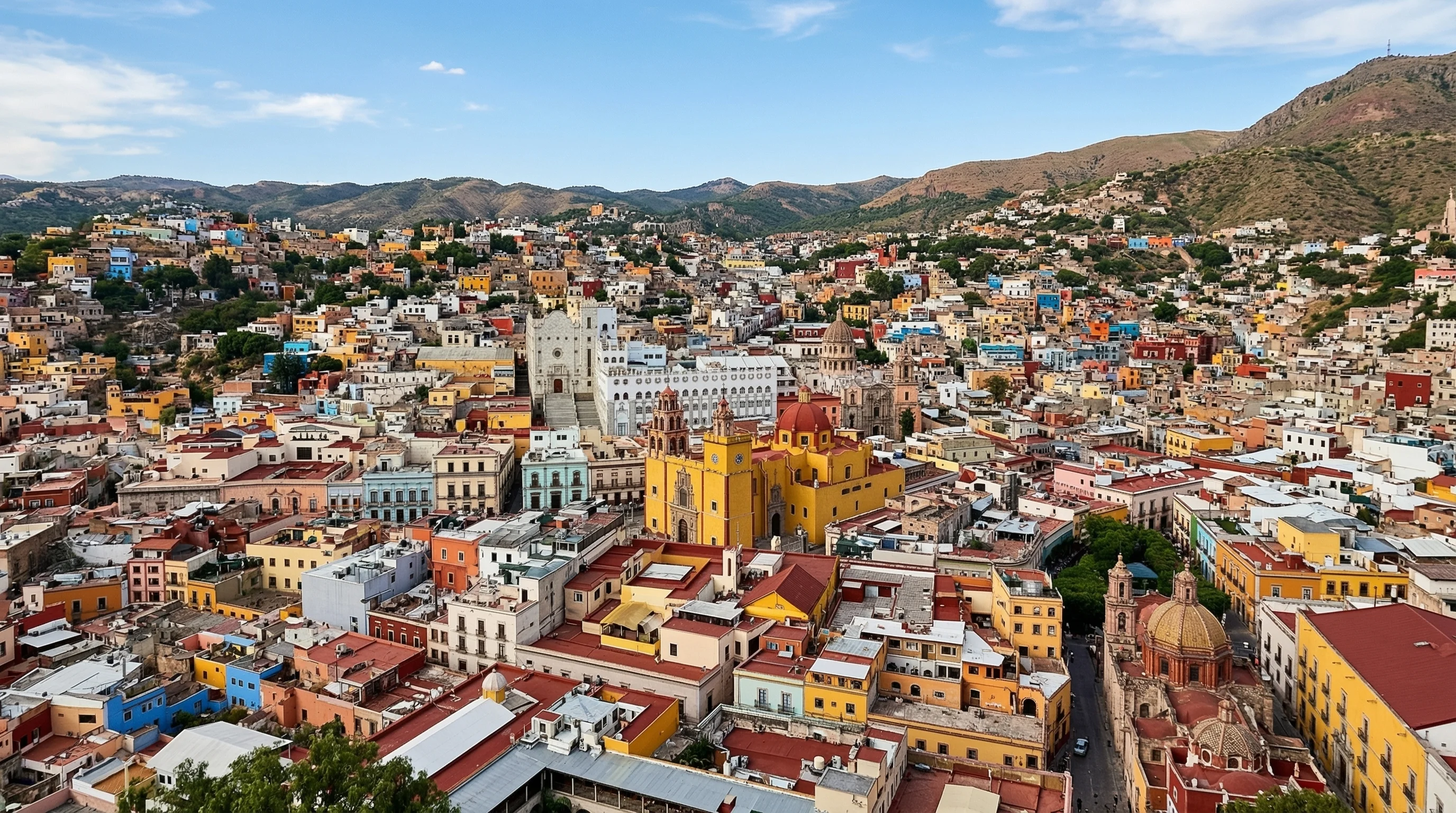
Guanajuato, located in central Mexico, stands as one of the country's most important industrial and logistics centers. The state benefits from its strategic position within Mexico's Bajío region, known as the country's industrial heartland. Guanajuato's capital city serves as a major manufacturing hub, particularly for automotive production, with companies like General Motors, Honda, and Mazda operating significant facilities in the area. The region's economic strength is further enhanced by its proximity to other industrial states such as Querétaro, San Luis Potosí, and Jalisco.
The transportation infrastructure in Guanajuato is well-developed, featuring extensive highway networks including Federal Highway 45, which connects the state to major border crossings. The state also benefits from rail connections through Ferromex and Kansas City Southern de México, providing intermodal transportation options. Guanajuato's industrial parks are equipped with modern logistics facilities, and the region's skilled workforce supports advanced manufacturing operations. The state's commitment to industrial development and its strategic location make it an ideal origin point for cross-border freight movements to North American destinations.
 Destination
Moncton
Moncton, located in New Brunswick, Canada, serves as a strategic logistics hub for Atlantic Canada. The city's position at the geographic center of the Maritimes makes it a natural distribution point for goods moving throughout the region. Moncton's transportation infrastructure is exceptional, featuring the Trans-Canada Highway, multiple rail connections through CN Rail, and the Greater Moncton Roméo LeBlanc International Airport. The city is also home to the Moncton Terminal, a major intermodal facility that connects road, rail, and air transportation modes.
The economic landscape of Moncton is diverse, with strong presence in distribution and logistics, advanced manufacturing, and technology sectors. The city's designation as a logistics center is reinforced by its role in supporting the Port of Halifax, located approximately 260 kilometers away. Moncton's bilingual workforce and business-friendly environment have attracted numerous distribution centers and warehouses, making it a key node in Canada's supply chain network. The region's cold climate also creates demand for specialized transportation services, particularly for temperature-sensitive goods moving through the corridor from Mexico.










