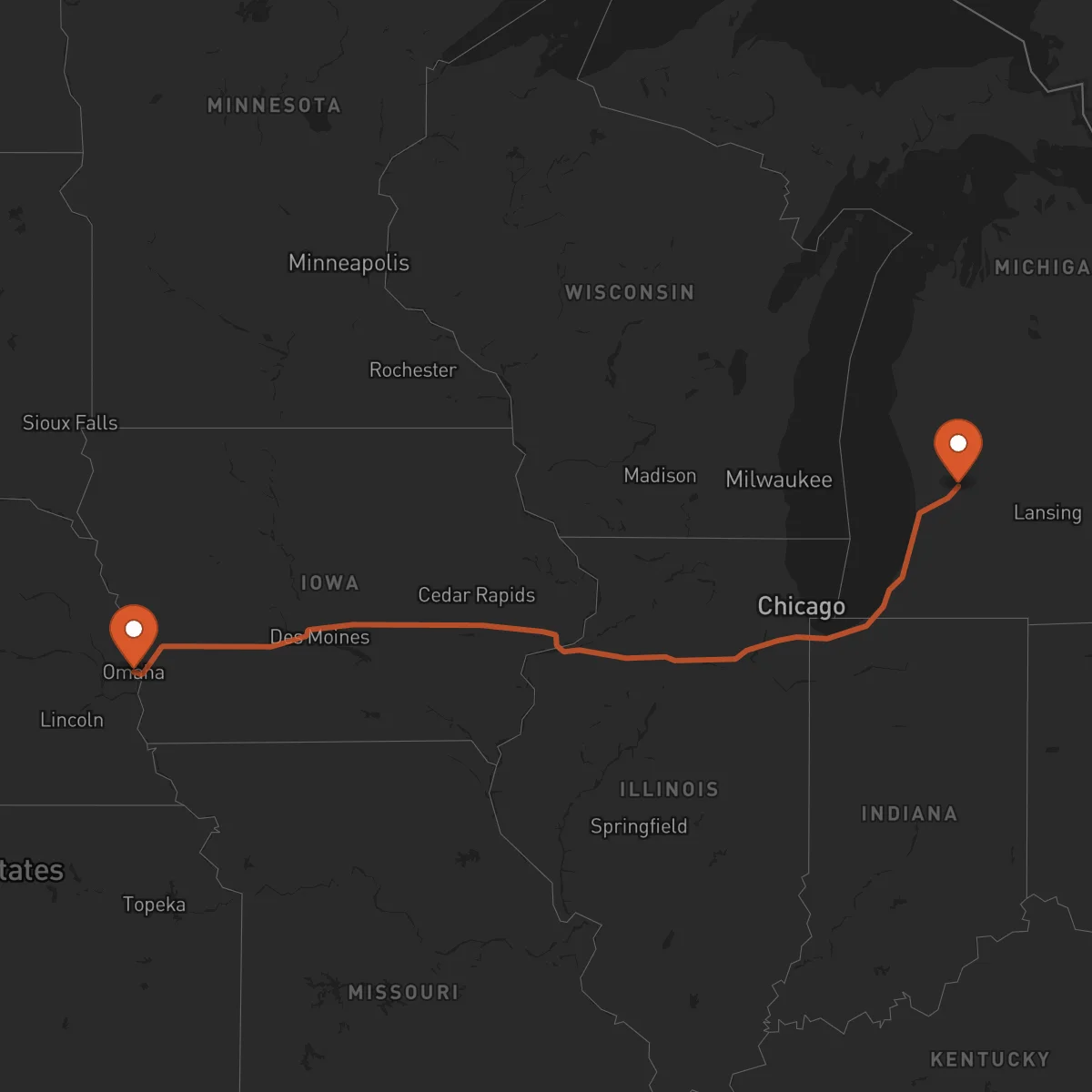
Grand Rapids to Omaha
Omaha → Grand RapidsFTL freight transportation service between Grand Rapids and Omaha. Reliable logistics solutions for your business.
Route Description
Everything you need to know about the corridor Grand Rapids - Omaha
The logistics corridor connecting Grand Rapids, Michigan to Omaha, Nebraska represents a vital freight transportation route across the American Midwest. Spanning approximately 867 kilometers, this domestic corridor links two important industrial and commercial centers, facilitating the movement of goods between Michigan's western region and Nebraska's eastern hub. This route traverses key states including Michigan, Indiana, Illinois, and Iowa, crossing through major transportation networks that support the region's robust economic activity.
The corridor serves as a crucial link between diverse economic regions, connecting Michigan's manufacturing and furniture industries with Nebraska's agricultural and financial sectors. Grand Rapids, known as the "Furniture City," and Omaha, recognized for its insurance and agricultural industries, create complementary economic activities that drive freight demand along this route. The corridor passes through major metropolitan areas and agricultural regions, supporting both industrial and consumer goods transportation needs.
Control Terrestre provides comprehensive FTL (Full Truckload) transportation services along this corridor, leveraging our extensive network of certified carriers and strategic partnerships. Our specialized equipment options, including dry vans, refrigerated units, and flatbed trailers, ensure we can accommodate various cargo types. With our commitment to safety, efficiency, and reliability, we facilitate seamless freight movement between these key Midwest locations, supporting our clients' supply chain requirements with professional transportation solutions.
Services for this Route
Available services for the corridor Grand Rapids - Omaha
 Origin
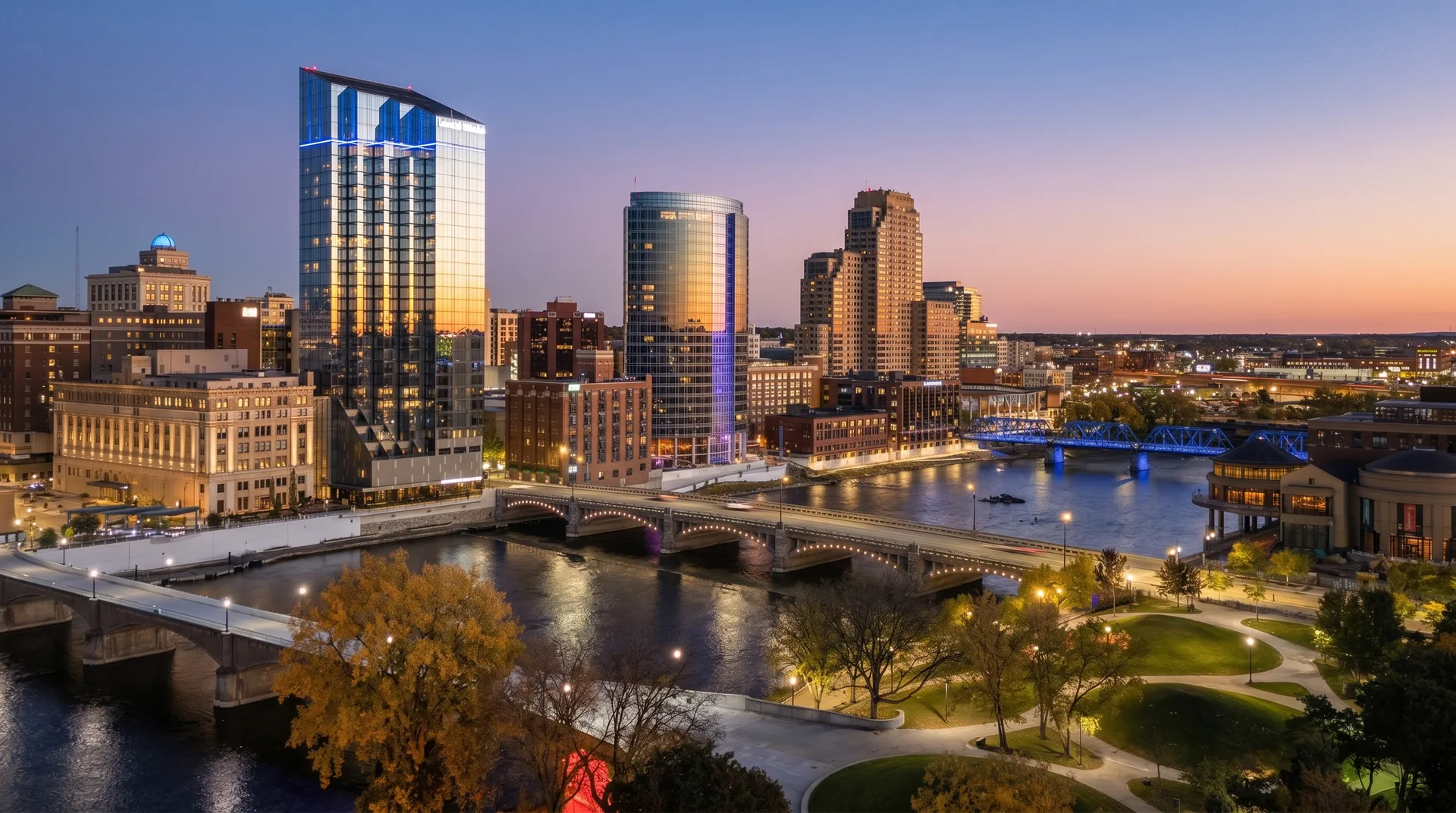
Grand Rapids
Grand Rapids, Michigan serves as a strategic logistics hub in the Midwest, positioned advantageously for freight distribution throughout the Great Lakes region. The city's location provides direct access to major transportation routes, including I-96 and I-196, connecting it to Detroit, Chicago, and other key markets. Grand Rapids benefits from its proximity to Lake Michigan ports and the Gerald R. Ford International Airport, creating multimodal transportation options for businesses. The region's robust infrastructure supports efficient freight movement and distribution operations.
The economic landscape of Grand Rapids is diverse, with strong representation in office furniture manufacturing, automotive parts, medical devices, and food processing industries. The city is famously known as the "Furniture City" due to its concentration of office furniture manufacturers. Additionally, the area hosts a growing healthcare sector, craft beverage industry, and technology companies. These industries generate consistent freight transportation demand, requiring reliable logistics solutions for raw materials inbound and finished products outbound.
 Destination
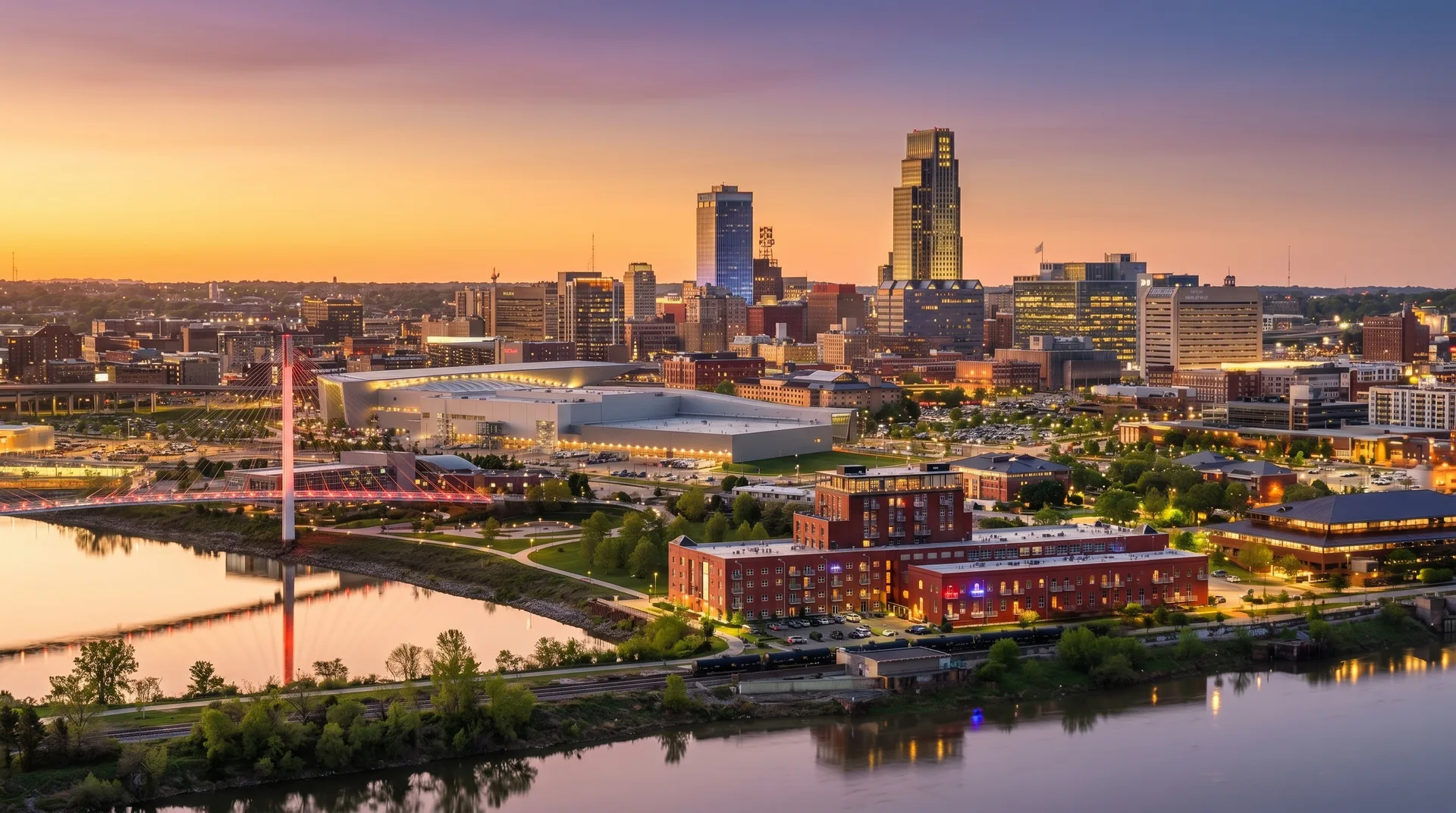
Omaha
Omaha, Nebraska stands as a strategic logistics center in the central United States, offering exceptional freight transportation advantages due to its central location. The city serves as a major transportation hub with extensive rail networks operated by Union Pacific and BNSF, complemented by interstate highway access through I-80, I-29, and I-680. Eppley Airfield provides air cargo capabilities, while the Missouri River offers potential for barge transportation, creating a comprehensive multimodal infrastructure that supports diverse freight needs.
The Omaha economy is characterized by its strength in insurance, finance, agriculture, and food processing sectors. The city hosts the headquarters of several Fortune 500 companies, particularly in the insurance industry, and serves as a major center for agribusiness operations. Omaha's strategic position in the Corn Belt and its role as a financial center for agricultural commodities create substantial freight transportation demand. The presence of major food processing facilities and distribution centers further amplifies the need for reliable FTL transportation services connecting Omaha to other major markets.










