Fresno to Madison
Madison → FresnoFTL freight transportation service between Fresno and Madison. Reliable logistics solutions for your business.
Route Description
Everything you need to know about the corridor Fresno - Madison
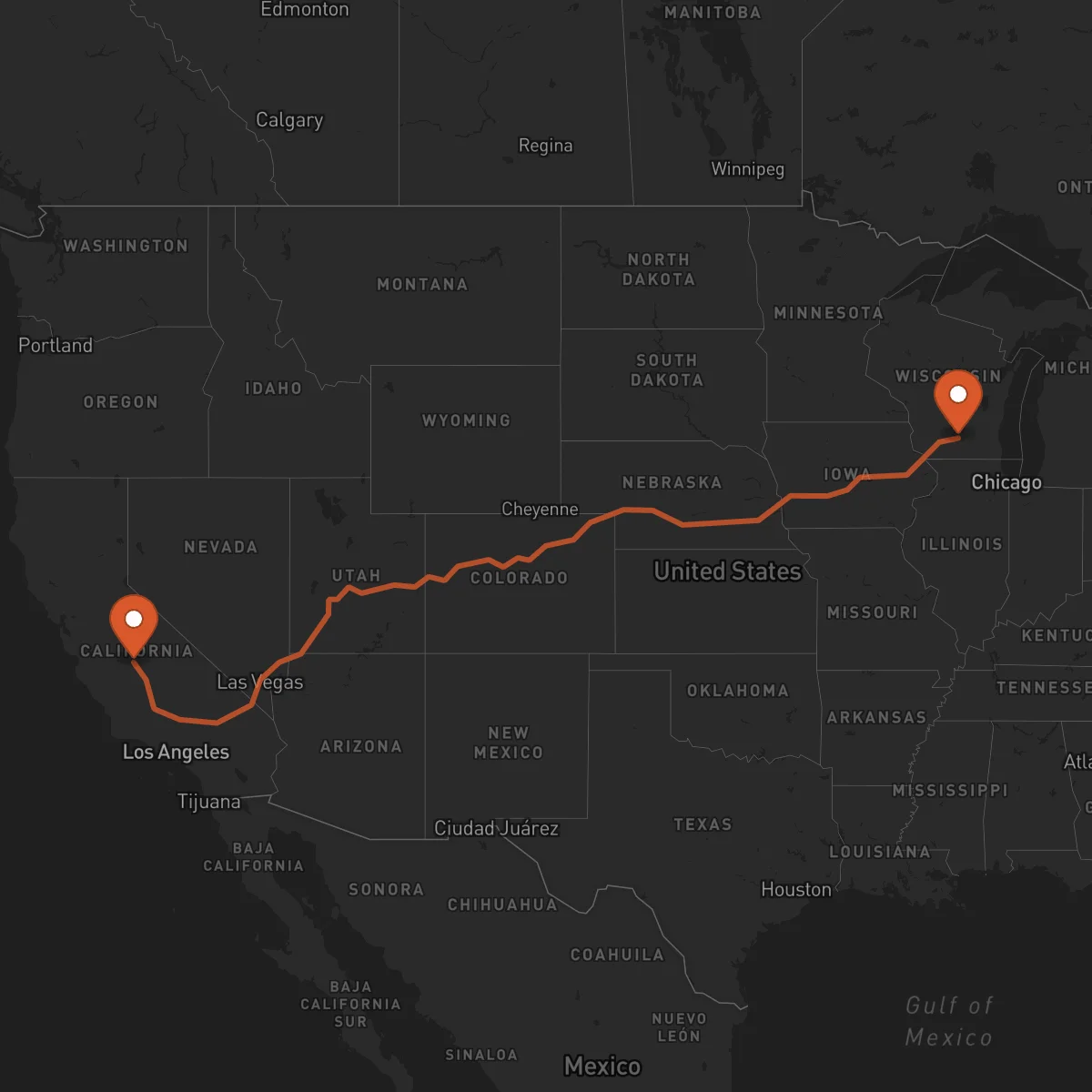
The logistics corridor connecting Fresno, California to Madison, Wisconsin represents one of the most important freight transportation routes in the United States, spanning approximately 2,670 kilometers across the country's heartland. This corridor links the agricultural and technological powerhouse of California's Central Valley with the industrial and educational hub of Wisconsin, creating a vital supply chain connection that supports numerous economic sectors.
The route traverses diverse landscapes and crosses multiple states, including California, Nevada, Utah, Wyoming, Nebraska, Iowa, Illinois, and Wisconsin. This transcontinental journey connects the Pacific Coast's agricultural abundance with the manufacturing and distribution centers of the Midwest, facilitating the movement of goods between two of America's most productive regions.
Major industries utilizing this corridor include agriculture and food processing, advanced manufacturing, technology and electronics, automotive components, and consumer goods distribution. The route serves as a critical link for California's agricultural exports, including fresh produce, nuts, and dairy products, as well as manufactured goods from both regions' industrial bases.
Control Terrestre provides comprehensive FTL (Full Truckload) freight transportation services along this corridor, offering dedicated solutions for companies requiring reliable, direct transportation between Fresno and Madison. Our specialized carriers and strategic partnerships ensure efficient, secure freight movement across this extensive route, supporting your supply chain needs with professional service and extensive coverage throughout North America.
Services for this Route
Available services for the corridor Fresno - Madison
 Origin
Fresno
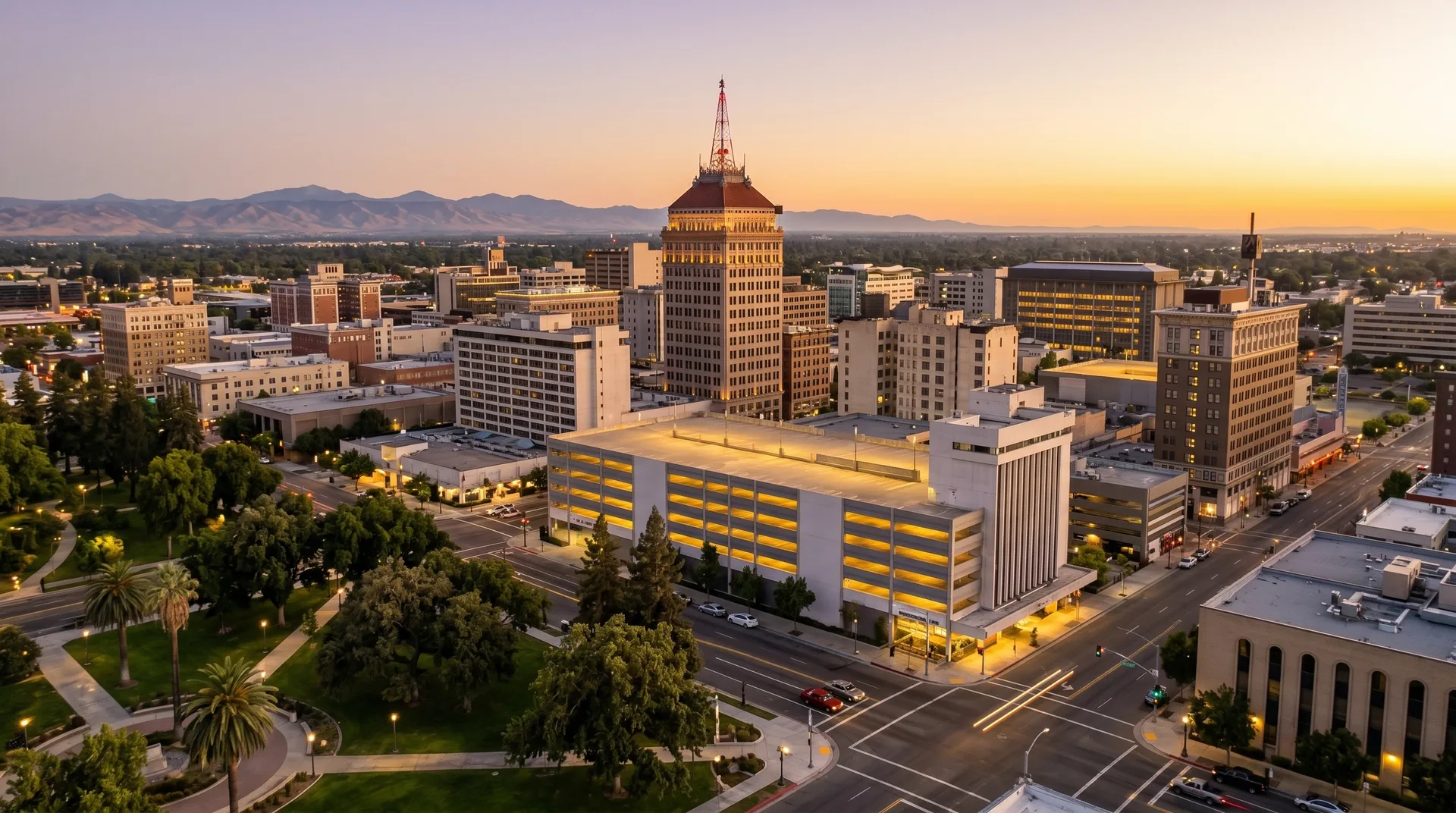
Fresno, located in California's Central Valley, serves as a strategic logistics hub for the entire West Coast. The city benefits from its proximity to major agricultural regions and its position as a gateway to international trade through nearby ports and airports. Fresno's economy is anchored in agriculture, food processing, and increasingly in technology and advanced manufacturing sectors. The region produces a significant portion of the nation's fruits, vegetables, and nuts, making it a critical origin point for food supply chains.
The city boasts excellent transportation infrastructure, including direct access to Interstate 5 and State Route 99, two of California's most important north-south freight corridors. Fresno Yosemite International Airport provides air cargo capabilities, while the Burlington Northern Santa Fe Railway offers intermodal freight services. The Port of Oakland, approximately 240 kilometers west, provides ocean freight connections for international trade, making Fresno an ideal origin point for comprehensive logistics operations.
 Destination
Madison
Madison, Wisconsin, strategically positioned in the Upper Midwest, serves as a vital logistics and economic center for the Great Lakes region. The city's location at the intersection of major transportation networks makes it an ideal destination for freight distribution throughout the Midwest and beyond. Madison's economy is diverse, with strong presence in manufacturing, healthcare, education, and technology sectors, anchored by the University of Wisconsin-Madison and numerous research institutions.
The city benefits from excellent transportation infrastructure, including direct access to Interstate 90/94, a major east-west freight corridor connecting the Great Lakes to the Pacific Northwest. Dane County Regional Airport provides air cargo services, while the Canadian National Railway and Union Pacific Railroad offer extensive rail freight connections. Madison's proximity to Chicago, approximately 150 miles southeast, provides additional access to one of North America's largest freight and distribution hubs, enhancing its strategic importance in regional logistics networks.










