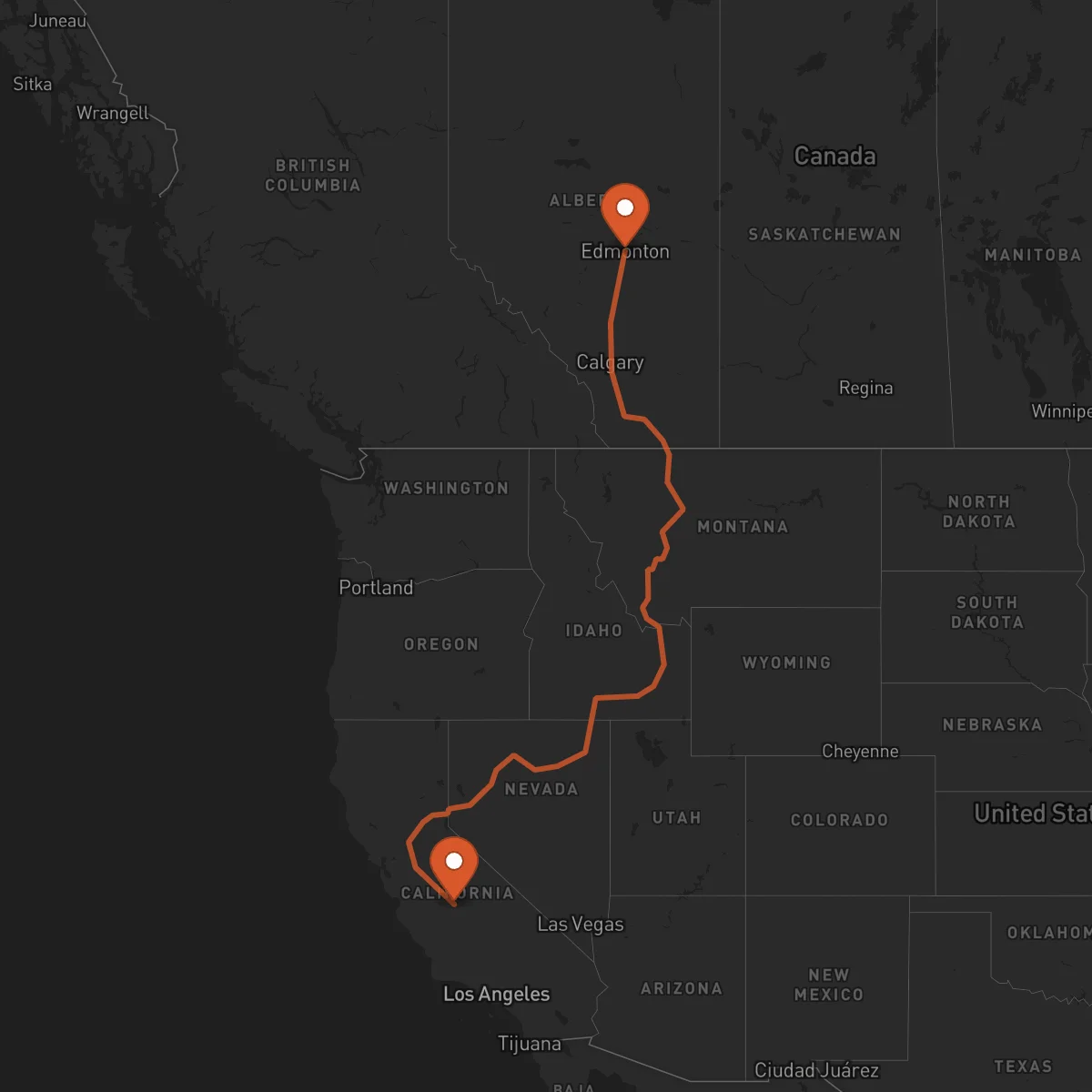
Fresno to Edmonton
Edmonton → FresnoFTL freight transportation service between Fresno and Edmonton. Reliable logistics solutions for your business.
Route Description
Everything you need to know about the corridor Fresno - Edmonton
The logistics corridor connecting Fresno, California to Edmonton, Alberta represents a vital cross-border transportation route spanning approximately 1,931 kilometers. This corridor links the agricultural heartland of California's Central Valley with Alberta's industrial and energy hub, facilitating the movement of diverse cargo between the United States and Canada. The route traverses major transportation arteries including Interstate 5 North through California and Oregon, connecting to Interstate 84 East through Idaho and Utah, before transitioning to Interstate 15 North through Montana and continuing to Alberta via Highway 2. This strategic pathway serves as a critical link for businesses operating across the North American Free Trade Agreement (USMCA) region.
The economic significance of this corridor cannot be overstated. Fresno serves as a major agricultural processing and distribution center, while Edmonton functions as a key node in Canada's energy sector and northern logistics network. The corridor facilitates the exchange of agricultural products, industrial equipment, manufactured goods, and energy-related materials between these two important economic regions. Key industries utilizing this route include agriculture and food processing, oil and gas equipment, construction materials, automotive parts, and general manufacturing.
Transportation infrastructure along this corridor is robust, featuring multiple interstate highways designed for efficient freight movement. The route includes passage through several major border crossing points, with the most commonly used being the Coutts/Sweetgrass crossing in Montana/Alberta, which offers 24/7 service and dedicated FAST lanes for expedited customs clearance. Control Terrestre's expertise in cross-border operations ensures seamless navigation through customs procedures, compliance with both US and Canadian regulations, and efficient coordination of all necessary documentation for freight moving between these two nations.
Our comprehensive understanding of this corridor allows us to provide reliable, full truckload (FTL) transportation services that meet the specific needs of shippers operating between Fresno and Edmonton. We leverage our network of certified carriers, our knowledge of border procedures, and our commitment to on-time delivery to ensure your cargo moves efficiently across this important North American trade route.
Services for this Route
Available services for the corridor Fresno - Edmonton
 Origin
Fresno
Fresno, California serves as a strategic logistics hub in the heart of the San Joaquin Valley, one of the most productive agricultural regions in the world. Located approximately 320 kilometers north of Los Angeles and 270 kilometers southeast of San Francisco, Fresno provides excellent connectivity to major West Coast markets. The city's logistics infrastructure includes the Fresno Yosemite International Airport, extensive rail connections through Union Pacific and BNSF rail lines, and direct access to Interstate 5 and State Route 99. Fresno's economy is anchored by agriculture, food processing, and distribution, with the region producing over 350 commercial crops annually. The city's central location within California's Central Valley makes it an ideal origin point for freight distribution throughout the western United States and beyond.
 Destination
Edmonton, Alberta stands as a crucial logistics and distribution center in western Canada, strategically positioned approximately 350 kilometers north of Calgary and serving as the northernmost major city in North America with a metropolitan population exceeding one million. The city's logistics infrastructure is anchored by the Edmonton International Airport, extensive rail connections through Canadian National Railway, and direct access to the CANAMEX Corridor via Highway 2 and the Queen Elizabeth II Highway. Edmonton's economy is diversified across energy, manufacturing, technology, and logistics sectors, with the city serving as the primary supply hub for northern Canada and Alaska. The Port Alberta initiative has established Edmonton as a key inland port, facilitating international trade through efficient customs clearance and distribution networks that connect to all major North American markets.










