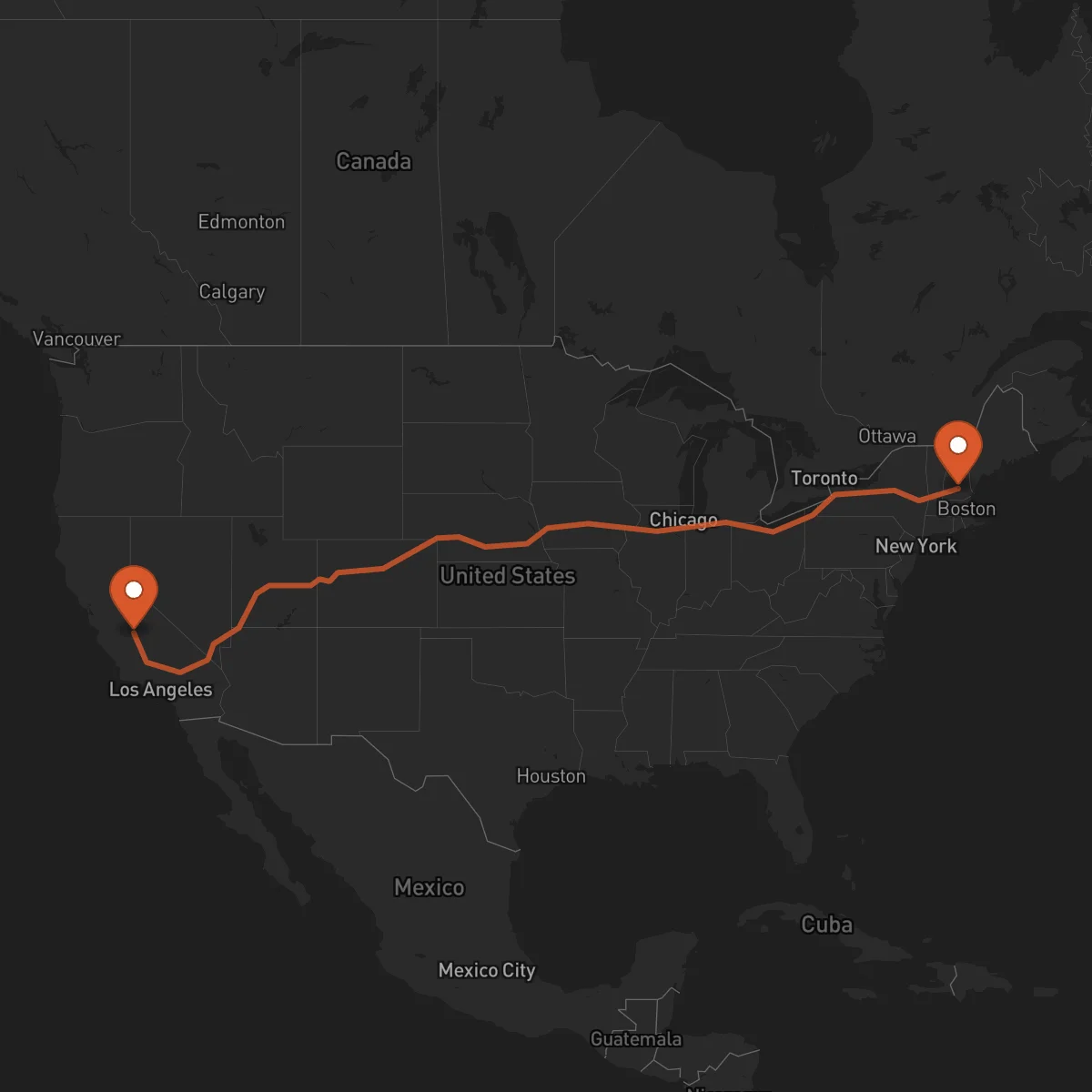
Fresno to Concord
Concord → FresnoFTL freight transportation service between Fresno and Concord. Reliable logistics solutions for your business.
Route Description
Everything you need to know about the corridor Fresno - Concord
The logistics corridor between Fresno, California, and Concord, New Hampshire, represents one of the most extensive domestic freight routes in the United States, covering approximately 4,116 kilometers across the country's diverse geography. This transcontinental corridor connects the agricultural heartland of California's Central Valley with the historic industrial and governmental center of New Hampshire, traversing multiple states and crossing diverse terrain from coastal ranges to the Appalachian Mountains.
The economic significance of this corridor is substantial, linking two regions with complementary industrial profiles. Fresno serves as a critical agricultural processing and distribution hub, while Concord functions as a key center for government operations, healthcare, and advanced manufacturing. The route facilitates the movement of specialized agricultural equipment, processed foods, industrial machinery, and high-value technology products between these complementary economic zones.
Major transportation infrastructure along this corridor includes Interstate 5 north to Interstate 80 east, providing reliable connectivity through California, Nevada, Utah, Wyoming, Nebraska, Iowa, Illinois, Indiana, Ohio, Pennsylvania, New York, and finally into New Hampshire. This established route ensures consistent transit times and access to major distribution centers throughout the journey.
Control Terrestre enhances this corridor's efficiency through our specialized full truckload (FTL) services, providing dedicated equipment and experienced carriers familiar with the route's unique challenges. Our strategic partnerships with certified transportation providers ensure compliance with all regulatory requirements across multiple state jurisdictions, while our advanced tracking systems maintain visibility throughout the entire journey from California's Central Valley to New England.
Services for this Route
Available services for the corridor Fresno - Concord
 Origin
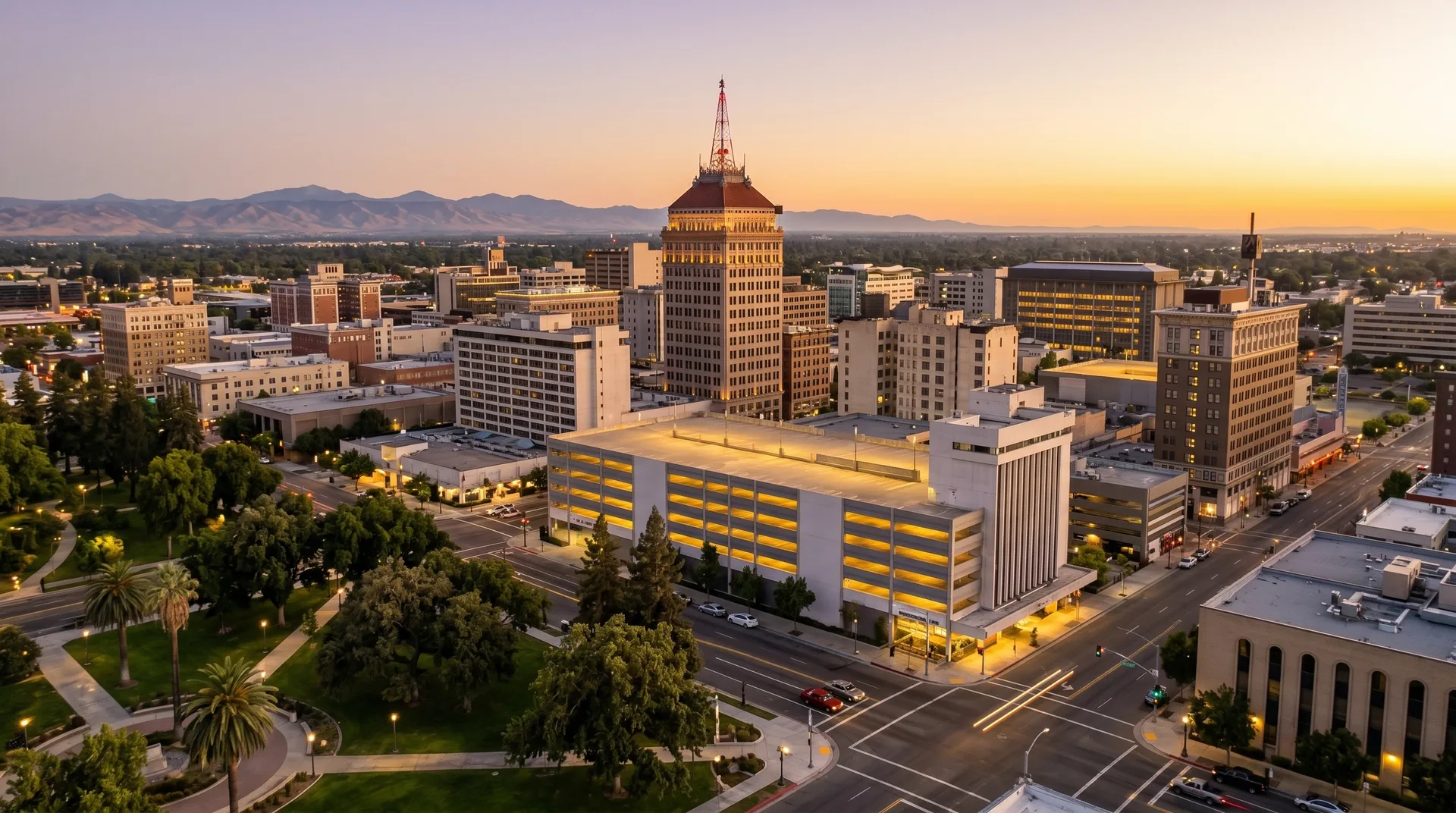
Fresno
Fresno, located in California's Central Valley, serves as a strategic logistics hub with its proximity to major agricultural production areas and excellent transportation infrastructure. The city's location provides direct access to Interstate 5 and State Route 99, two of California's most critical freight corridors. Fresno's industrial landscape includes extensive food processing facilities, agricultural equipment manufacturers, and distribution centers that support the region's $8 billion agricultural economy.
The city benefits from the Port of Oakland's proximity, approximately 200 miles west, enabling efficient intermodal connections for international trade. Fresno Yosemite International Airport provides air cargo capabilities for time-sensitive shipments, while the Burlington Northern Santa Fe (BNSF) and Union Pacific railroads offer rail freight alternatives. The region's logistics infrastructure is further enhanced by specialized facilities for handling perishable goods, including cold storage warehouses and refrigerated transportation services essential for the agricultural sector.
 Destination
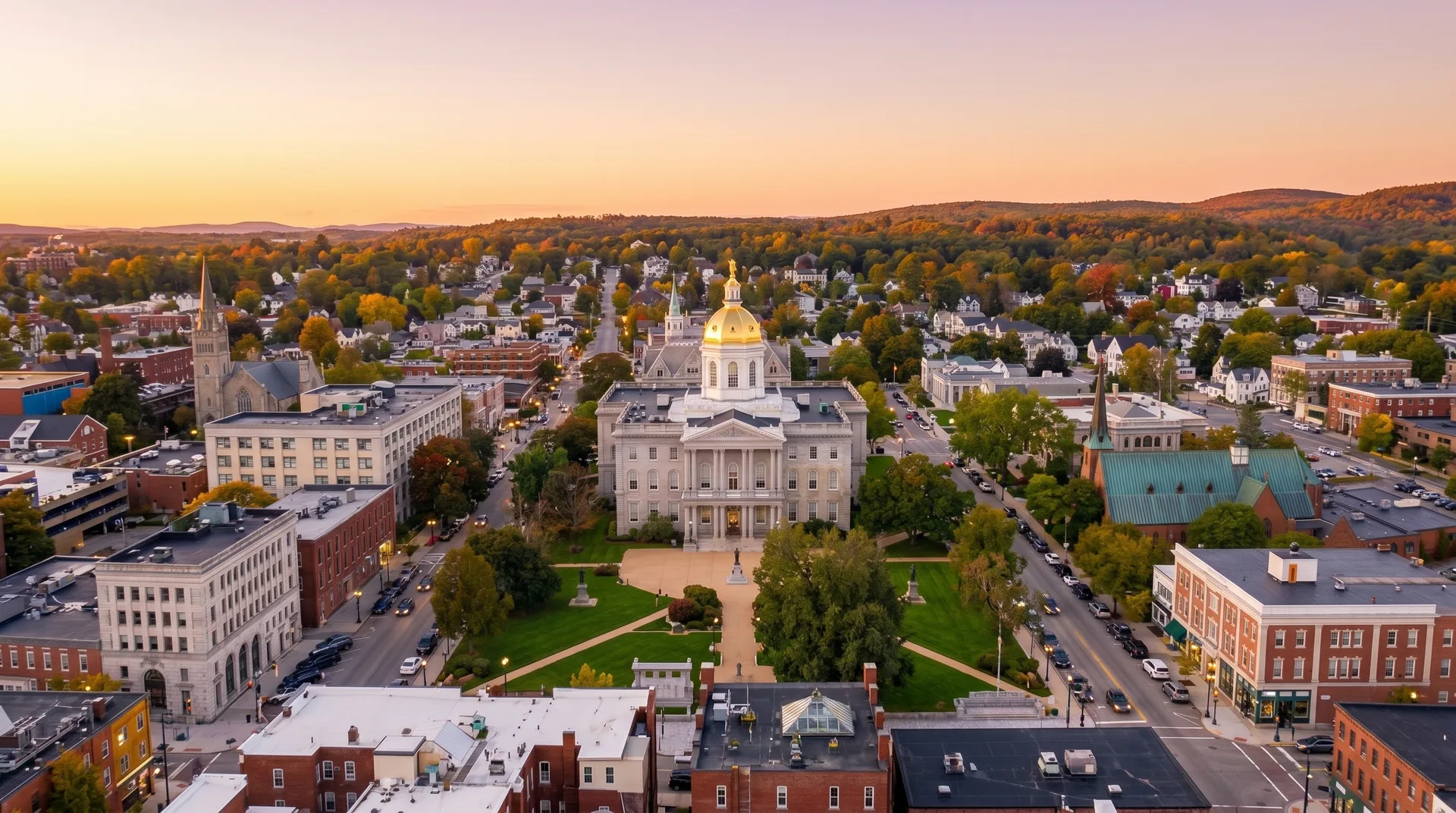
Concord
Concord, New Hampshire, functions as a strategic logistics center in New England, offering unique advantages for freight distribution in the northeastern United States. Located in the Merrimack Valley along the Merrimack River, Concord provides access to major transportation routes including Interstate 93 and Interstate 89, connecting to Boston's extensive logistics network approximately 70 miles south. The city's central New Hampshire location enables efficient distribution throughout New England and into eastern Canada.
The region's industrial base includes advanced manufacturing, healthcare technology, and government operations, creating consistent demand for specialized freight services. Concord's logistics infrastructure features modern warehousing facilities, cross-docking operations, and proximity to Manchester-Boston Regional Airport for air cargo services. The area's cold climate necessitates specialized transportation capabilities for temperature-sensitive goods, while the region's commitment to sustainable practices aligns with environmentally conscious freight solutions.










