Flores to Las Tablas
Las Tablas → FloresFTL freight transportation service between Flores and Las Tablas. Reliable logistics solutions for your business.
Route Description
Everything you need to know about the corridor Flores - Las Tablas
The corridor between Flores and Las Tablas hums with quiet purpose, a thread linking highland mist to coastal breeze. It’s not just distance—it’s the contrast of jungle canopy meeting open savanna, of ancient stone pathways beside modern fiber. Traveling it feels like moving between two breaths of the same landscape, each step a negotiation between what is rooted and what is flowing.
Economically, the corridor carries more than goods; it carries stories. Flores, with its market stalls bright with textiles and pottery, feeds into Las Tablas where cattle ranches and salt flats shape the rhythm of the day. The main industries—artisan crafts, agro-processing, and eco-tourism. They exchange not just products. products but perspectives, each end learning the other's pace.
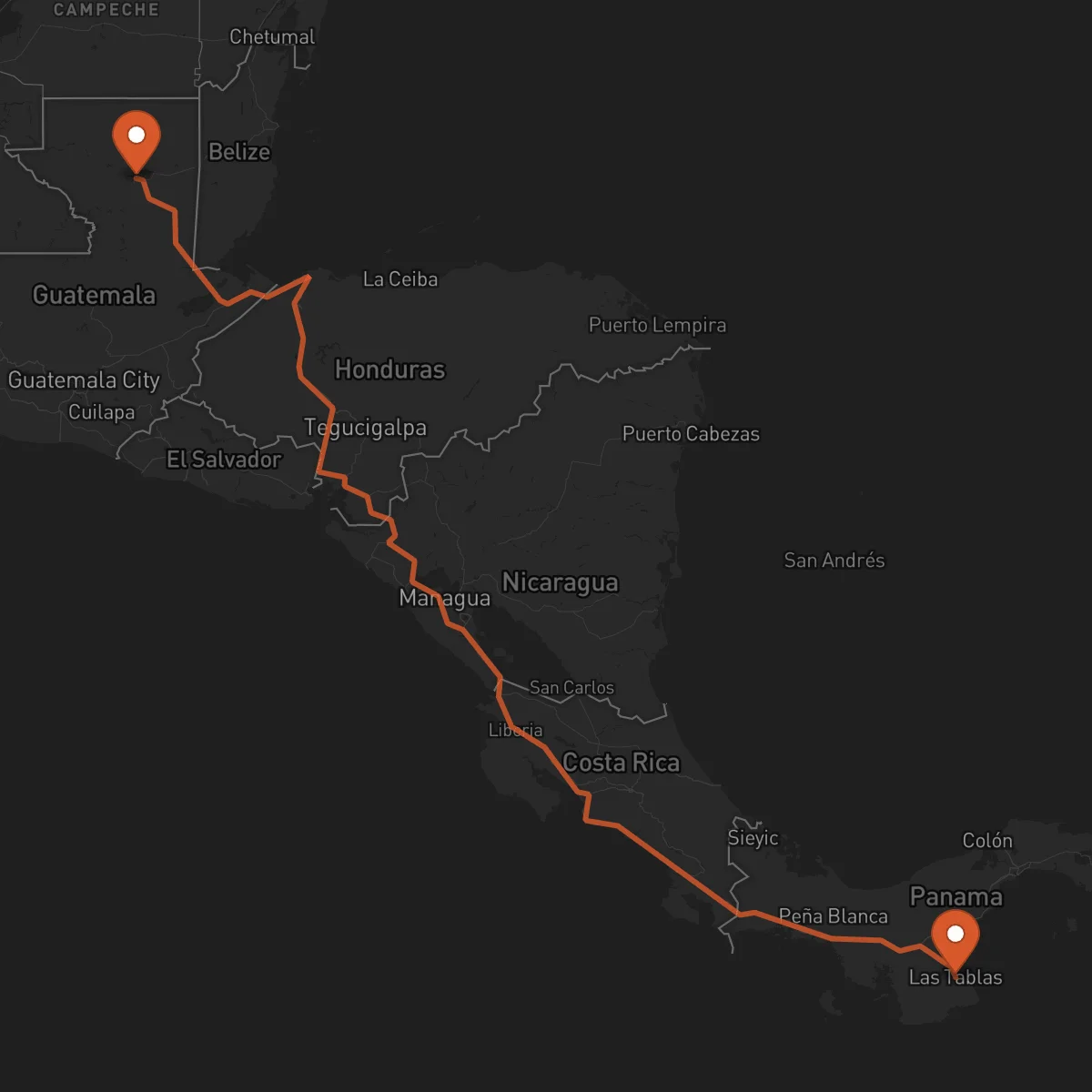
The road itself is a patchwork: the CA-13 north from Flores toward Melchor de Mencos, then the winding CA-9 east through Dolores, crossing into Mexico at El Ceibo, continuing south through Tabasco and Chiapas before the final stretch into Panama via the Interamericana. Border crossings are patient affairs—customs officers who know your face, stamps that tell of coffee beans and hand-woven hammocks passing through.
We, Control Terrestre, walk this corridor with you, not as a distant dispatcher but as a companion who notices the shift in light at noon, who remembers which bridge needs extra care after rains. We offer FTL moves that respect the rhythm of the road, ensuring your cargo arrives not just on time, but with the spirit of the journey intact.
Services for this Route
Available services for the corridor Flores - Las Tablas
 Origin
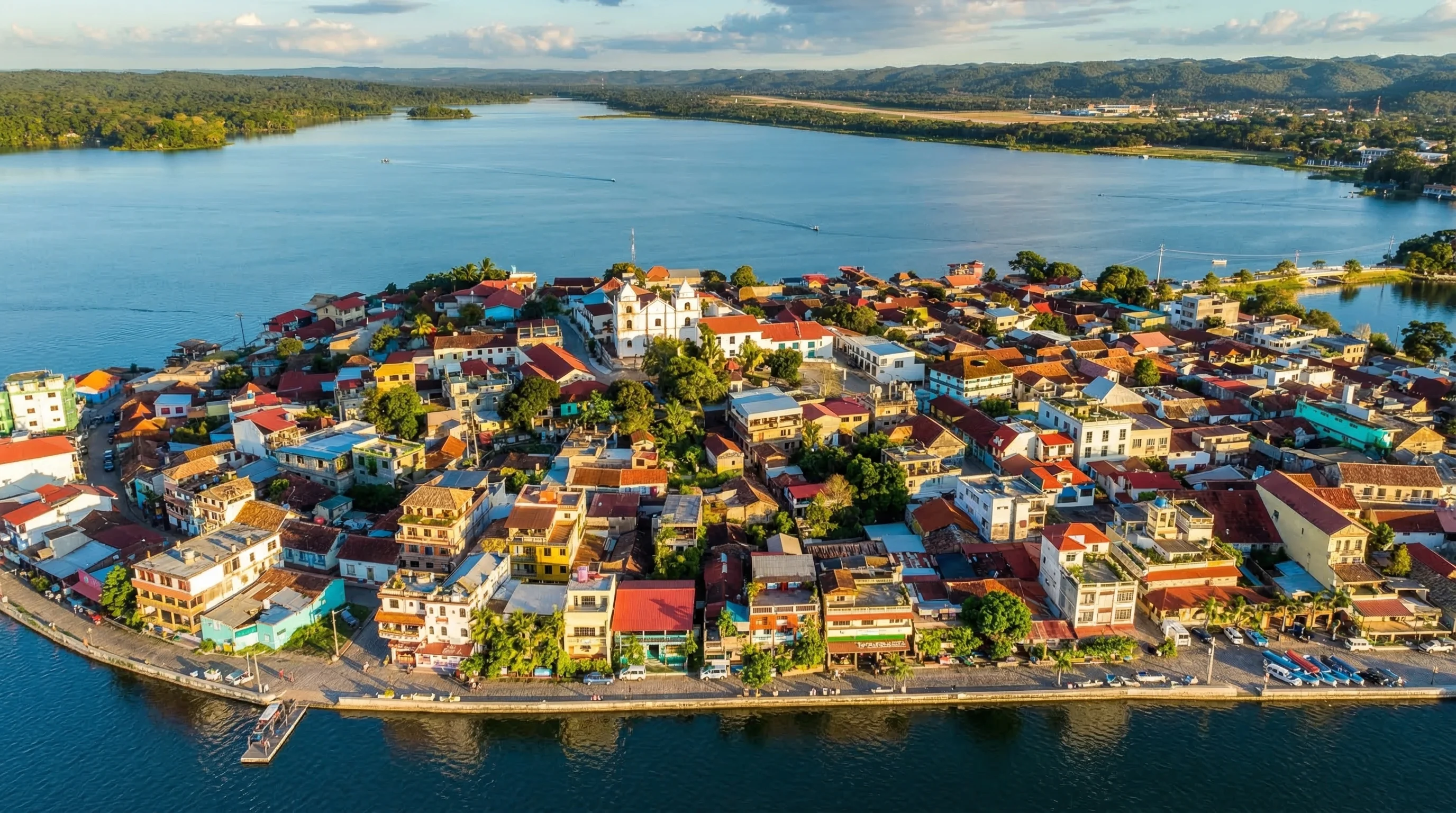
Flores sits cradled by Lake Petén Itzá, its island streets a mosaic of pastel facades and cobblestone echoes. Strategically, it’s a gateway—north to Mexico, east to Belize, south toward the heart of Guatemala. The town thrives on tourism drawn to Tikal’s shadows, yet its pulse is local: families selling tamales at dawn, artisans weaving cotton with threads of indigo and cochineal.
Main industries here are hospitality, handicrafts, and small-scale agriculture—corn, beans, and cacao grown in the fertile lake basin. Transportation infrastructure is modest but reliable: a modest airstrip for regional flights, the paved CA-13 linking to border crossings, and lanchas that skim the lake’s surface, connecting scattered villages. It’s a place where movement feels intentional, each arrival and departure a quiet ceremony.
 Destination
Las Tablas
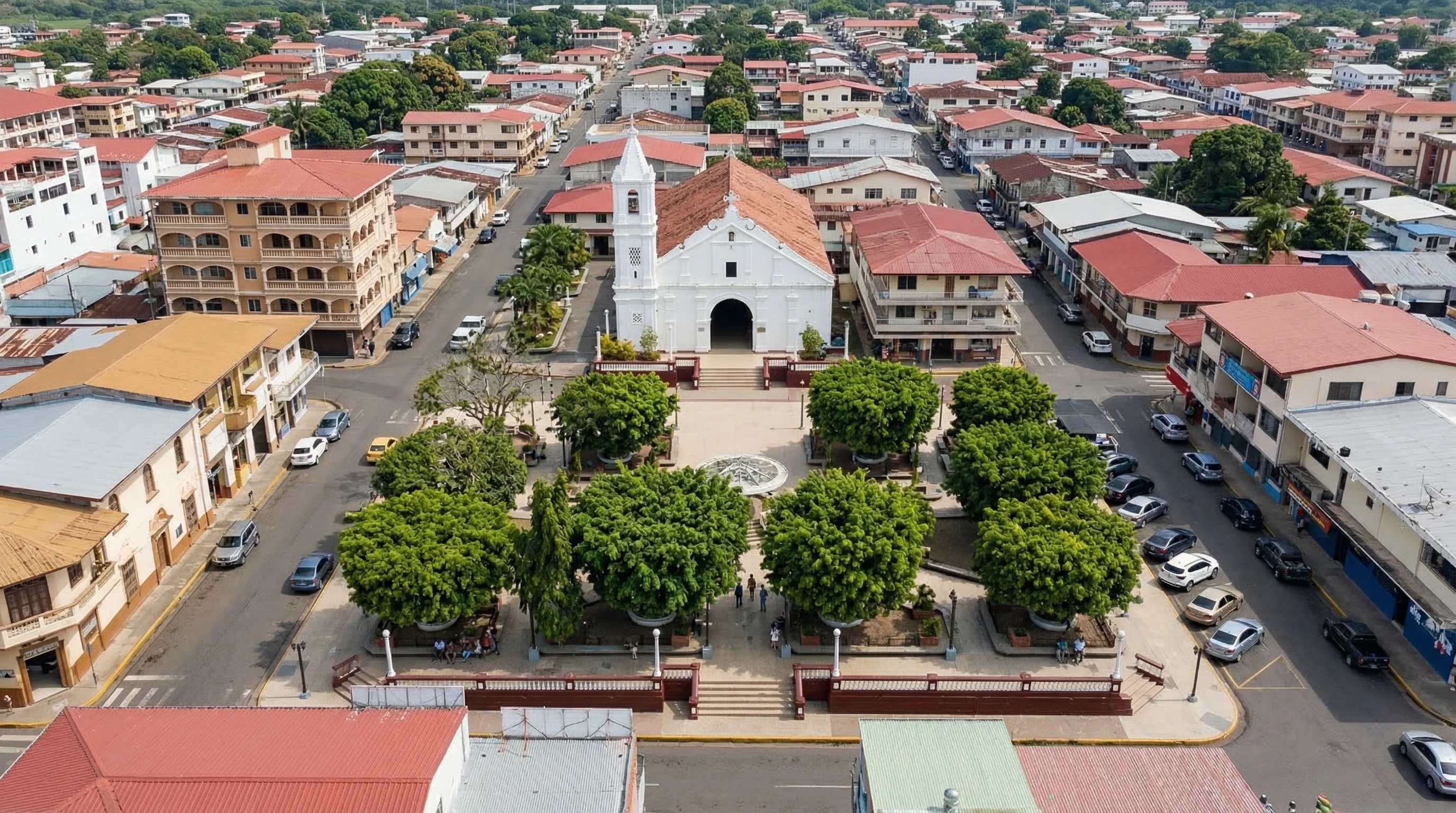
Las Tablas spreads across the Azuero Peninsula, where the sky meets the sea in a sweep of golden grass and salt-kissed wind. Its strategic value lies in its position as a cultural hub—known for folkloric festivals, cattle ranching, and proximity to both Pacific shores and inland savannas. Here, tradition isn’t performed; it’s lived, from the pollera skirts swaying in parades to the sancocho simmering in clay pots.
The economy pulses with ranching, seafood harvesting, and artisanal distillation—seco de Herrera, a sugarcane spirit that carries the taste of the earth. Infrastructure includes a regional airport handling domestic flights, the paved Pan-American Highway threading through town, and local feeder roads that reach coastal fisheries and inland haciendas. It’s a place where the road doesn’t just connect points—it weaves communities together.










