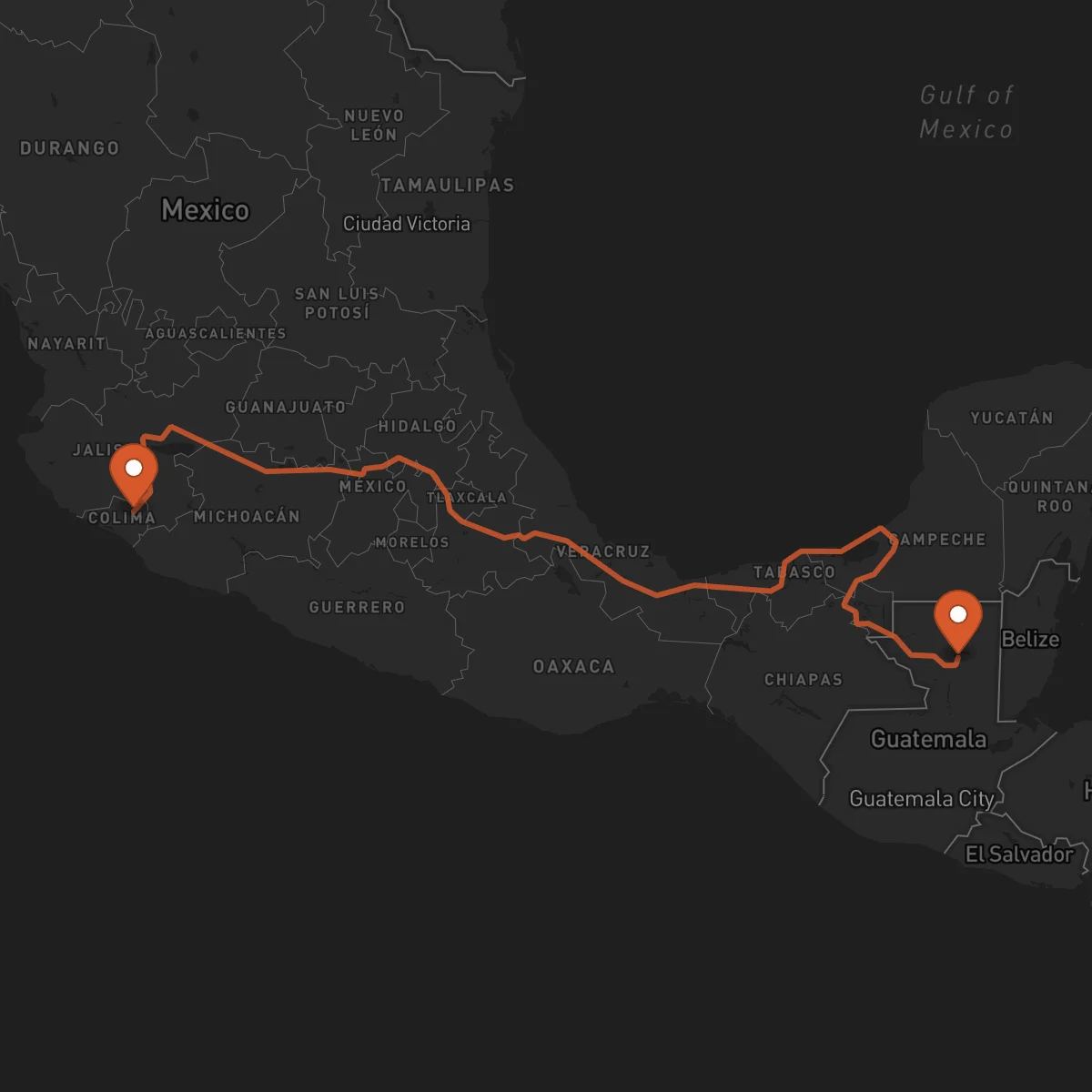
Flores to Colima
Colima → FloresFTL freight transportation service between Flores and Colima. Reliable logistics solutions for your business.
Route Description
Everything you need to know about the corridor Flores - Colima
The logistics corridor from Flores, Petén, Guatemala, to Colima, Colima, México, spans approximately 1484 km and represents a strategic cross-border artery for trade between Central America and Mexico's Pacific region. This route is essential for connecting the resource-rich areas of northern Guatemala with Mexico's agricultural and industrial heartlands, facilitating the flow of goods that support regional economies. The economic context involves Petén's abundance in agricultural products like tropical fruits and timber, alongside Colima's prominence in banana cultivation, coffee production, and manufacturing sectors. Key industries utilizing this corridor include agriculture, food processing, and logistics providers seeking efficient FTL solutions. Transportation infrastructure primarily relies on Guatemala's CA-13 highway, which transitions into Mexico's Federal Highway 200, providing a continuous paved route. Critical border crossings occur at Tecún Umán / Ciudad Hidalgo, where customs procedures are managed; Control Terrestre's providers leverage certifications such as C-TPAT and FAST to ensure compliance and streamline clearance. We facilitate operations on this corridor through our dedicated FTL services, offering door-to-door solutions that handle all logistics complexities, from scheduling to cross-border documentation, while emphasizing human-centric and environmentally responsible practices.
Flores serves as a pivotal logistics origin due to its location in Petén, Guatemala, near the Mexico border, acting as a gateway for exports from northern Guatemala. Strategically, it provides access to both overland routes and nearby ports like Puerto Barrios for multimodal connections. The main industries here revolve around tourism—driven by nearby Mayan ruins like Tikal—alongside agriculture (citrus, bananas, and palm oil) and timber extraction. Available transportation infrastructure includes Highway CA-13, which directly links to the border, and local road networks that support efficient cargo movement to and from Flores, making it an ideal launch point for FTL freight to Mexico.
Colima, the capital of Colima state in México, is a strategic destination with its coastal position and proximity to the Port of Manzanillo, a major hub for international trade. The city's economy is bolstered by agriculture (bananas, coconut, and coffee), food processing, and light manufacturing industries. Transportation infrastructure is robust, featuring Federal Highways 200 and 4, which connect Colima to interior Mexico and border regions, enabling seamless distribution. This network supports high-volume FTL operations, positioning Colima as a key endpoint for cross-border freight from Central America, with efficient links to domestic and export markets.
Services for this Route
Available services for the corridor Flores - Colima
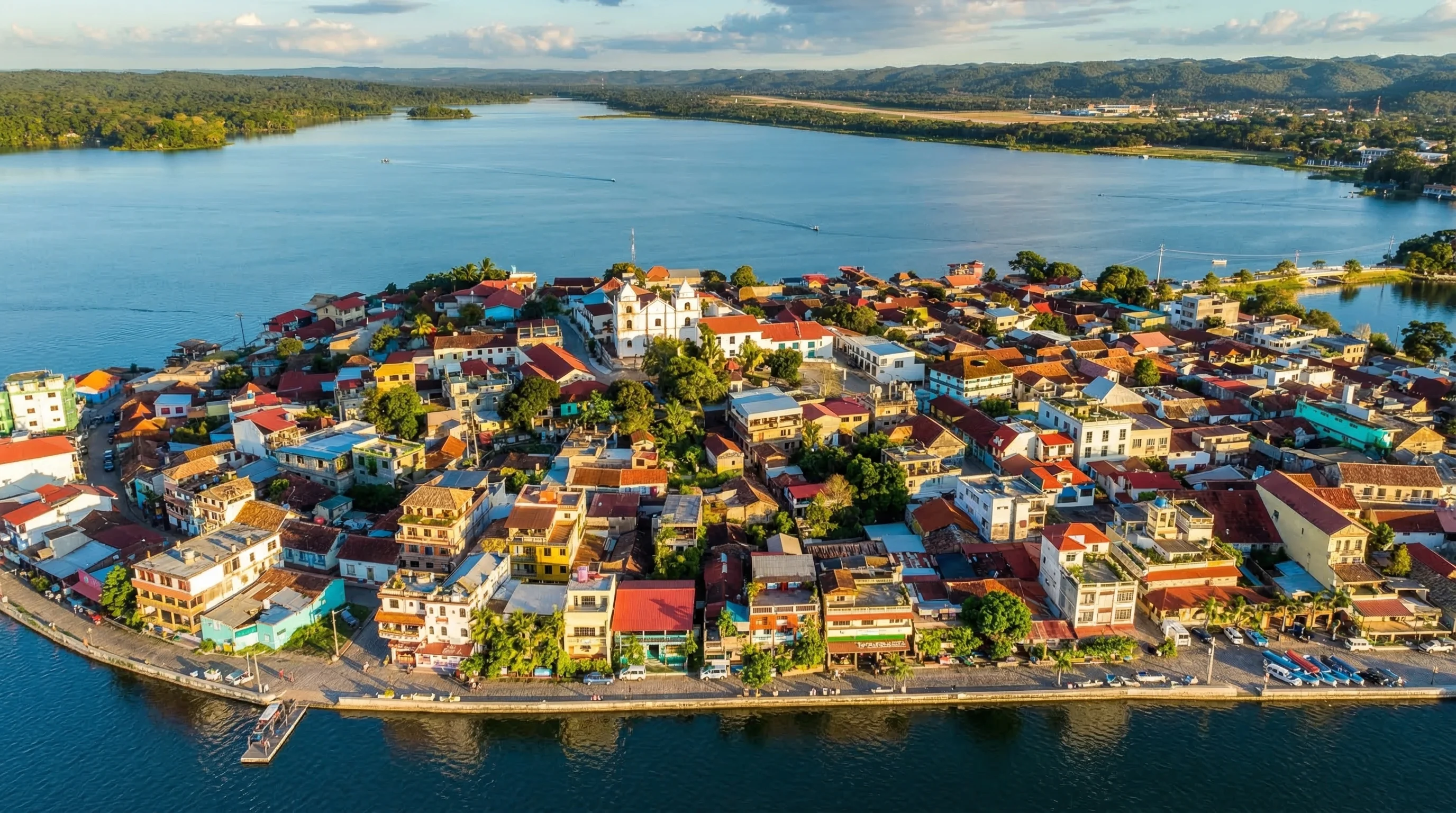 Origin
Flores, located in the Petén department of Guatemala, is a strategic logistics hub due to its northern position adjacent to the Mexico border, facilitating trade flows into Central America. The region's economy is driven by tourism—capitalizing on attractions like Tikal—alongside agriculture (citrus fruits, bananas, and palm oil) and timber industries. Transportation infrastructure includes the CA-13 highway, which provides a direct route to the Tecún Umán border crossing, and connections to the Port of Puerto Barrios for potential intermodal options. This setup ensures that Flores is well-equipped as an origin point for full truckload freight, with reliable road access for moving goods southward into Mexico.
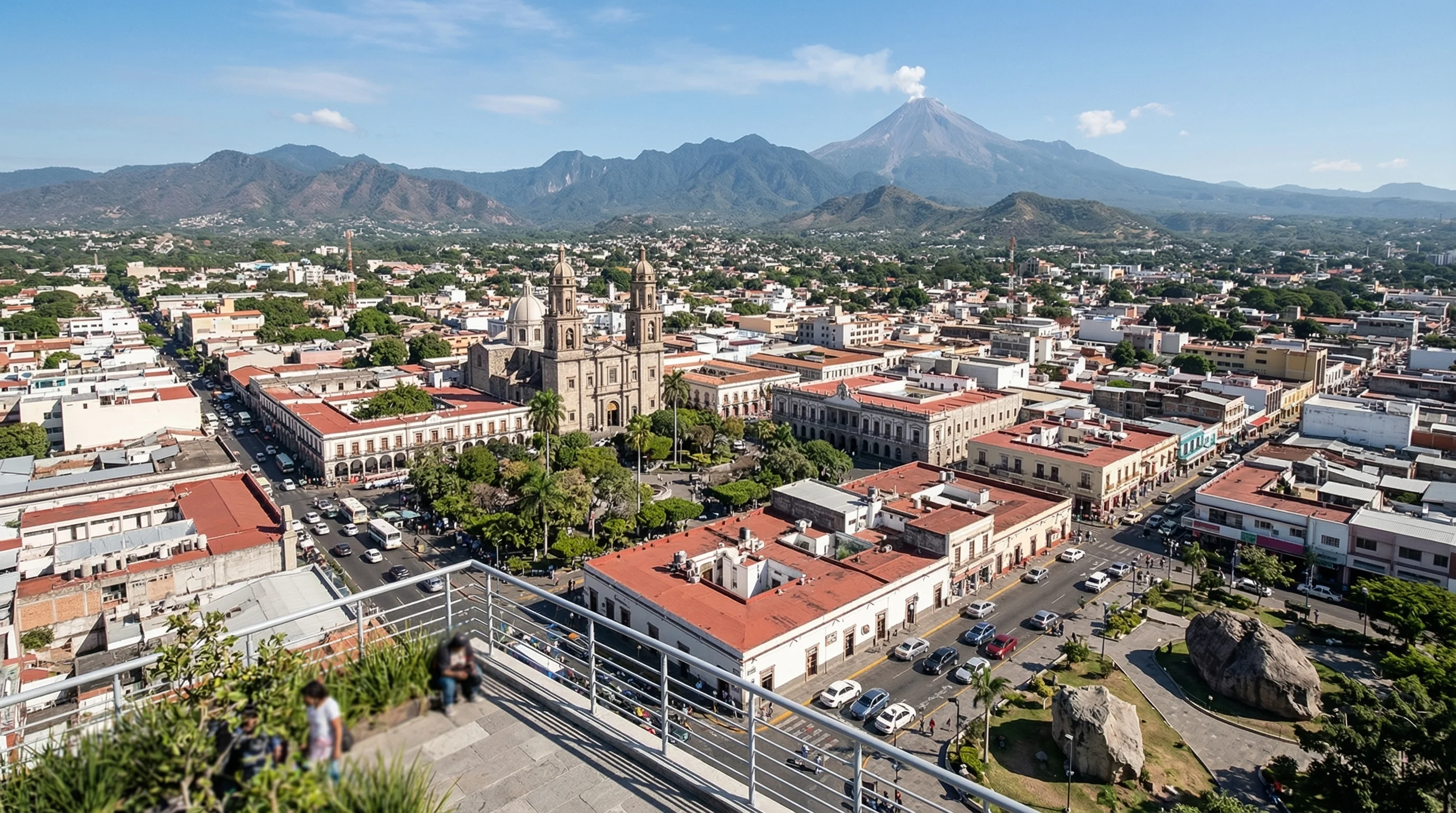 Destination
Colima, the capital city of Colima state in México, offers strategic advantages as a logistics destination with its Pacific coastal location and access to the Port of Manzanillo, one of Mexico's busiest ports. Key industries include agriculture (bananas, coffee, and coconut), food processing, and manufacturing, which generate substantial freight demand. The city is served by Federal Highways 200 and 4, creating a strong road network that links to the interior and border areas, supporting efficient FTL transportation. This infrastructure makes Colima a vital node for receiving cross-border shipments from Guatemala and distributing them throughout Mexico, enhancing supply chain connectivity.










