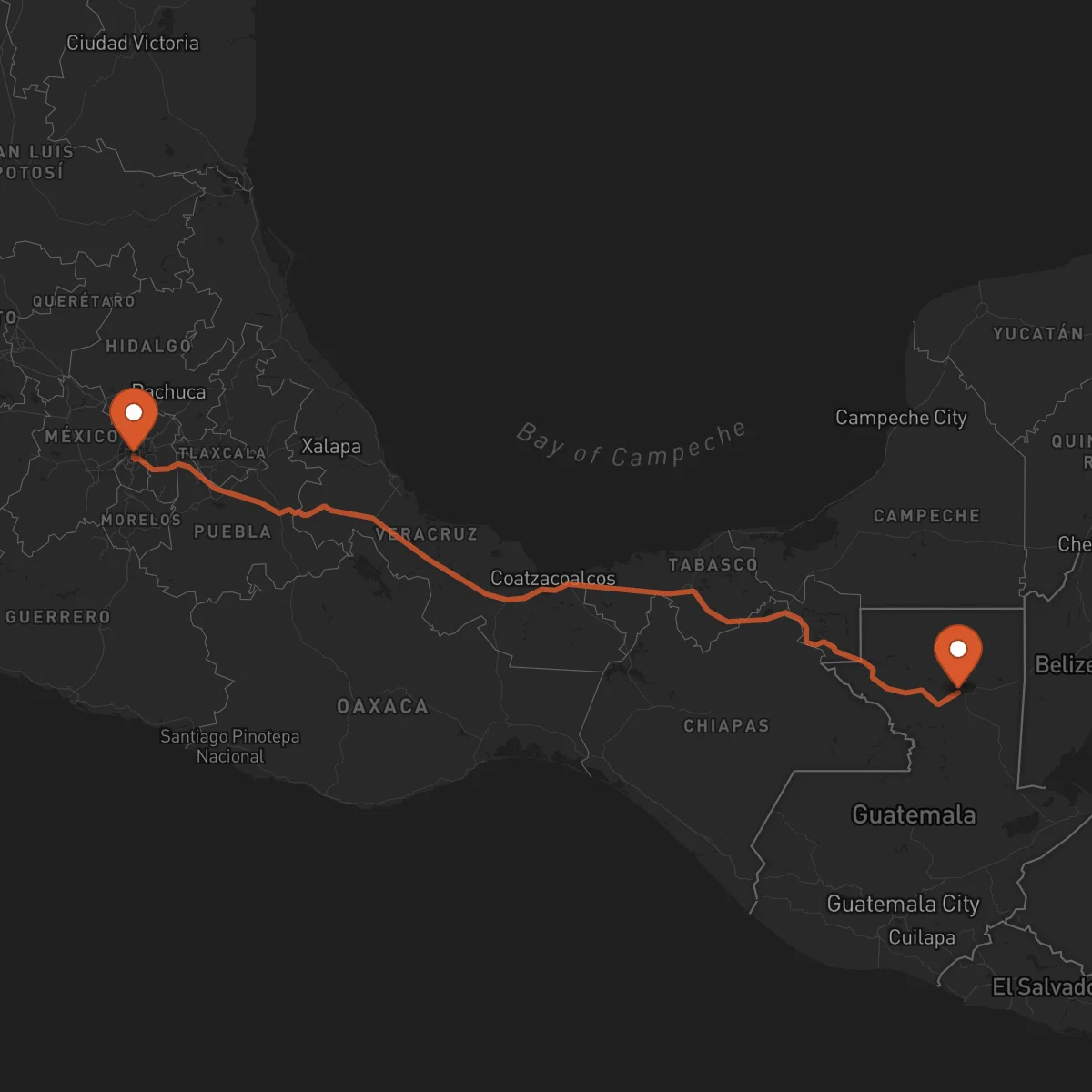
Flores to Mexico City
Mexico City → FloresFTL freight transportation service between Flores and Mexico City. Reliable logistics solutions for your business.
Route Description
Everything you need to know about the corridor Flores - Mexico City
The Flores-Ciudad de México corridor is a vital north-south artery connecting the heart of Guatemala's Petén region with Mexico's economic and political capital. This strategic route facilitates the movement of goods across Central America, serving as a critical link for supply chains that integrate the region's agricultural output with Mexico's vast industrial and consumer markets. The corridor's importance is underscored by the volume of trade flowing between Guatemala and Mexico, encompassing everything from raw materials to finished goods, making it a cornerstone of regional commerce.
Economically, the corridor bridges two distinct but complementary zones. The Petén basin is a powerhouse of agriculture and natural resources, while the Mexico City metropolitan area represents a massive hub for manufacturing, distribution, and high-value services. Key industries leveraging this route include agriculture (palm oil, bananas, timber), food and beverage processing, construction materials, and consumer goods. The flow is bidirectional: southbound shipments often consist of manufactured products, machinery, and fuel, while northbound traffic is dominated by agricultural commodities and forestry products.
Transportation infrastructure primarily follows the Pan-American Highway network. From Flores, trucks typically utilize Guatemala's CA-13 highway south to the border crossing at Tecún Umán. Upon entering Mexico at Ciudad Hidalgo, the main artery is Federal Highway 190, which connects efficiently to the Mexico City metropolitan area via the robust network of Mexican federal highways. The Tecún Umán/Ciudad Hidalgo crossing is the principal gateway, requiring meticulous customs coordination between Guatemalan (SAT) and Mexican (SAT) authorities, with procedures for documentation, inspections, and duties.
Control Terrestre facilitates seamless operations on this corridor through our dedicated alliance of experienced carriers certified for cross-border logistics. We manage the entire process, from pre-clearance documentation coordination to customs brokerage support, ensuring compliance with both nations' regulations. Our expertise in navigating the specific requirements of the Tecún Umán crossing, combined with our network of certified equipment—including dry vans, reefers, and flatbeds—allows us to provide reliable, full truckload (FTL) solutions. We focus on making this complex international corridor straightforward for our clients, handling the logistical intricacies so you can optimize your supply chain flow between Central America and Mexico's core market.
Services for this Route
Available services for the corridor Flores - Mexico City
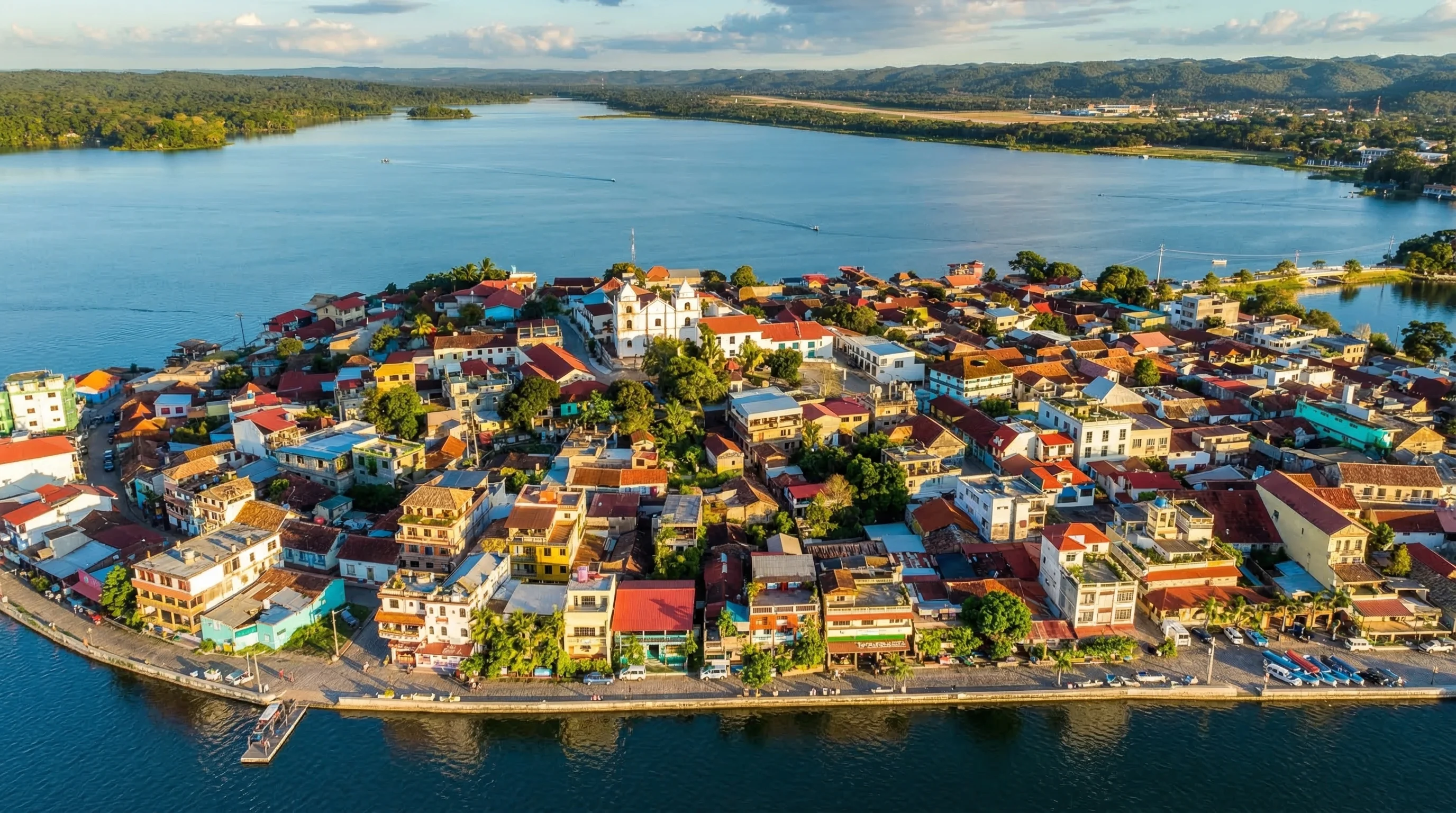 Origin
Flores, located on an island in Lake Petén Itzá, is the principal urban and logistical hub for Guatemala's northern department of Petén. Its strategic value lies in its position as the primary gateway to one of Central America's most significant agricultural and natural resource regions. The Petén basin is a major producer of export commodities like African palm oil, bananas, and timber, alongside growing sectors in rubber and tourism-related goods. The city's infrastructure is centered on its connectivity to the south via the CA-13 highway, which is the main paved route to the Guatemalan border at Tecún Umán. While the local road network serves the immediate region, all long-haul freight depends on this critical corridor. Flores functions as a consolidation point where agricultural products from the surrounding vast plantations and forestry operations are gathered and prepared for the journey north, making it an indispensable origin node for supply chains targeting Mexico and beyond.
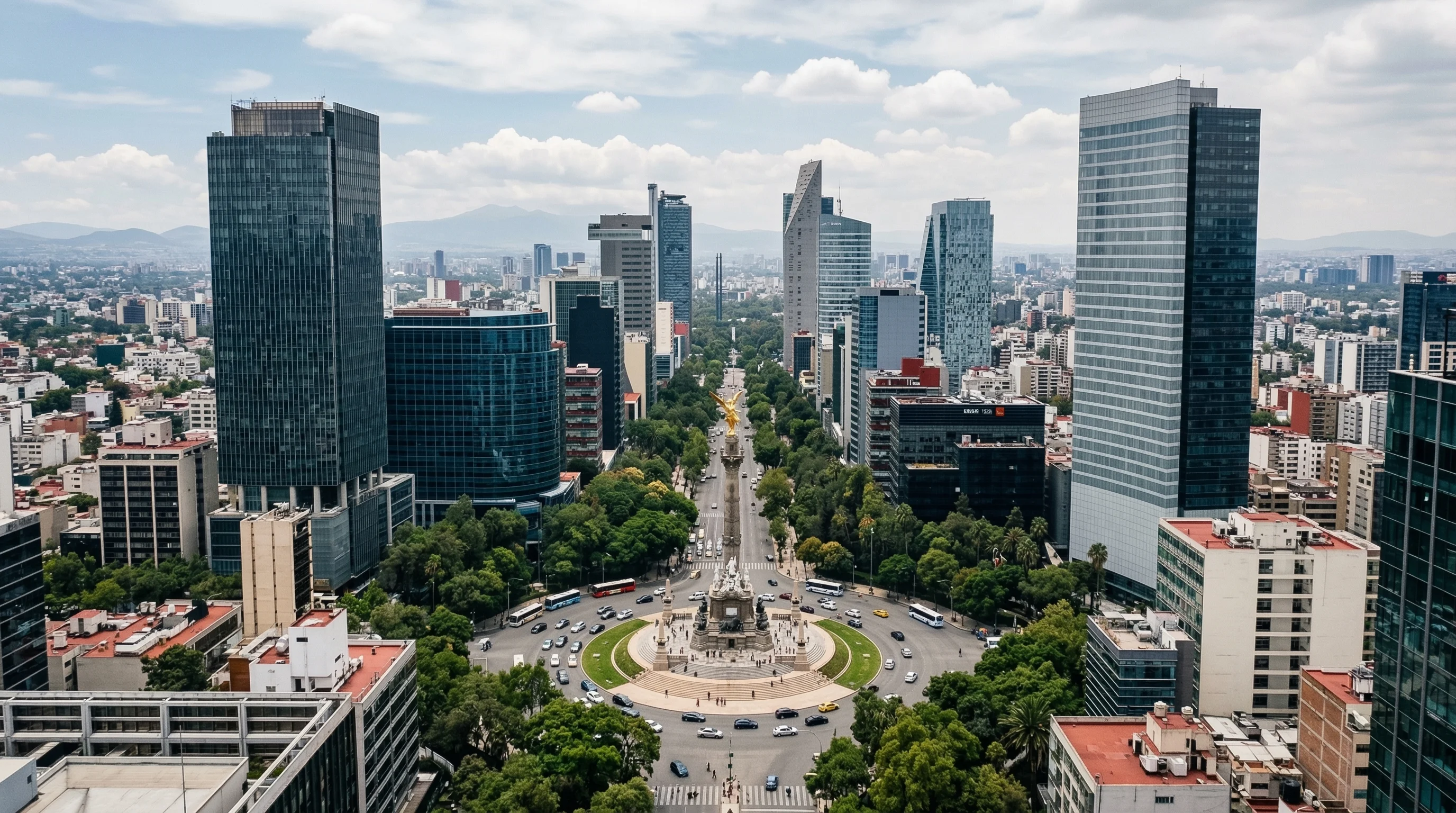 Destination
Mexico City
Ciudad de México is not only the nation's capital but also its undisputed economic, industrial, and distribution epicenter. Its strategic location in the highlands of central Mexico provides unparalleled access to a massive consumer market of over 20 million people and a dense network of manufacturing plants, particularly in the adjacent State of Mexico. Key industries driving demand for inbound freight include automotive and aerospace manufacturing, food and beverage processing, pharmaceuticals, electronics, and construction. The city is a massive consumption point and a transshipment hub for the entire country. Its freight infrastructure is extensive, featuring major federal highways like the 150D (Mexico City-Querétaro) and 57 (Mexico City-Pachuca), which radiate to all corners of the nation. While urban traffic presents challenges, the city is served by numerous logistics parks and distribution centers on its periphery, efficiently receiving full truckload shipments from corridors like the one from Flores to supply its industrial zones and retail sectors.










