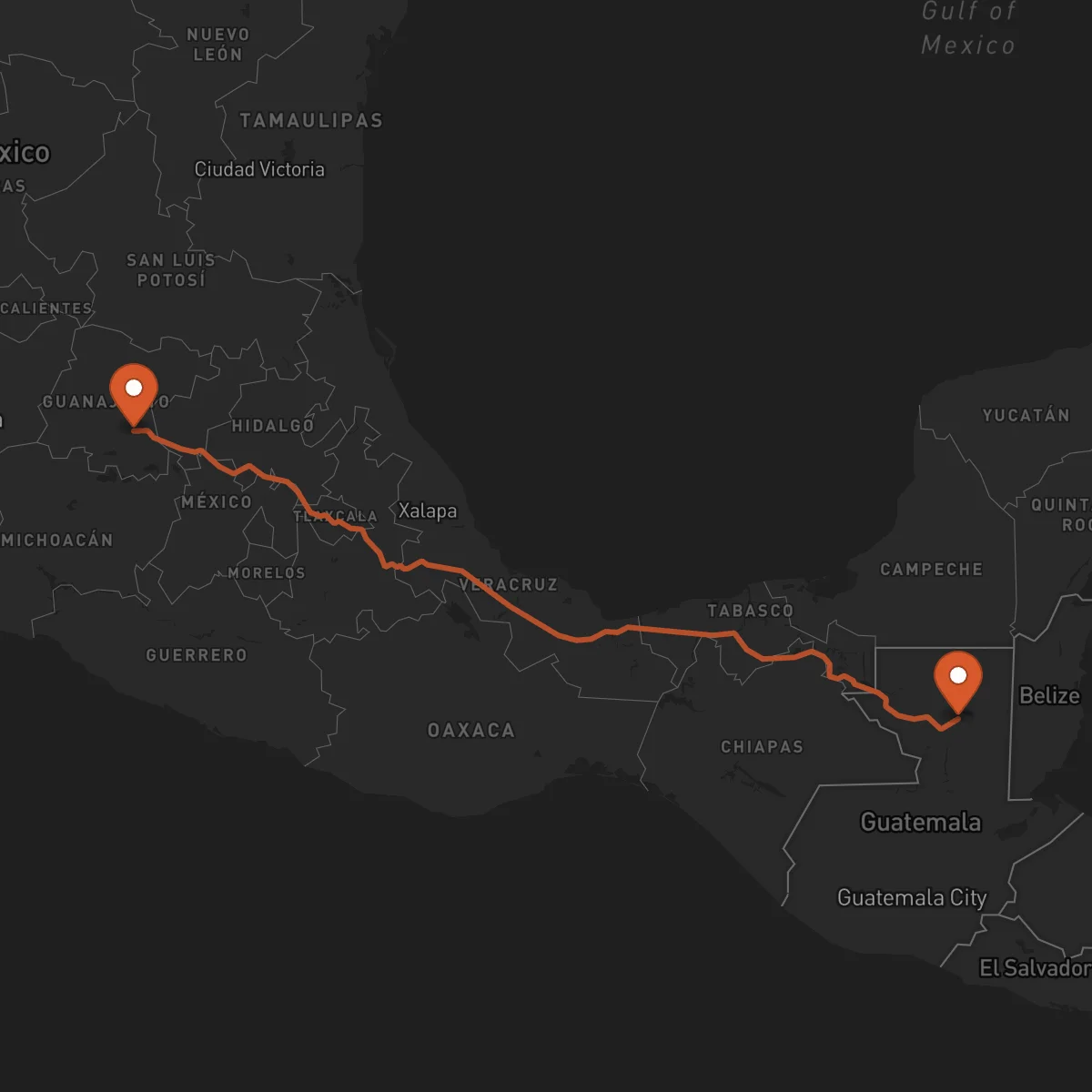
Flores to Celaya
Celaya → FloresFTL freight transportation service between Flores and Celaya. Reliable logistics solutions for your business.
Route Description
Everything you need to know about the corridor Flores - Celaya
The Flores to Celaya corridor is a vital cross-border artery connecting the tropical lowlands of northern Guatemala with the industrial heartland of central Mexico. Spanning approximately 1,217 kilometers, this route is strategically critical for moving goods between Central America and the Bajío region, one of Mexico's most dynamic manufacturing and agricultural zones. The corridor facilitates the flow of raw materials inbound to Mexico and finished goods and agricultural exports southward, underpinning supply chains for industries that span international boundaries.
Economically, the route links the resource-rich Petén department of Guatemala with the highly industrialized state of Guanajuato. The Petén region is a major source for agricultural commodities, timber, and increasingly, palm oil products. Celaya and its surrounding area are powerhouses for automotive manufacturing, food processing, and a broad array of light industry. This creates a consistent demand for reliable, high-capacity freight movement to support just-in-time production schedules and export logistics.
The primary transportation infrastructure relies on a network of key highways. In Guatemala, the route begins on the CA-13, which connects Flores to the border crossing at La Mesilla/El Carmen. On the Mexican side, Federal Highway 45 becomes the main north-south corridor, providing a direct and efficient link from the border through Tapachula, up through central Mexico, and directly into Celaya. This highway is well-maintained and designed for heavy commercial traffic.
The principal formal border crossing is at Ciudad Hidalgo, Mexico / Tecún Umán, Guatemala. Navigating this crossing requires expertise in customs procedures for both nations. Control Terrestre facilitates seamless operations on this corridor through our robust alliance of transportation providers. Our partners hold critical certifications including C-TPAT, FAST, and BASC, which streamline customs processes and enhance security. We coordinate dedicated FTL, refrigerated, and specialized equipment movements, managing the complex cross-border documentation and ensuring a single point of contact for our clients' full truckload shipments from origin to destination.
Services for this Route
Available services for the corridor Flores - Celaya
 Origin
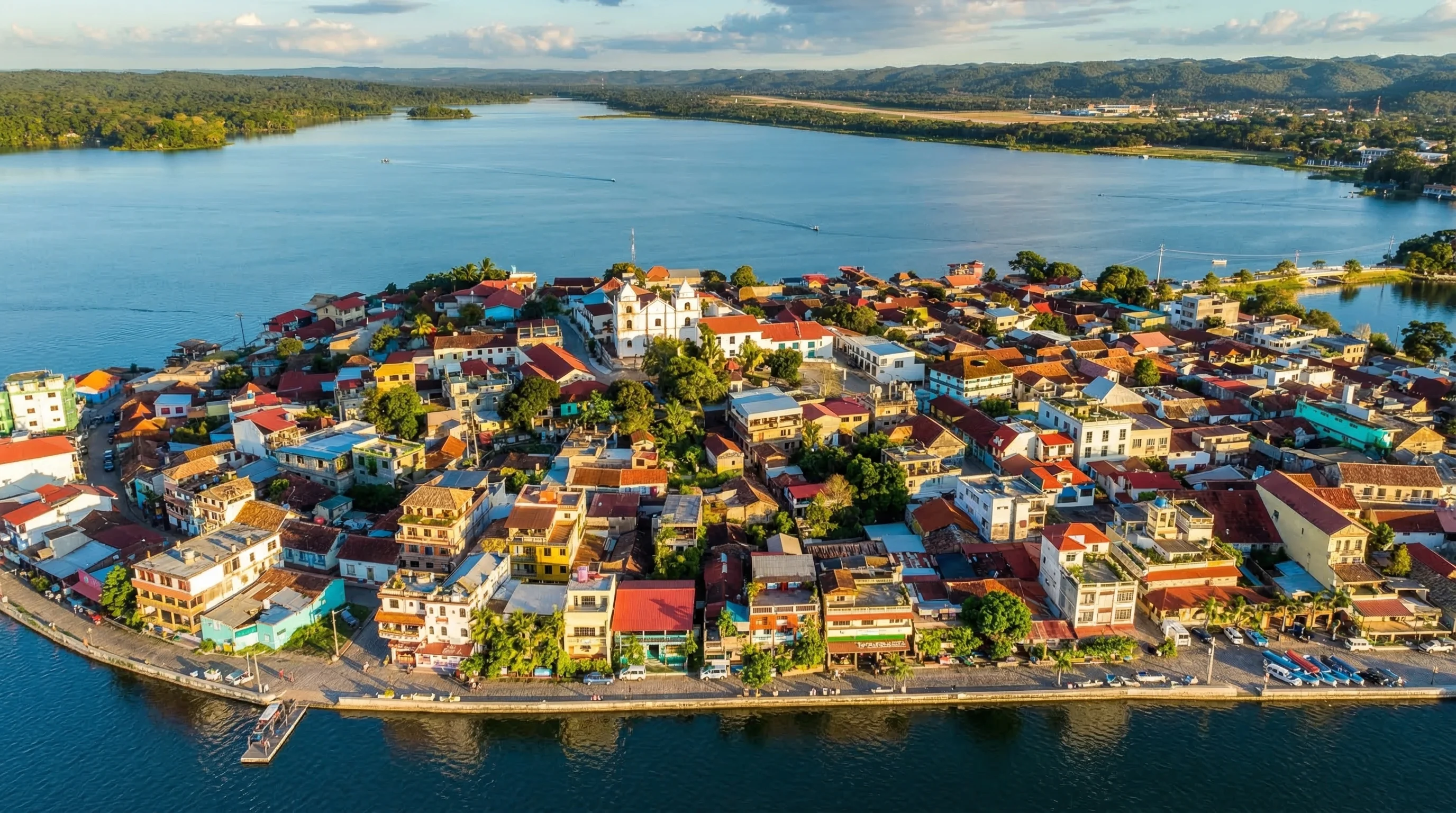
Flores, located on an island in Lake Petén Itzá in the department of Petén, Guatemala, serves as the primary logistical and commercial hub for northern Guatemala. Its strategic importance stems from its position as the main gateway between the Guatemalan interior and the Mexican border, approximately 150 kilometers to the north. The island city is the administrative capital of the region and a focal point for commerce, with road networks radiating out to key agricultural and forestry zones.
The Petén economy is dominated by agriculture, including banana and pineapple plantations, and more recently, large-scale African palm oil cultivation. Forestry and timber processing are also significant sectors. Tourism, centered on the nearby Tikal Mayan ruins, contributes to the local economy but generates different freight demands compared to bulk agricultural and industrial goods. The available transportation infrastructure is centered on the CA-13 highway, which provides the crucial paved link south to Guatemala City and north to the Mexican border. While there is a small airport (Mundo Maya International), the bulk of commercial freight, especially for the volumes required by FTL, moves via road. Control Terrestre leverages this road network to provide direct, full truckload connections from the production areas around Flores to the Mexican border and beyond.
 Destination
Celaya
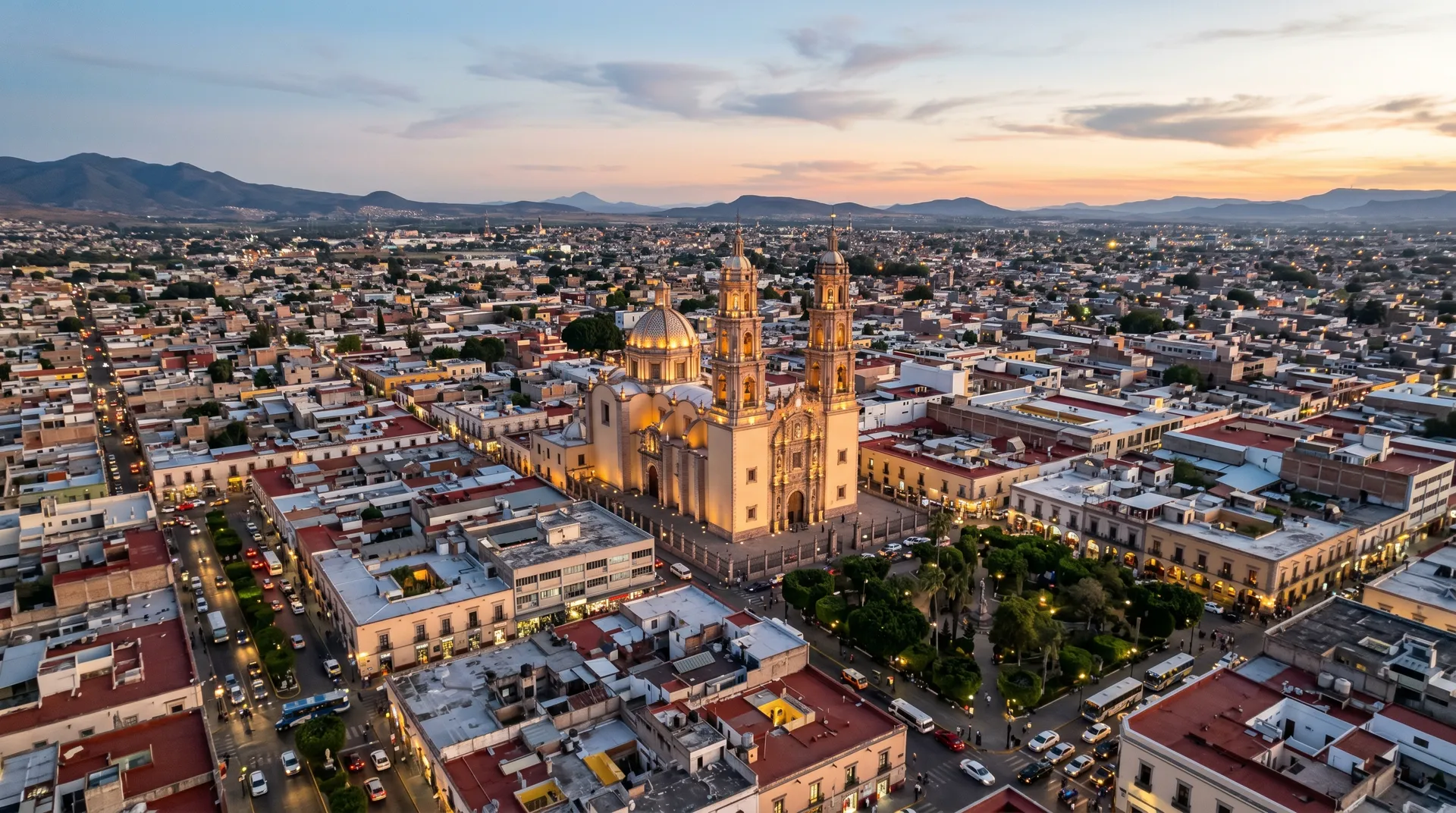
Celaya, Guanajuato, is a linchpin in Mexico's industrial landscape, strategically positioned within the Bajío macro-region. Its location provides excellent connectivity to major markets: it is roughly 200 kilometers northwest of Mexico City and 150 kilometers southeast of Querétaro, a key aerospace and technology hub. This central position makes it a premier destination for logistics and distribution, serving as a manufacturing base and a cross-docking point for goods moving throughout central Mexico and to northern border crossings for U.S. export.
The industrial economy of Celaya is diverse and robust. It is historically known for food processing, particularly cookies and confectionery (home to brands like Gamesa and Marinela). More recently, it has become a major site for the automotive industry, hosting assembly plants and a dense network of Tier 1 and 2 suppliers for manufacturers like General Motors and Volkswagen. Other key sectors include metal mechanics, plastics, and packaging. The transportation infrastructure is exceptional, anchored by Federal Highway 45 (Carretera Panamericana), which runs directly through the city. This highway connects Celaya to the U.S. border in the north and to Mexico City and ports on the Pacific and Gulf coasts in the south and east. The presence of developed industrial parks with private rail spurs and direct highway access makes it highly efficient for full truckload inbound logistics of raw materials and outbound distribution of finished vehicles and consumer goods.










