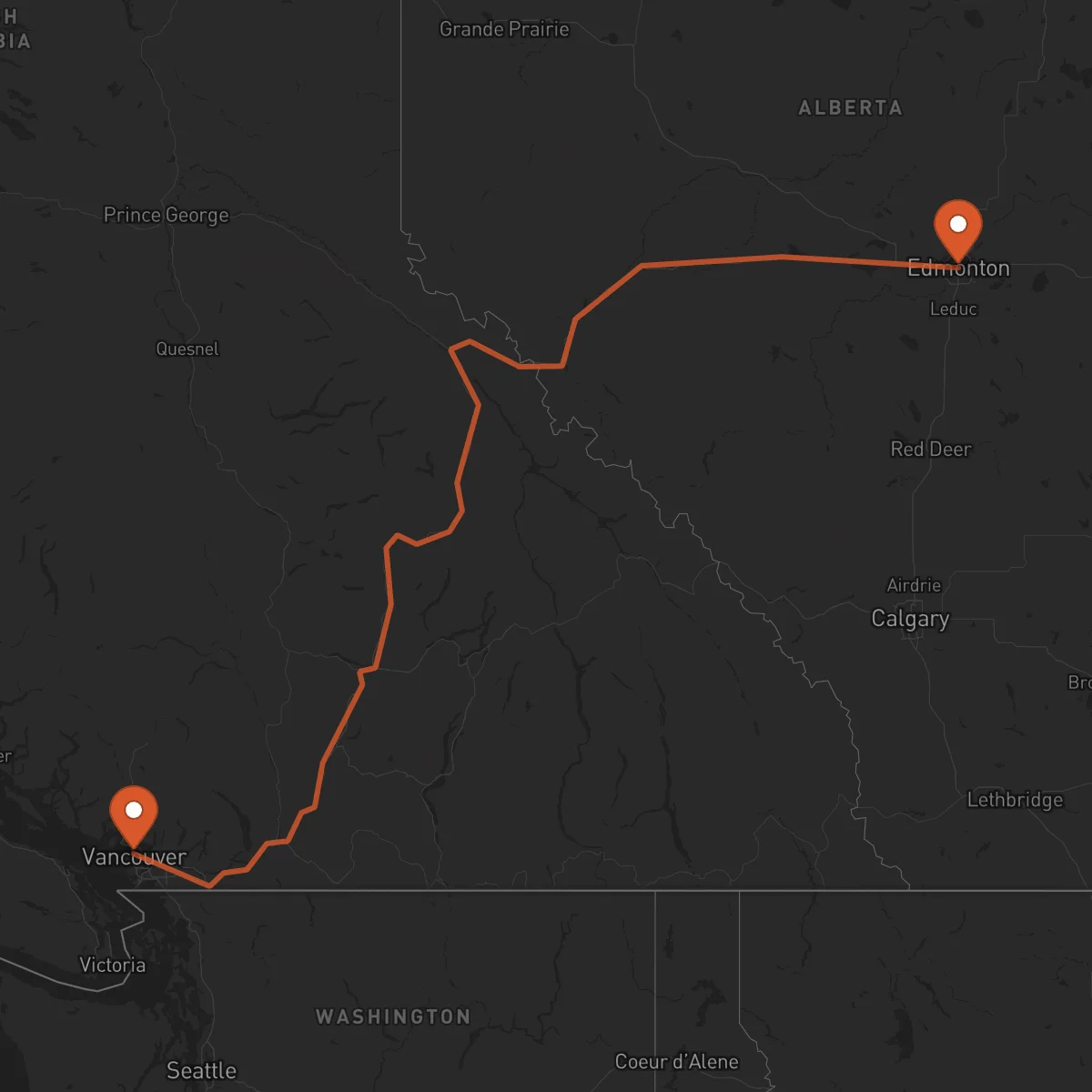
Edmonton to Vancouver
Vancouver → EdmontonFTL freight transportation service between Edmonton and Vancouver. Reliable logistics solutions for your business.
Route Description
Everything you need to know about the corridor Edmonton - Vancouver
The logistics corridor between Edmonton and Vancouver represents a vital artery for freight transportation in Western Canada. This 818 km route connects Alberta's capital with British Columbia's largest port city, facilitating the movement of goods between the prairies and the Pacific coast. The corridor serves as a critical link in the supply chain, enabling businesses to efficiently transport raw materials, finished products, and industrial equipment across provincial boundaries.
The economic significance of this corridor extends beyond simple transportation. Edmonton, as Alberta's economic hub, contributes substantial industrial output, while Vancouver serves as Canada's gateway to Asian markets. This creates a dynamic flow of goods moving in both directions - from Edmonton's manufacturing and energy sectors to Vancouver's export facilities, and from Vancouver's port and international trade back to Alberta's distribution centers.
The main industries leveraging this corridor include energy equipment and services, manufacturing, construction materials, agricultural products, and retail distribution. The route primarily follows Highway 1 and Highway 5, offering reliable transportation infrastructure with multiple rest stops and service centers along the way. Control Terrestre facilitates seamless operations on this corridor through our specialized FTL services, providing dedicated equipment and experienced drivers who understand the unique demands of cross-provincial freight movement.
Services for this Route
Available services for the corridor Edmonton - Vancouver
 Origin
Edmonton serves as a strategic logistics hub in Western Canada, offering exceptional connectivity and infrastructure for freight operations. The city's central location in Alberta provides access to major rail networks and highways that extend throughout the province and beyond. Edmonton's industrial base includes energy services, manufacturing, and distribution centers that generate substantial freight volumes requiring reliable transportation solutions.
The city boasts comprehensive transportation infrastructure, including the Edmonton International Airport, extensive rail connections, and major highways such as the Yellowhead Highway (Highway 16). The Edmonton region also features numerous industrial parks and warehousing facilities, creating a robust ecosystem for logistics operations. These assets make Edmonton an ideal origin point for freight shipments heading west to Vancouver or other destinations across Canada.
 Destination
Vancouver
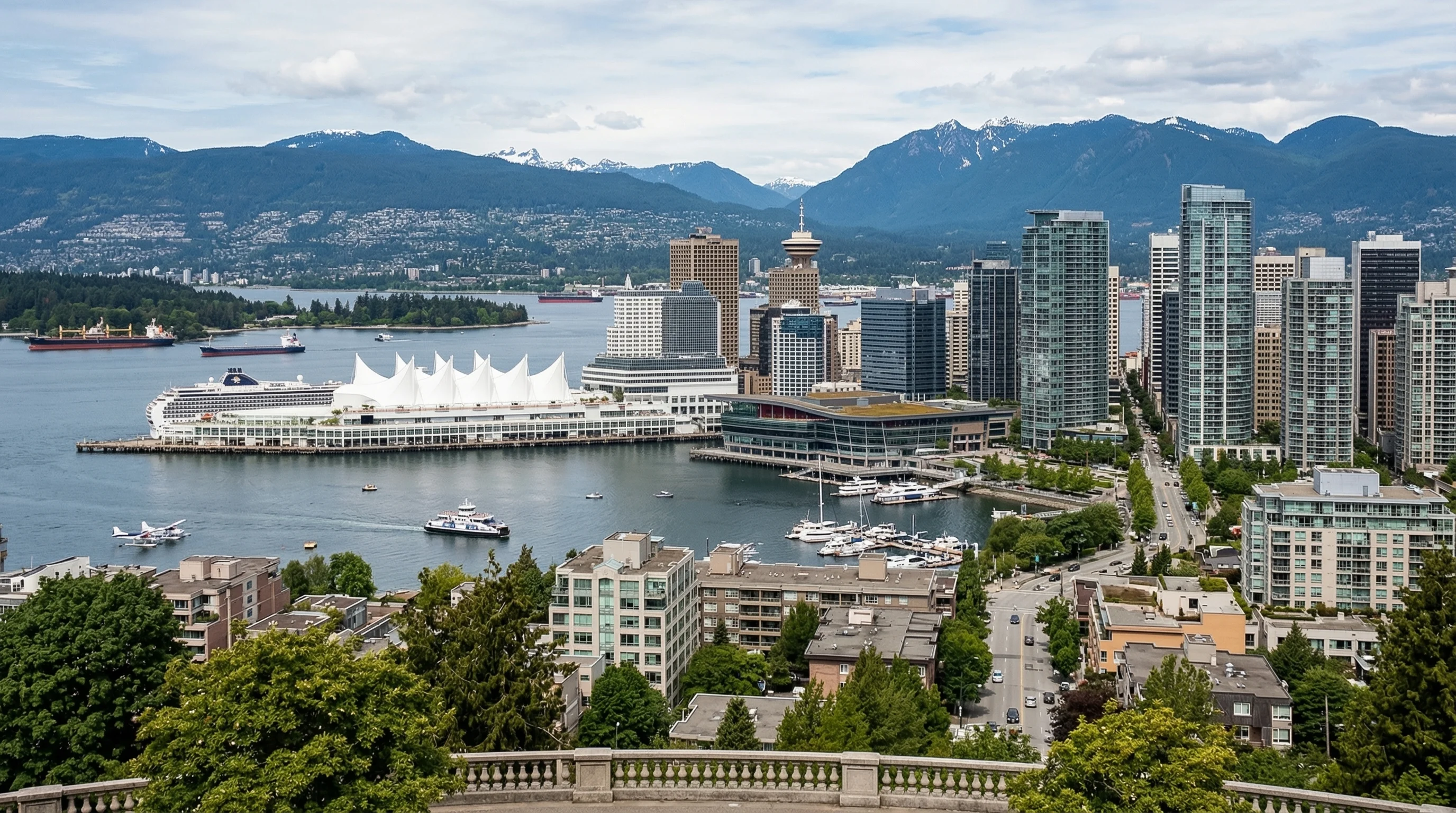
Vancouver stands as a premier logistics destination on Canada's west coast, offering unparalleled access to international markets through its port facilities. As Canada's largest port by tonnage, the Port of Vancouver handles millions of containers annually and serves as the primary gateway for trade with Asia. The city's strategic coastal location makes it essential for businesses requiring efficient import/export capabilities and Pacific Rim connections.
The region features extensive transportation infrastructure, including the Port of Vancouver, Vancouver International Airport, and a comprehensive network of highways and railways. Vancouver's economy encompasses diverse sectors including technology, film production, tourism, and international trade, all of which generate significant freight transportation needs. The city's proximity to major U.S. border crossings also enhances its role as a distribution center for cross-border commerce.










