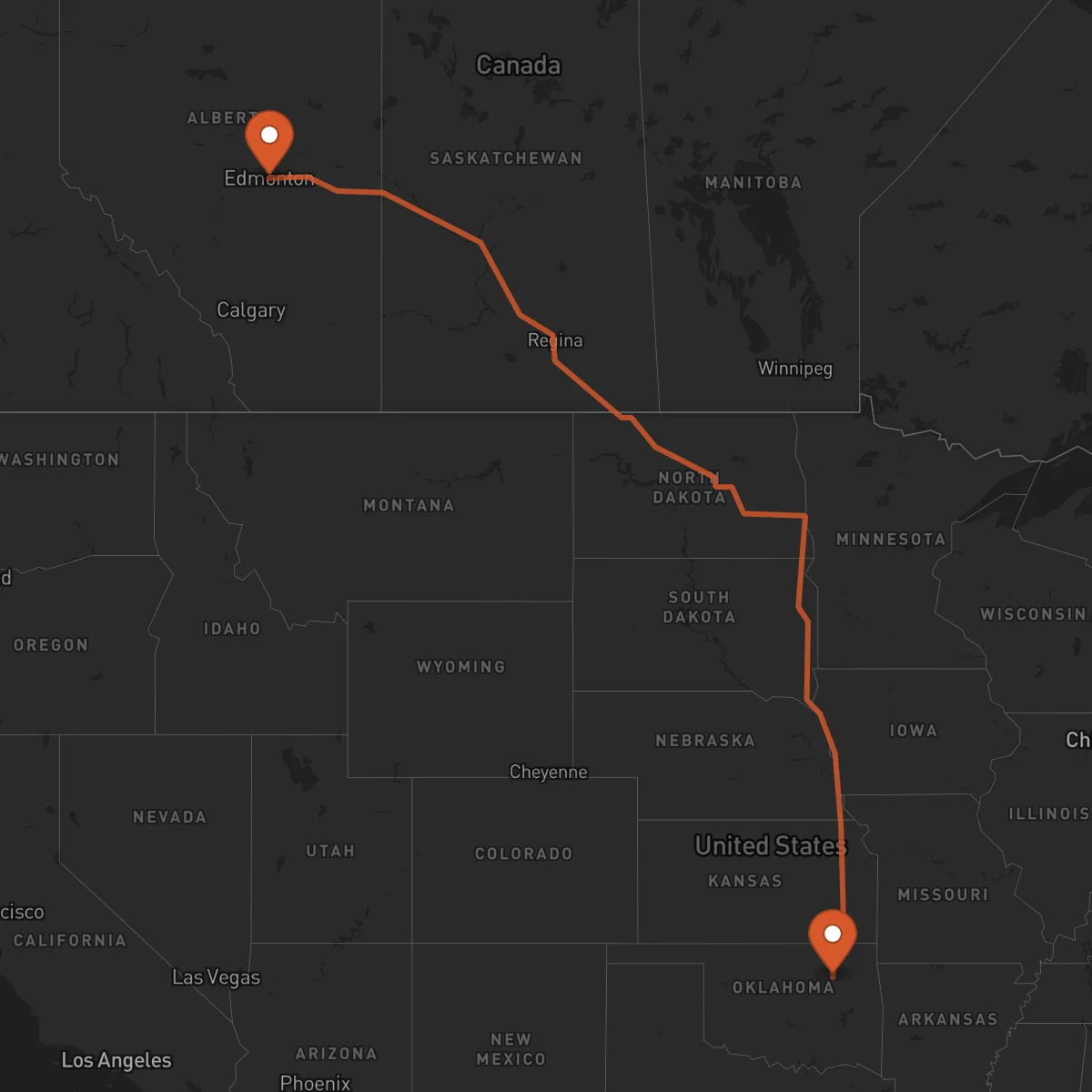
Edmonton to Tulsa
Tulsa → EdmontonFTL freight transportation service between Edmonton and Tulsa. Reliable logistics solutions for your business.
Route Description
Everything you need to know about the corridor Edmonton - Tulsa
The Edmonton to Tulsa corridor represents a vital cross-border logistics route connecting Alberta's energy and industrial hub with Oklahoma's manufacturing and energy center. This 2,362 km transportation artery facilitates the movement of critical goods between Canada and the United States, supporting the integrated North American supply chain. The corridor traverses diverse terrain and crosses the international border, requiring specialized expertise in customs compliance and cross-border documentation.
The region's economic significance stems from its concentration of energy production, manufacturing, and agricultural activities. Edmonton serves as a gateway to Canada's oil sands and northern resource development, while Tulsa anchors one of America's most important energy corridors, with strong aerospace, manufacturing, and logistics sectors. This complementary industrial base creates substantial freight demand for specialized equipment and time-sensitive deliveries.
Major transportation infrastructure along this route includes Interstate 35 and connecting highways that provide reliable access between the two cities. The corridor benefits from well-maintained border crossings and established freight networks. Control Terrestre's expertise in cross-border operations ensures seamless customs clearance, proper documentation, and compliance with both Canadian and US regulations. Our dedicated FTL services provide the capacity and reliability that industries along this corridor require for their time-sensitive and high-value shipments.
Services for this Route
Available services for the corridor Edmonton - Tulsa
 Origin
Edmonton stands as Alberta's capital and a strategic logistics hub in Western Canada. Located along the North Saskatchewan River, the city serves as a critical gateway to Canada's northern territories and oil sands operations. Edmonton's Yellowhead Highway and proximity to major rail terminals create excellent multimodal connectivity for freight movement. The city's industrial base includes energy services, manufacturing, and technology sectors, generating substantial freight volume for cross-border transportation.
 Destination
Tulsa
Tulsa represents a strategic logistics center in the heart of America's energy corridor. The city's location in northeastern Oklahoma provides excellent access to major freight routes and distribution networks throughout the central United States. Tulsa's economy centers on energy, aerospace manufacturing, and logistics services, with a well-developed transportation infrastructure including the Tulsa Port of Catoosa and extensive highway connections. The city's industrial parks and manufacturing facilities create consistent demand for reliable freight transportation services.










