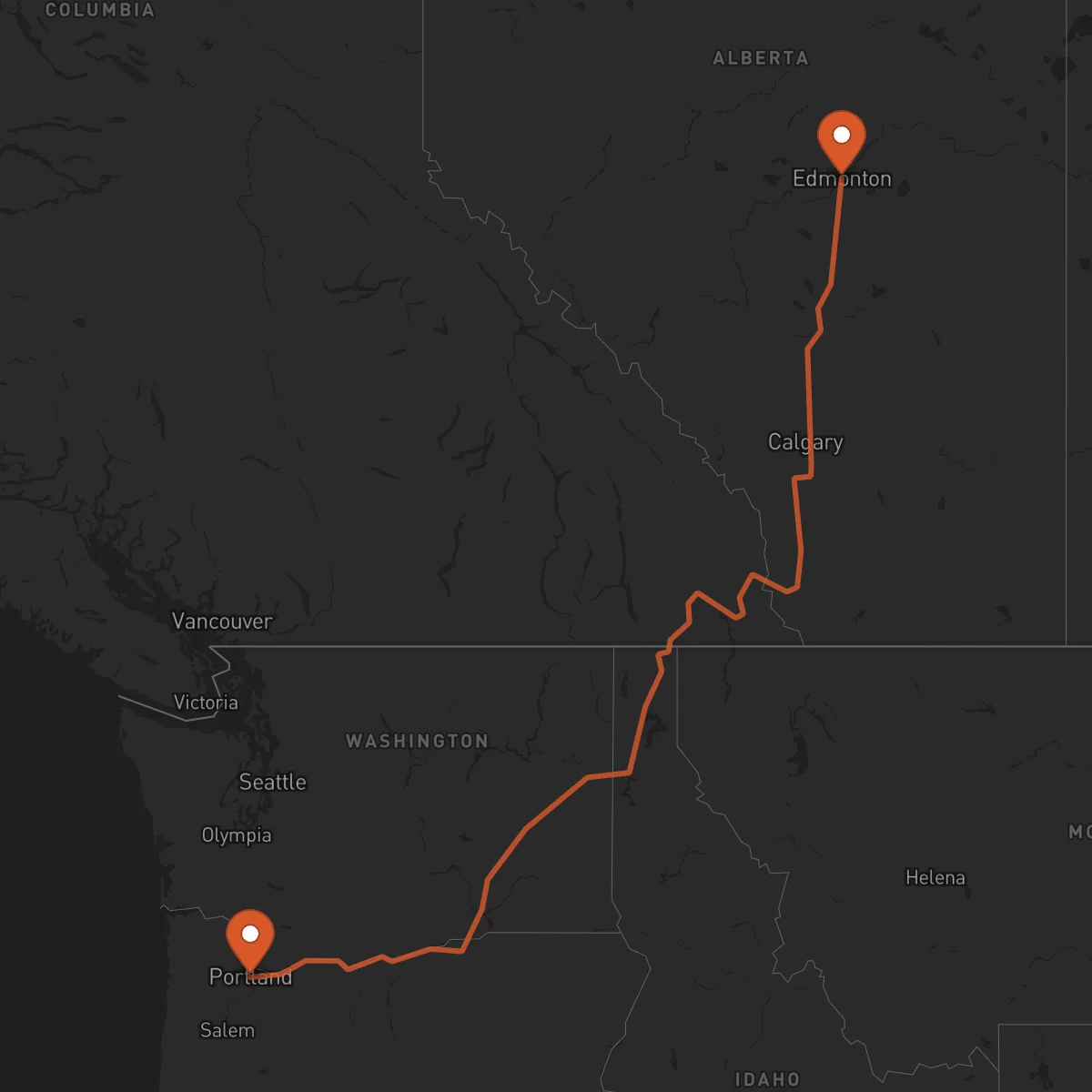
Edmonton to Portland
Portland → EdmontonFTL freight transportation service between Edmonton and Portland. Reliable logistics solutions for your business.
Route Description
Everything you need to know about the corridor Edmonton - Portland
The Edmonton-Portland corridor connects the Canadian province of Alberta with the state of Oregon in the northwestern United States, covering approximately 1,110 kilometers. This route is strategically vital for cross-border trade between Canada and the United States, facilitating the movement of goods between two dynamic economic regions. The corridor traverses diverse landscapes, from the Canadian prairies to the Cascade Mountains, requiring specialized logistics expertise to ensure efficient and timely transportation.
The economic importance of this corridor is significant, as it links Alberta's energy and industrial sectors with Oregon's manufacturing and technology industries. Edmonton serves as a major distribution hub for western Canada, while Portland is a key port city with access to international markets via the Columbia River. This connection enables seamless supply chain integration between the two regions, supporting industries such as automotive, technology, agriculture, and energy.
Key transportation infrastructure along this corridor includes the Trans-Canada Highway (Highway 1) and Interstate 5, which provide reliable cross-border freight movement. The primary border crossing at Coutts-Sweetgrass facilitates smooth customs clearance between Alberta and Montana, while subsequent connections through Washington and Oregon ensure efficient delivery to Portland. Control Terrestre's expertise in cross-border operations ensures compliance with customs regulations, proper documentation, and seamless freight movement across international boundaries.
Services for this Route
Available services for the corridor Edmonton - Portland
 Origin
Edmonton, the capital city of Alberta, is strategically positioned as a major logistics hub in western Canada. Located in the heart of the province, it serves as a gateway to northern Canada and provides excellent connectivity to both domestic and international markets. The city's economy is diverse, with strong sectors in energy, manufacturing, technology, and logistics, making it a critical point for freight movement in the region.
The city boasts a robust transportation infrastructure, including major highways such as the Yellowhead Highway (Highway 16) and the Queen Elizabeth II Highway (Highway 2), which connect Edmonton to other major Canadian cities and U.S. border crossings. Edmonton International Airport and the Port Alberta initiative further enhance its logistics capabilities, offering air and intermodal freight options. The city's proximity to the Alberta Industrial Heartland, Canada's largest hydrocarbon processing region, makes it a key origin point for industrial and energy-related freight shipments.
 Destination
Portland
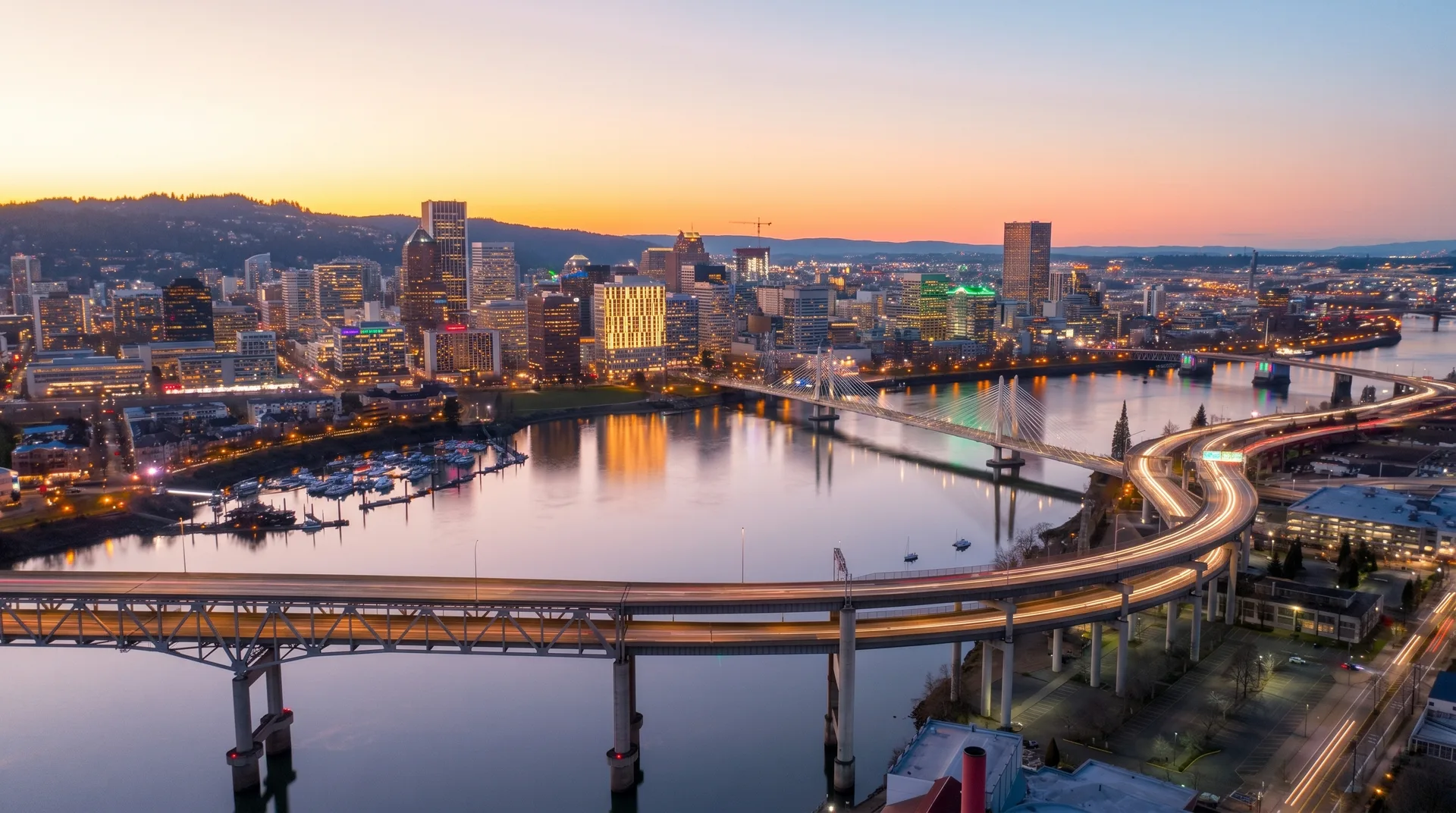
Portland, Oregon, is a major logistics and transportation hub on the U.S. West Coast, strategically located at the confluence of the Willamette and Columbia Rivers. Known for its thriving economy, Portland is a center for technology, manufacturing, and trade, with a strong emphasis on sustainability and innovation. Its proximity to the Pacific Ocean and access to international shipping routes make it a critical gateway for imports and exports in the Pacific Northwest.
The city's transportation infrastructure is highly developed, featuring major highways such as Interstate 5 and Interstate 84, which connect Portland to other key markets in the region. The Port of Portland, one of the largest freshwater ports in the United States, offers extensive maritime shipping capabilities, while Portland International Airport supports air freight operations. Additionally, the city's rail network, operated by Union Pacific and BNSF, provides efficient intermodal transportation options. Portland's strategic location and infrastructure make it an ideal destination for freight shipments from Canada and other regions.










