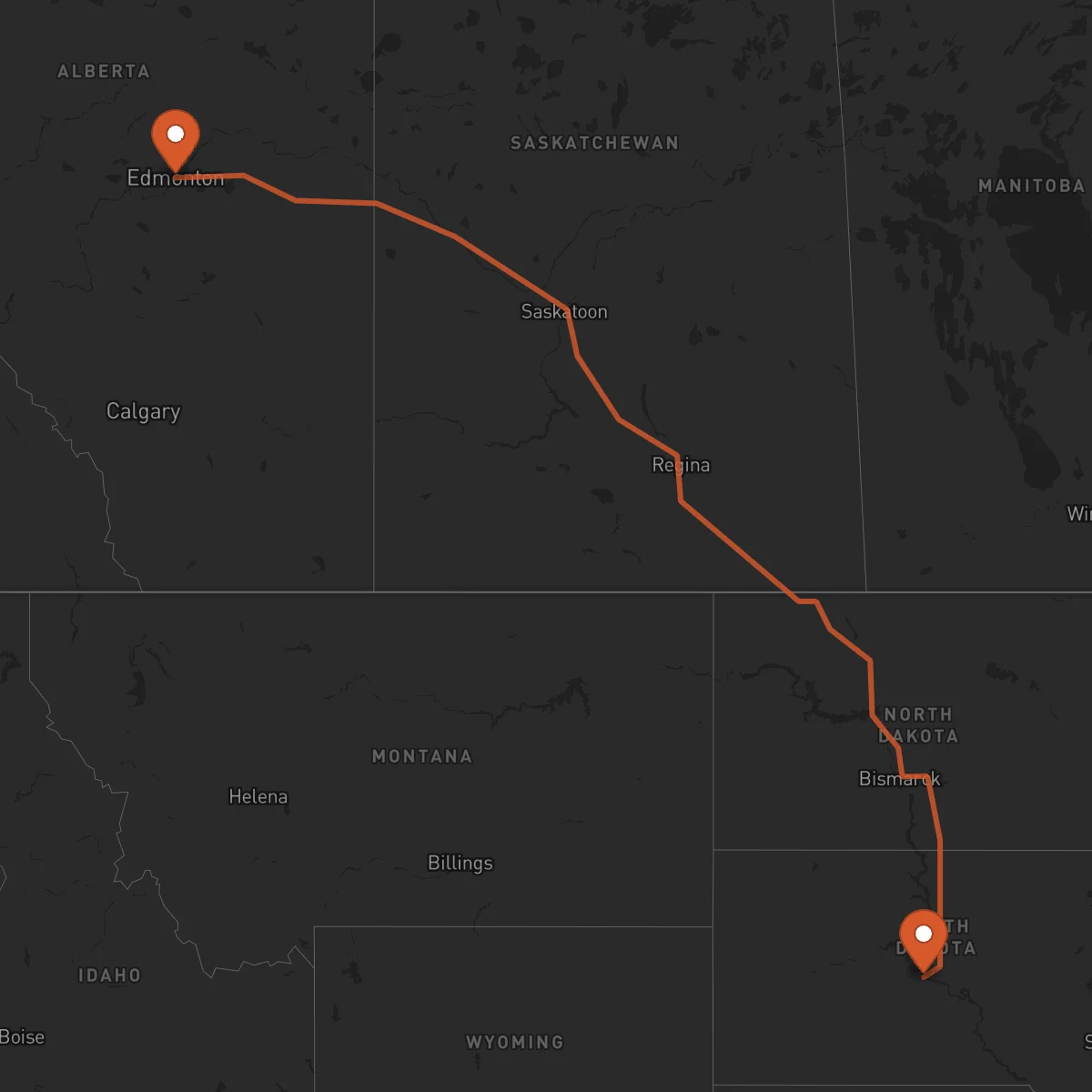
Edmonton to Pierre
Pierre → EdmontonFTL freight transportation service between Edmonton and Pierre. Reliable logistics solutions for your business.
Route Description
Everything you need to know about the corridor Edmonton - Pierre
The Edmonton to Pierre corridor represents a vital cross-border freight route connecting Alberta, Canada with South Dakota, USA. This 1397 km transportation link serves as a crucial artery for moving goods between the Canadian Prairies and the American Midwest, facilitating trade and economic integration across North America. The corridor traverses diverse landscapes, from the Canadian Rockies foothills through the northern Great Plains, connecting two important regional economies through a network of major highways and border crossings.
The economic significance of this route stems from the complementary industrial strengths of both regions. Alberta's energy sector, agricultural production, and manufacturing capabilities find markets in South Dakota's processing industries, agricultural equipment manufacturing, and distribution centers. This corridor supports the movement of energy products, agricultural commodities, industrial equipment, and manufactured goods, creating a robust two-way trade flow that benefits both Canadian and American businesses along the route.
Transportation infrastructure along this corridor primarily relies on Highway 14 through Alberta and Saskatchewan, connecting to Interstate 90 in South Dakota. The main border crossing at Portal, North Dakota serves as the primary gateway for commercial traffic, offering efficient processing for pre-cleared shipments. Control Terrestre's expertise in cross-border operations ensures seamless customs clearance, compliance with both US and Canadian regulations, and optimized routing to minimize transit times and costs for our clients' full truckload shipments.
Services for this Route
Available services for the corridor Edmonton - Pierre
 Origin
Edmonton serves as a strategic logistics hub in western Canada, positioned at the crossroads of major transportation networks. As Alberta's capital and second-largest city, Edmonton offers excellent connectivity through its international airport, extensive highway system including the Yellowhead Highway, and proximity to the Port of Prince Rupert for Pacific trade. The city's location provides direct access to northern Alberta's oil sands, agricultural regions, and industrial centers, making it an ideal origin point for cross-border freight movements. Edmonton's robust infrastructure includes major intermodal facilities, warehousing districts, and a skilled logistics workforce that supports efficient freight operations.
 Destination
Pierre
Pierre, South Dakota's capital city, occupies a strategic position along the Missouri River in the central part of the state. While smaller than other regional centers, Pierre's location provides excellent access to South Dakota's agricultural heartland, manufacturing facilities, and distribution networks. The city benefits from its position on Interstate 90, offering direct connections to major markets like Sioux Falls, Minneapolis, and Denver. Pierre's transportation infrastructure includes the Pierre Regional Airport, barge traffic on the Missouri River, and well-maintained highway connections that facilitate efficient distribution throughout the Midwest region.










