Edmonton to Hamilton
Hamilton → EdmontonFTL freight transportation service between Edmonton and Hamilton. Reliable logistics solutions for your business.
Route Description
Everything you need to know about the corridor Edmonton - Hamilton
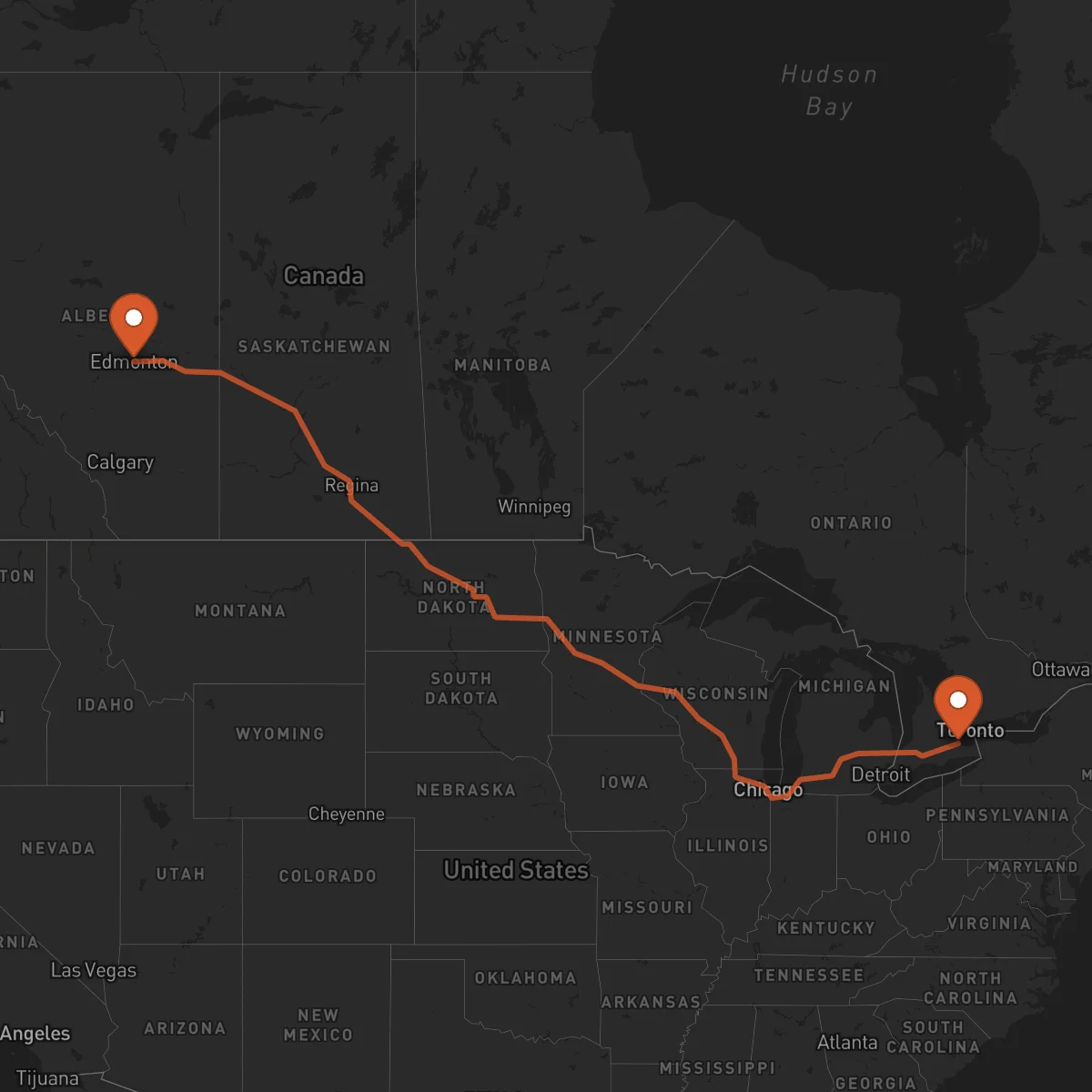
The Edmonton to Hamilton corridor represents one of Canada's most vital domestic freight transportation routes, connecting the economic heart of Alberta with Ontario's industrial powerhouse. Spanning approximately 2700 km across the Canadian landscape, this corridor serves as a critical artery for goods movement between Western and Central Canada. The route traverses diverse terrain and connects major urban centers, facilitating the flow of goods that powers both regional and national economies.
The economic significance of this corridor cannot be overstated. Edmonton serves as Alberta's capital and a major center for the energy sector, while Hamilton stands as a leading manufacturing and steel production hub in Ontario. This connection enables the seamless transfer of raw materials, manufactured goods, and industrial equipment between these two economic powerhouses. The corridor supports industries ranging from energy and manufacturing to agriculture and technology, making it indispensable for Canada's supply chain infrastructure.
Control Terrestre specializes in optimizing freight operations along this crucial corridor. Our extensive network of certified carriers and strategic partnerships ensures reliable, efficient transportation solutions for businesses moving goods between Edmonton and Hamilton. We understand the unique challenges of this route and provide tailored services that address everything from cross-country logistics to specialized cargo requirements. Our commitment to safety, compliance, and timely delivery makes us the trusted partner for companies seeking to maximize their supply chain efficiency on this important domestic route.
Services for this Route
Available services for the corridor Edmonton - Hamilton
 Origin
Edmonton, Alberta stands as a strategic logistics hub in Western Canada, serving as the capital city and economic center of the province. Located in the heart of Alberta's energy sector, Edmonton benefits from its position as a gateway to the oil sands and northern resource extraction operations. The city's robust infrastructure includes major highways such as the Yellowhead Highway (Trans-Canada Highway 16) and proximity to major rail connections, making it an ideal origin point for freight distribution across Western Canada and beyond.
The city's economy is diverse, with strong presence in energy, manufacturing, technology, and logistics sectors. Edmonton's industrial base includes petrochemical refining, agricultural processing, and advanced manufacturing facilities. The presence of major transportation infrastructure, including the Edmonton International Airport and extensive road networks, positions the city as a critical node in Canada's freight transportation system. Local industries rely heavily on efficient logistics solutions to move goods to markets across the country.
 Destination
Hamilton, Ontario represents a strategic logistics destination in Central Canada, situated on the western tip of Lake Ontario. Known historically as Canada's steel capital, Hamilton has evolved into a diverse industrial center with strong manufacturing, healthcare, and technology sectors. The city's location provides excellent access to major markets in Southern Ontario and the Greater Toronto Area, making it a crucial endpoint for freight movements from Western Canada.
The city boasts a comprehensive transportation infrastructure that includes the Queen Elizabeth Way (QEW), Highway 403, and direct rail connections to major North American networks. Hamilton's port facilities on Lake Ontario complement its road and rail infrastructure, offering multimodal transportation options. The city's industrial parks and manufacturing zones are well-served by modern logistics facilities, supporting efficient distribution and warehousing operations. Hamilton's strategic position within Canada's most populous region makes it an essential destination for freight traffic moving from Western provinces.










