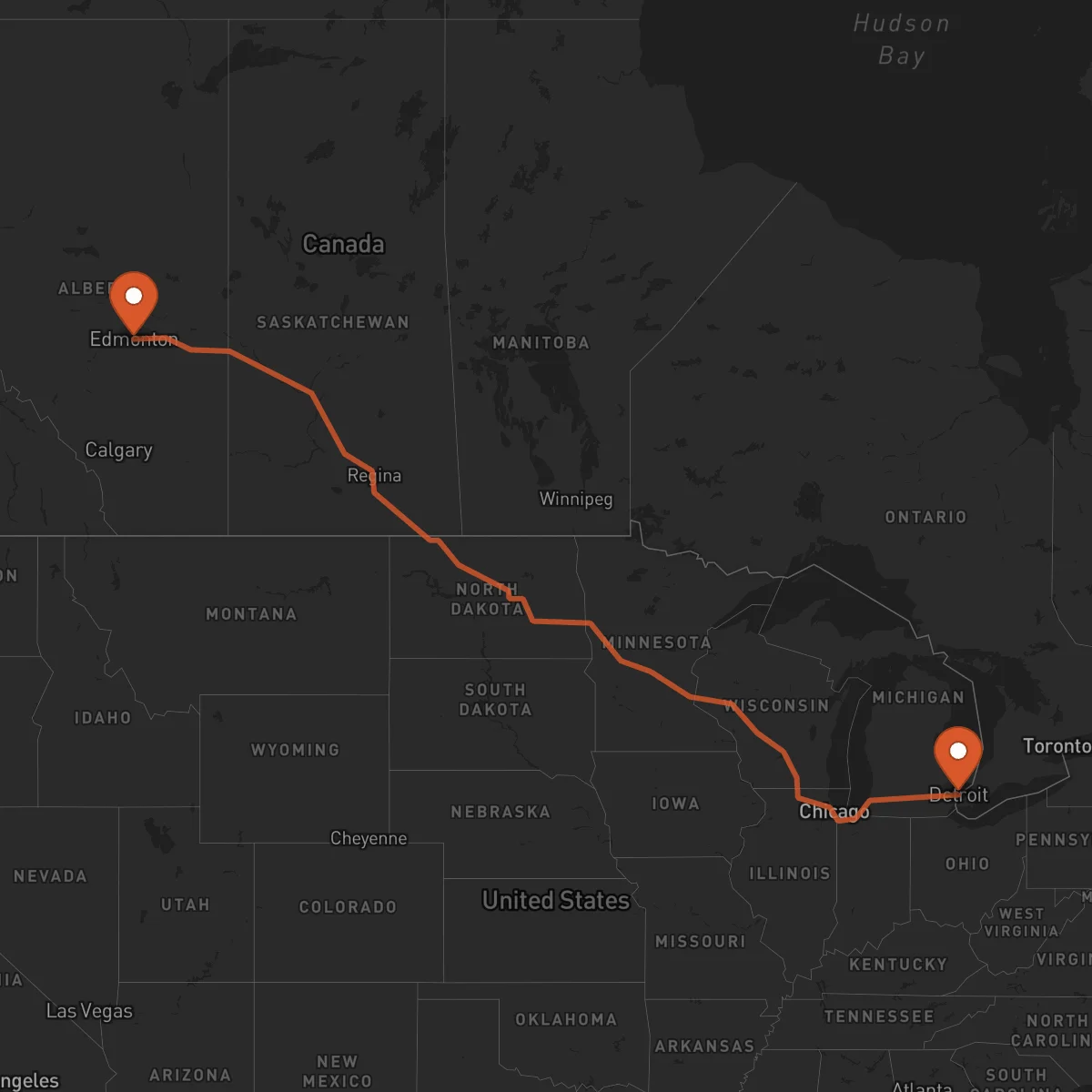
Edmonton to Detroit
Detroit → EdmontonFTL freight transportation service between Edmonton and Detroit. Reliable logistics solutions for your business.
Route Description
Everything you need to know about the corridor Edmonton - Detroit
The Edmonton-Detroit corridor connects Alberta, Canada's industrial heartland with Michigan's automotive manufacturing center, spanning approximately 2,561 kilometers across the Canada-US border. This vital trade route facilitates the movement of goods between two major economic regions, supporting industries that drive North American commerce.
This cross-border corridor traverses diverse landscapes, from Alberta's oil and gas fields through the Canadian prairies and into the industrial Midwest. The route primarily follows Highway 16 (Yellowhead Highway) west from Edmonton, connecting to Interstate 94 in the United States, providing efficient access to Detroit's manufacturing hubs.
Key industries utilizing this corridor include automotive parts manufacturing, energy equipment, agricultural products, and industrial machinery. Edmonton's proximity to Canada's oil sands creates demand for specialized equipment transport, while Detroit's automotive ecosystem requires consistent supply chain support for just-in-time manufacturing.
Control Terrestre facilitates seamless cross-border operations on this corridor through our network of certified transportation providers. We handle customs documentation, regulatory compliance, and border clearance procedures, ensuring your freight moves efficiently between Edmonton and Detroit. Our expertise in cross-border logistics eliminates delays and reduces administrative burden, allowing you to focus on your core business operations.
Services for this Route
Available services for the corridor Edmonton - Detroit
 Origin
Edmonton serves as Alberta's primary logistics hub, strategically positioned in Western Canada's industrial corridor. The city's location provides access to major transportation networks including the Yellowhead Highway and proximity to the Edmonton International Airport. Edmonton's infrastructure includes extensive warehousing facilities, intermodal yards, and specialized equipment for handling oversized cargo common in the energy sector.
The region's economy centers on energy production, particularly oil sands extraction, which drives demand for heavy equipment and industrial parts transportation. Manufacturing sectors include agricultural machinery, construction equipment, and petrochemical products. Edmonton's location near major oil and gas operations creates unique logistics requirements for specialized freight movement.
 Destination
Detroit
Detroit stands as North America's automotive manufacturing capital, strategically located in Michigan's industrial belt. The city's logistics infrastructure includes extensive highway networks, rail connections, and the Port of Detroit for international cargo. Detroit Metropolitan Airport and multiple intermodal facilities support diverse freight movement requirements.
The region's economy is dominated by automotive manufacturing, with major OEMs and extensive supplier networks creating complex supply chain demands. Detroit's industrial base also includes aerospace components, medical equipment, and advanced manufacturing. The city's location provides access to major US markets and serves as a gateway for international trade through the Ambassador Bridge and Detroit-Windsor Tunnel.










