Edmonton to Columbia
Columbia → EdmontonFTL freight transportation service between Edmonton and Columbia. Reliable logistics solutions for your business.
Route Description
Everything you need to know about the corridor Edmonton - Columbia
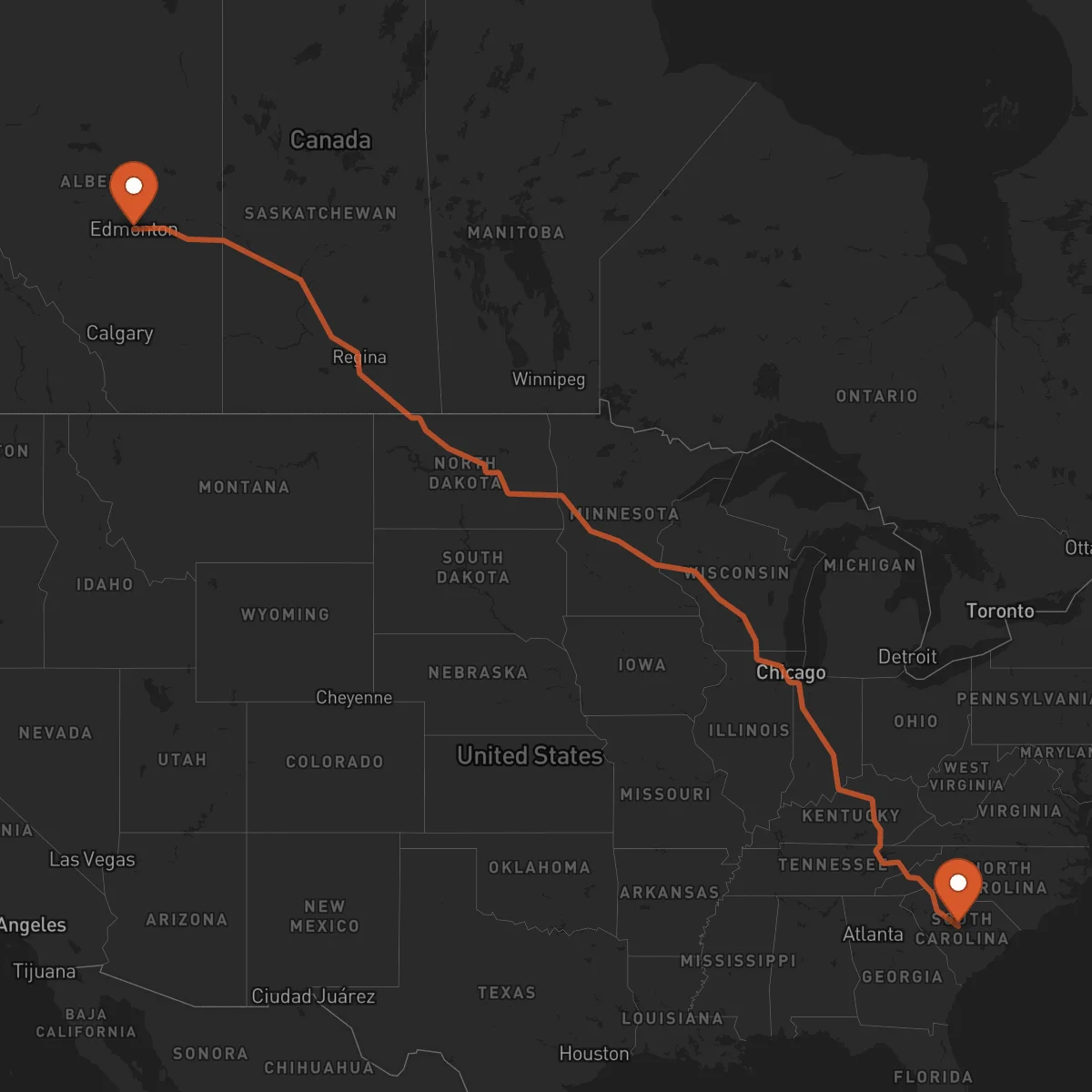
The Edmonton to Columbia corridor represents a vital cross-border logistics connection between Canada and the southeastern United States. This strategic route spans approximately 3,343 kilometers, linking Alberta's capital with South Carolina's capital through a network of major highways including I-29, I-70, and I-77. This corridor facilitates the movement of goods between Canada's western provinces and the industrial heartland of the American Southeast, supporting critical supply chains across North America.
The economic significance of this corridor is substantial, connecting Alberta's energy sector, manufacturing base, and agricultural exports with Columbia's diverse industrial landscape. The route serves as a crucial link for companies in automotive, aerospace, advanced manufacturing, and technology sectors. Major industries along this corridor include energy production, heavy machinery, agricultural equipment, and consumer goods manufacturing, all requiring reliable full truckload transportation services to maintain their supply chains.
Control Terrestre specializes in managing cross-border operations along this corridor, providing seamless transportation solutions that navigate customs requirements, border crossing protocols, and regulatory compliance. Our experienced team ensures smooth transitions through major border crossings, handling all necessary documentation and maintaining compliance with both US and Canadian transportation regulations. We offer dedicated FTL services with real-time tracking, ensuring your cargo moves efficiently and securely from Edmonton to Columbia.
Services for this Route
Available services for the corridor Edmonton - Columbia
 Origin
Edmonton, located in Alberta, Canada, serves as a strategic logistics hub for western Canada. The city's position along the North Saskatchewan River and its proximity to major transportation corridors make it an ideal origin point for cross-border freight movements. Edmonton's economy is anchored by the energy sector, with significant contributions from manufacturing, technology, and logistics industries. The city boasts extensive transportation infrastructure including major highways (Yellowhead Trail/Highway 16), Edmonton International Airport, and rail connections through Canadian National Railway and Canadian Pacific Railway, providing multiple options for freight consolidation and distribution.
 Destination
Columbia
Columbia, South Carolina, represents a key logistics destination in the southeastern United States. Located at the confluence of three rivers and positioned centrally within the state, Columbia offers excellent connectivity to major markets along the East Coast. The city's economy is diverse, with strong presence in automotive manufacturing (including major facilities for BMW and other suppliers), healthcare, education, and advanced manufacturing. Columbia benefits from robust transportation infrastructure including major highways (I-26, I-20, I-77), the Columbia Metropolitan Airport, and rail services through Norfolk Southern and CSX, making it an ideal destination for full truckload freight deliveries.










