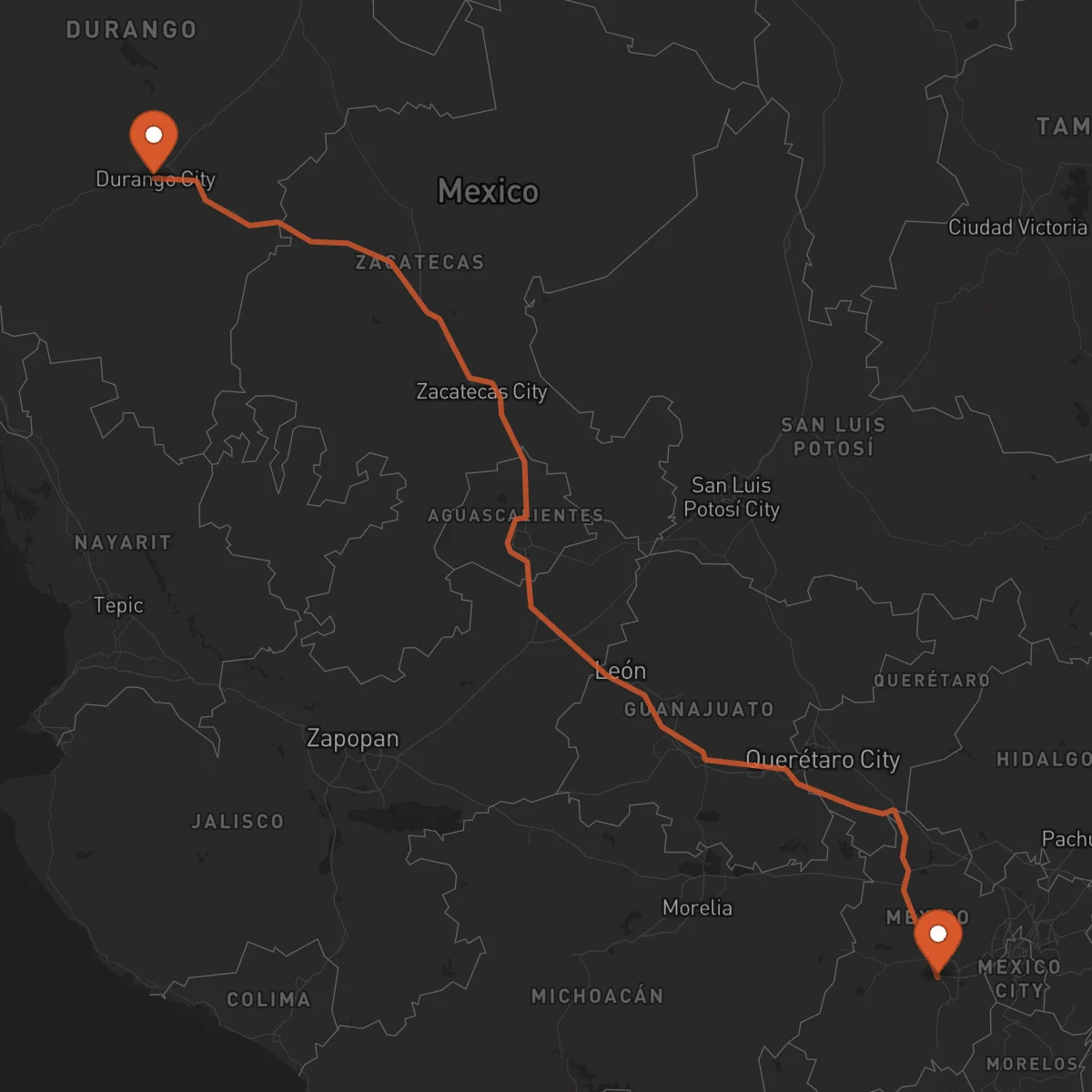
Durango to Toluca
Toluca → DurangoFTL freight transportation service between Durango and Toluca. Reliable logistics solutions for your business.
Route Description
Everything you need to know about the corridor Durango - Toluca
The Durango-Toluca corridor represents a vital logistics route connecting the mining and industrial heart of northern Mexico with the manufacturing and automotive hub of the State of Mexico. This 738 km domestic corridor facilitates the movement of heavy industrial cargo, raw materials, and finished products between two economically significant regions. The route traverses diverse terrain and crosses several key industrial zones, making it essential for supply chain operations in central and northern Mexico.
The corridor's strategic importance is underscored by the complementary economic activities of both regions. Durango serves as a major mining and agricultural center, while Toluca is renowned for its aerospace, automotive, and manufacturing industries. This creates a dynamic flow of specialized cargo, from mineral resources and agricultural products heading south to industrial components and finished goods moving north. The corridor supports the industrial ecosystem of central Mexico by ensuring reliable transportation of critical materials and products.
Key transportation infrastructure along this route includes major highways such as the Durango-Mexico Highway and the Mexico-Querétaro Highway, which provide efficient connectivity. Control Terrestre leverages this infrastructure through our network of certified transportation providers, offering specialized FTL services that ensure cargo integrity and timely delivery. Our expertise in handling diverse cargo types, from mining equipment to automotive parts, makes us the ideal partner for businesses operating along this crucial industrial corridor.
Services for this Route
Available services for the corridor Durango - Toluca
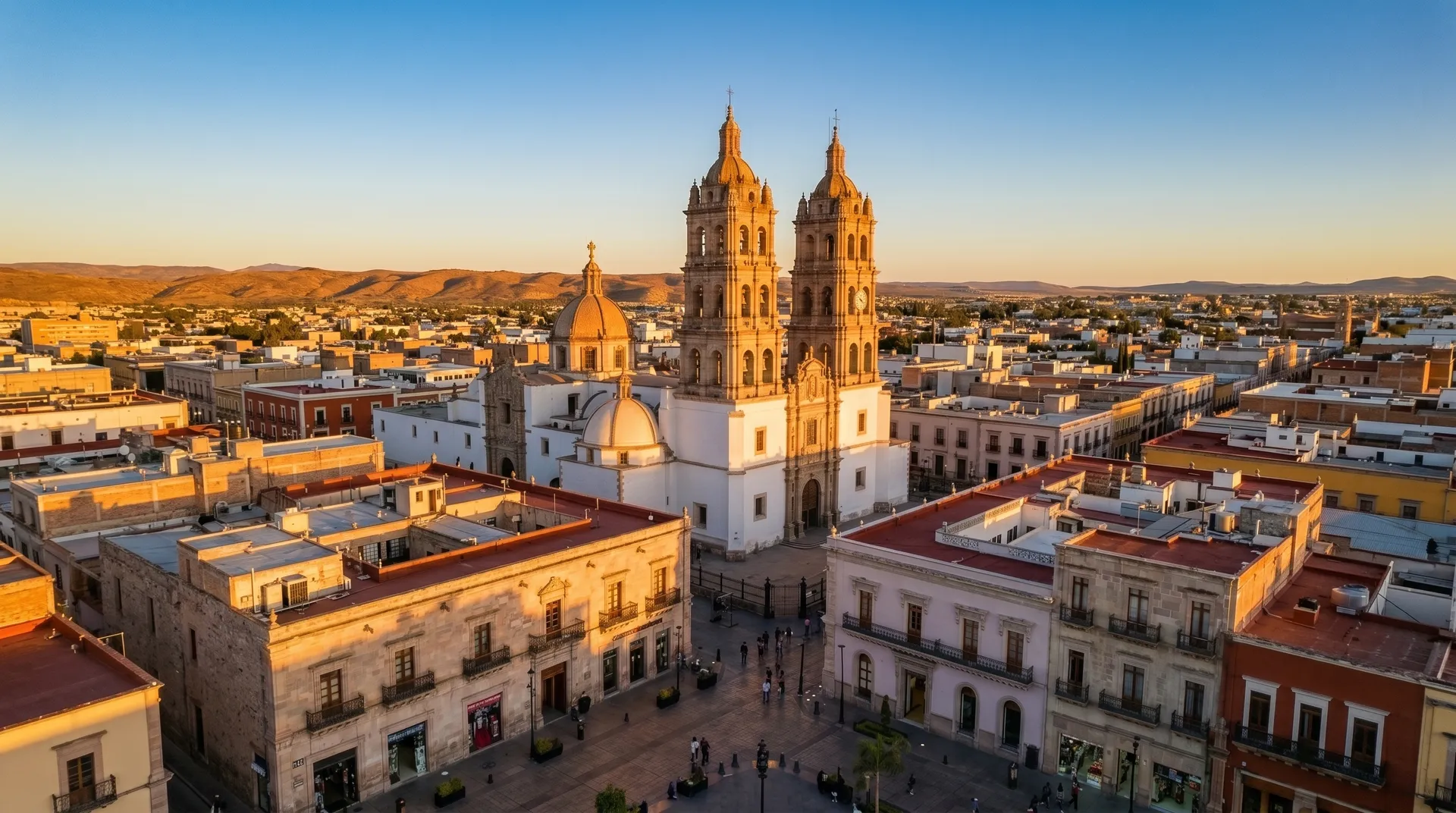 Origin
Durango stands as a strategic logistics hub in northern Mexico, characterized by its robust mining industry and agricultural production. The city's location provides excellent connectivity to major industrial centers across the north and central regions of the country. Durango's economic strength lies in its mining sector, particularly silver, gold, and zinc extraction, complemented by significant agricultural activities including grape cultivation and livestock production. The region's industrial parks and mining operations require reliable transportation solutions for both inbound raw materials and outbound finished products.
The city boasts modern transportation infrastructure, including the Durango International Airport and well-maintained highway connections to major cities like Zacatecas, Monterrey, and Mexico City. The Durango-Mexico Highway serves as a primary artery for freight movement, supporting the region's industrial activities. Control Terrestre's presence in Durango ensures that local businesses have access to specialized FTL transportation services, connecting them efficiently with markets across Mexico and beyond.
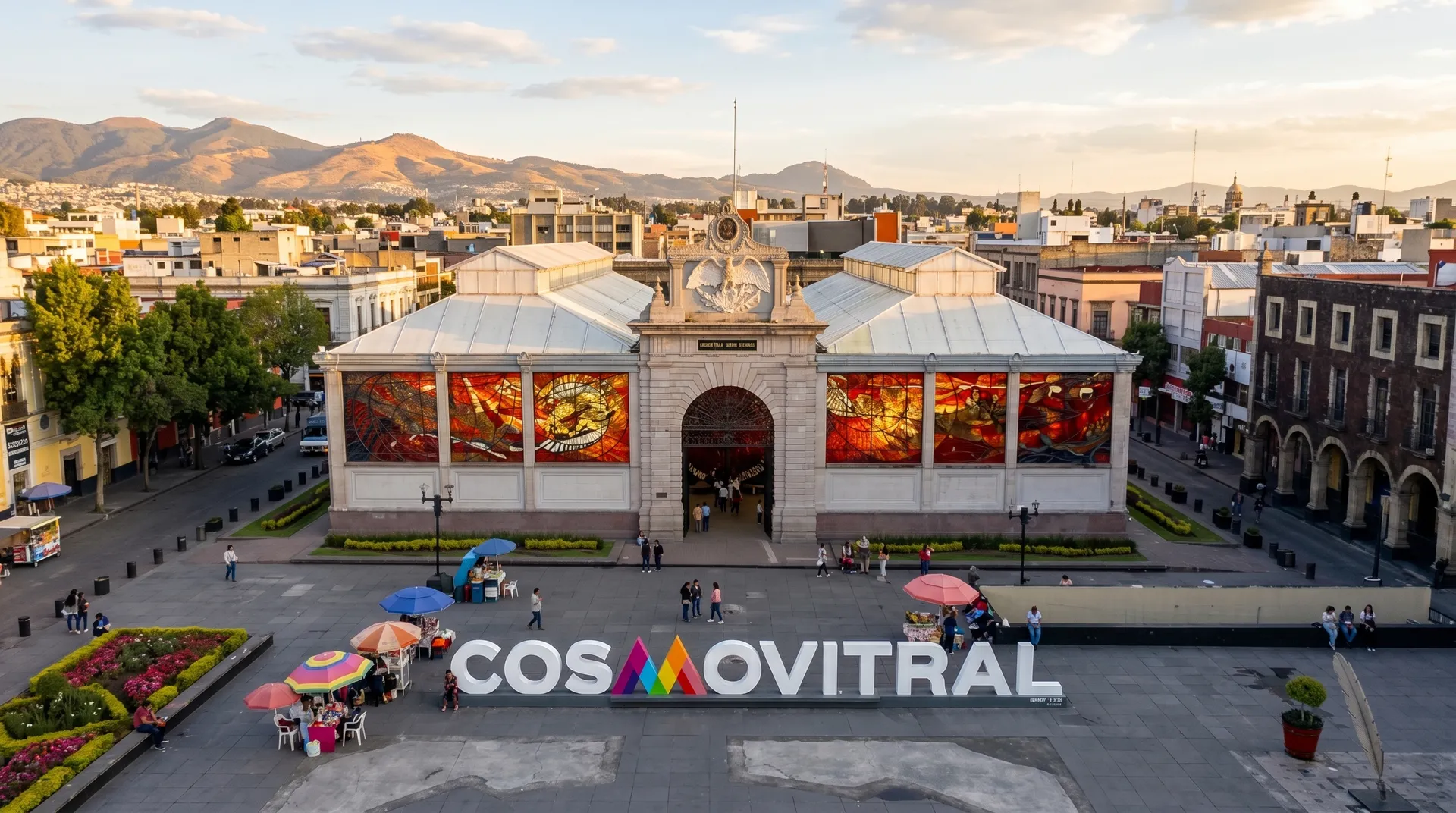 Destination
Toluca
Toluca represents a strategic logistics center in the State of Mexico, serving as a gateway to Mexico's most industrialized region. The city's proximity to Mexico City and its established industrial infrastructure make it a crucial node in the national supply chain. Toluca's economy is dominated by the aerospace industry, automotive manufacturing, and food processing, with major global companies maintaining significant operations in the area. The region's industrial parks and manufacturing facilities require sophisticated logistics solutions to support just-in-time production and distribution networks.
The city benefits from excellent transportation infrastructure, including the Mexico City International Airport, multiple highway connections, and proximity to major rail terminals. The Mexico-Querétaro Highway and other arterial routes provide efficient access to central and northern Mexico. Control Terrestre's specialized FTL services in Toluca support the region's advanced manufacturing sector by ensuring reliable, secure transportation of high-value cargo, components, and finished products to and from this critical industrial hub.










