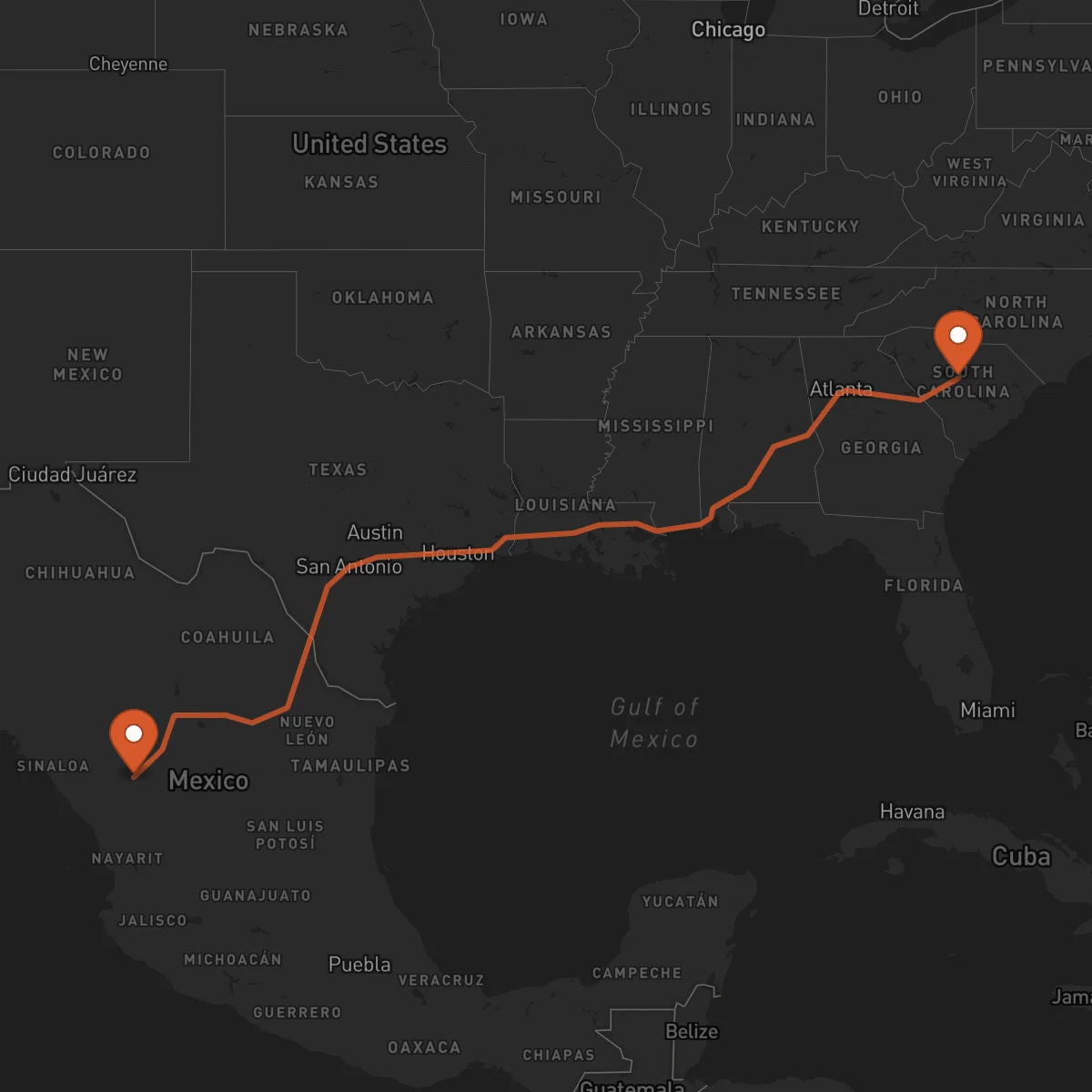
Durango to Columbia
Columbia → DurangoFTL freight transportation service between Durango and Columbia. Reliable logistics solutions for your business.
Route Description
Everything you need to know about the corridor Durango - Columbia
The Durango-Columbia corridor connects the industrial heart of northern Mexico with a key logistics hub in the southeastern United States. This 2,543 km cross-border route is essential for companies moving full truckload freight between Mexico and the US East Coast. Durango serves as a strategic industrial center in Mexico, while Columbia functions as a distribution and manufacturing hub in South Carolina. The corridor primarily utilizes major highways including Mexico's Federal Highway 45D and the US interstate system, with the Laredo-Nuevo Laredo border crossing being the most common entry point. Control Terrestre's expertise in cross-border operations ensures seamless customs clearance and efficient transit through this vital trade lane. Our C-TPAT certified carriers and experienced logistics team handle all aspects of the journey, from origin pickup in Durango to final delivery in Columbia.
Services for this Route
Available services for the corridor Durango - Columbia
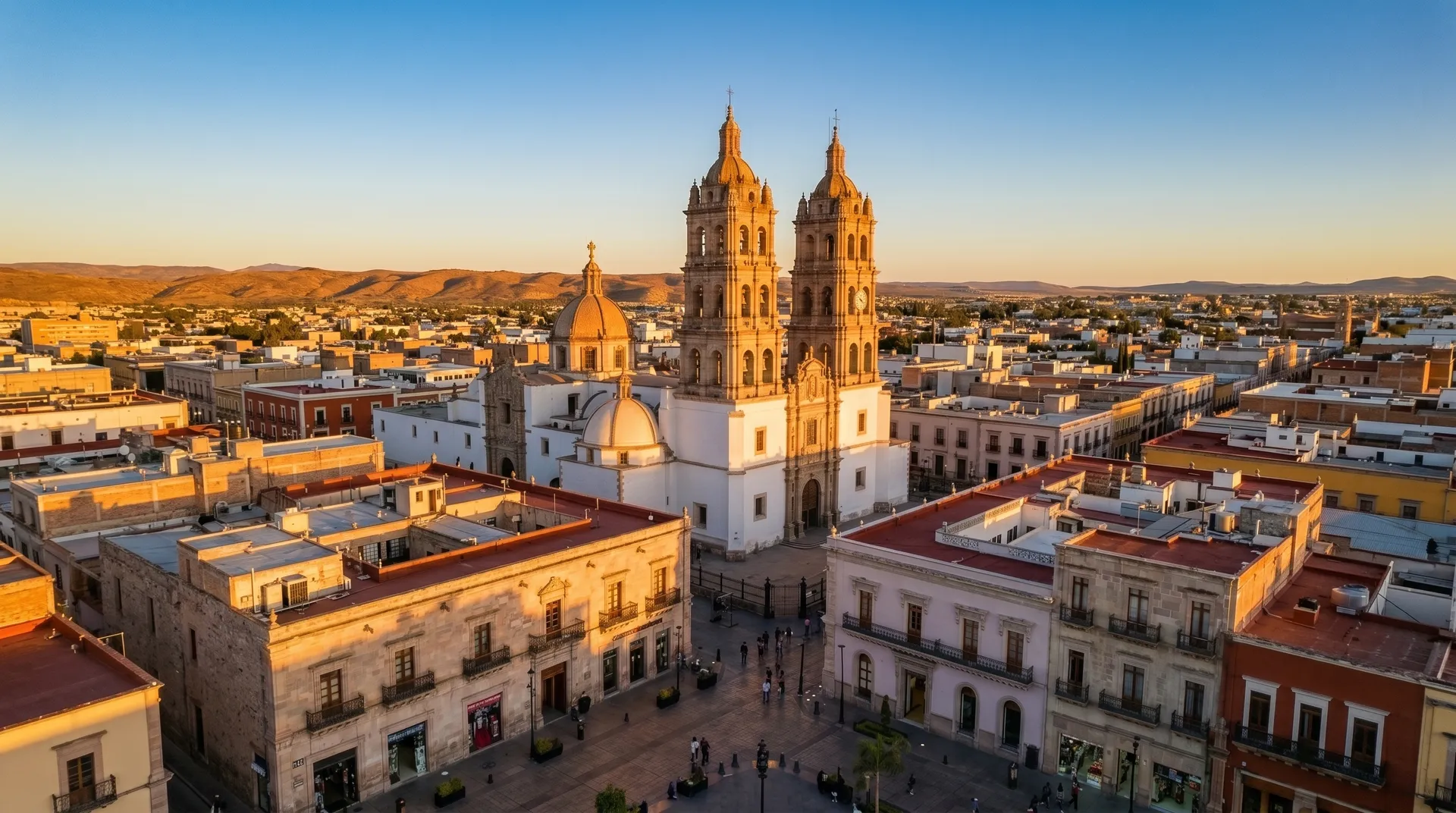 Origin
Durango is a key industrial and manufacturing center in northern Mexico, known for its automotive, mining, and agricultural sectors. The city's strategic location provides excellent connectivity to major industrial corridors and border crossings. Durango's transportation infrastructure includes access to Mexico's Federal Highway 45D, which connects to the US border, as well as rail connections for intermodal transport. The region's industrial parks and manufacturing facilities make it a significant origin point for cross-border freight movements, particularly for automotive parts, mining equipment, and agricultural products.
 Destination
Columbia
Columbia serves as a major logistics and distribution center in South Carolina, strategically positioned along the I-20 and I-26 corridors. The city benefits from excellent transportation infrastructure, including the Columbia Metropolitan Airport, multiple rail connections, and proximity to major ports. Columbia's economy is driven by manufacturing, healthcare, and education sectors, with a growing presence in automotive and advanced manufacturing. The region's logistics advantages include access to major distribution networks and a skilled workforce, making it an ideal destination for freight movements from Mexico.










