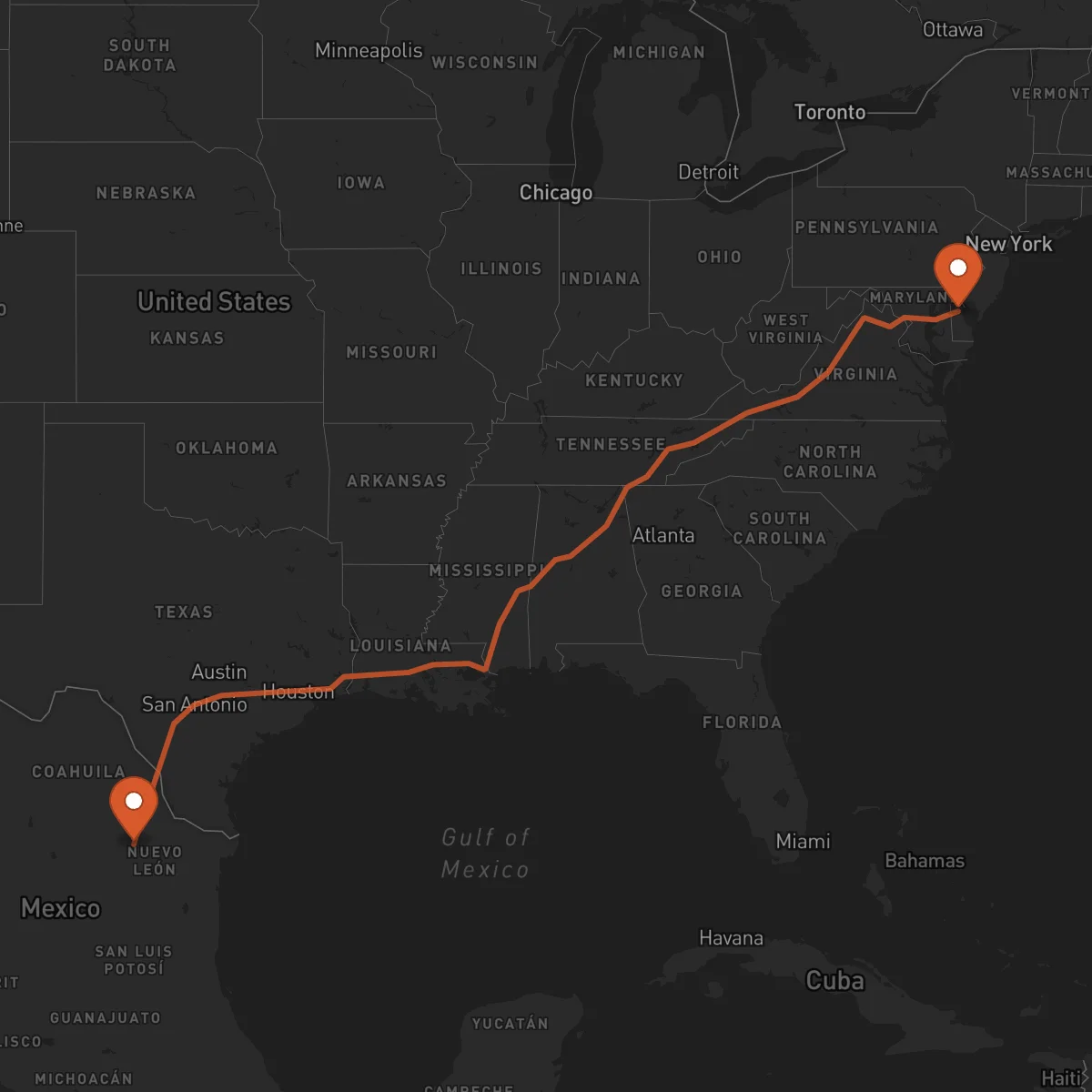
Dover to Monterrey
Monterrey → DoverFTL freight transportation service between Dover and Monterrey. Reliable logistics solutions for your business.
Route Description
Everything you need to know about the corridor Dover - Monterrey
The logistics corridor connecting Dover, Delaware to Monterrey, Nuevo León represents a vital cross-border freight route spanning approximately 2,753 kilometers. This corridor links the Mid-Atlantic industrial base with Mexico's industrial powerhouse in northeastern Mexico. The route traverses major transportation hubs including Philadelphia, Baltimore, and Washington D.C., before crossing at Laredo-Nuevo Laredo, the busiest inland port on the U.S.-Mexico border. Control Terrestre specializes in full truckload (FTL) services along this corridor, ensuring dedicated capacity for your freight with seamless customs clearance and border crossing expertise. Our C-TPAT-certified carriers provide secure, reliable transportation with real-time tracking and dedicated customer support throughout the journey.
Services for this Route
Available services for the corridor Dover - Monterrey
 Origin
Dover
Dover, Delaware serves as a strategic logistics hub in the Mid-Atlantic region, offering proximity to major East Coast markets and ports. The city benefits from its location near the Port of Wilmington and major highways including I-95 and U.S. Route 13. Dover's economy features strong manufacturing, aerospace, and defense sectors, with companies like Kraft Foods and Procter & Gamble maintaining significant operations. The Dover Air Force Base and Delaware Technical Community College contribute to a skilled workforce and specialized logistics capabilities. The region's well-developed infrastructure supports efficient freight movement to both northern and southern destinations.
 Destination
Monterrey
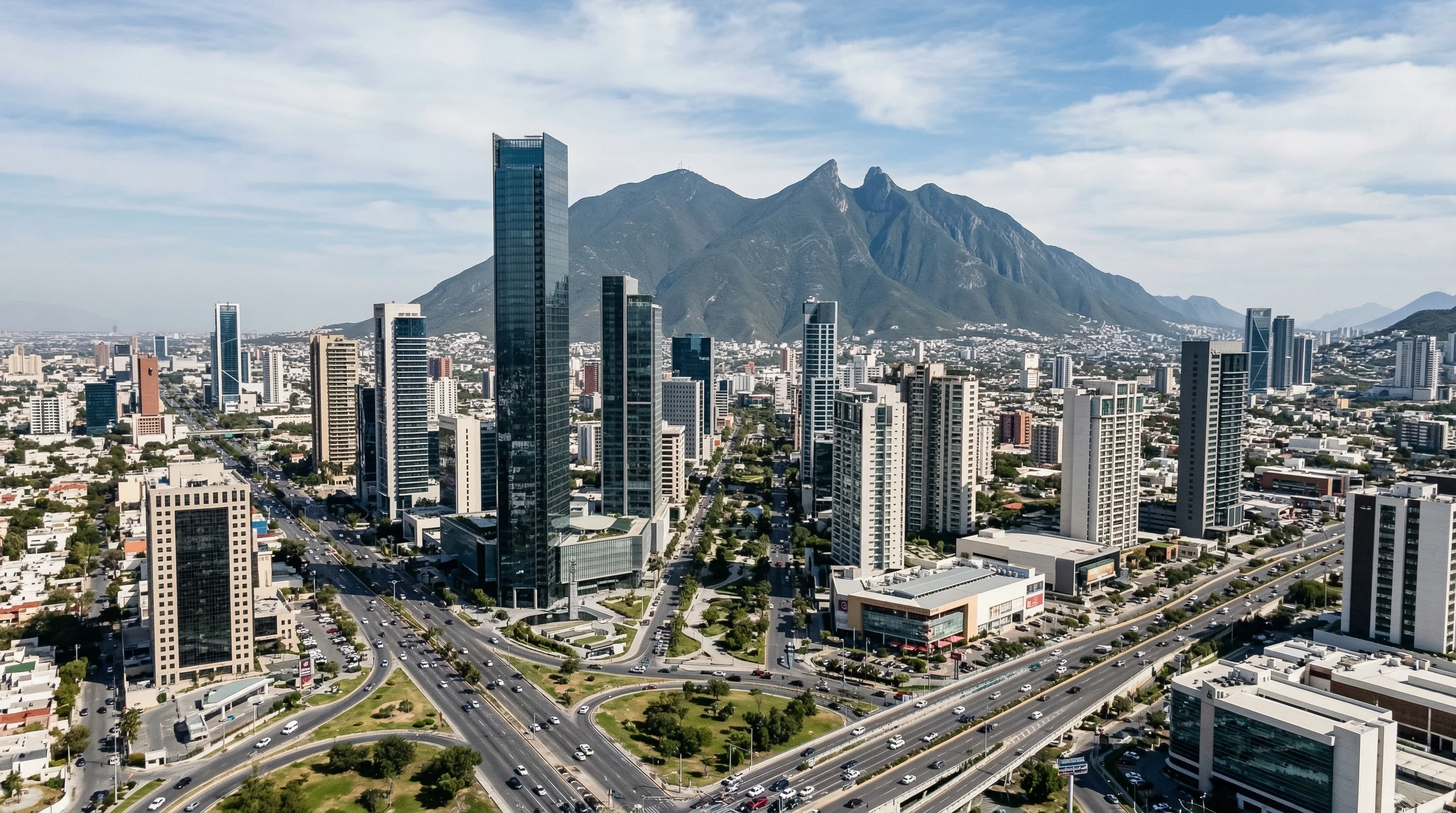
Monterrey, Nuevo León stands as Mexico's third-largest metropolitan area and a leading industrial center. Known as the "Sultan of the North," Monterrey hosts major manufacturing operations for automotive, steel, cement, glass, and food processing industries. The city's strategic location provides access to the U.S. border within hours and connects to Mexico's major ports. Monterrey's logistics infrastructure includes international airport, extensive highway network (including NAFTA corridor), and rail connections. The region's industrial parks and free trade zones make it a preferred destination for cross-border manufacturing and distribution operations.










