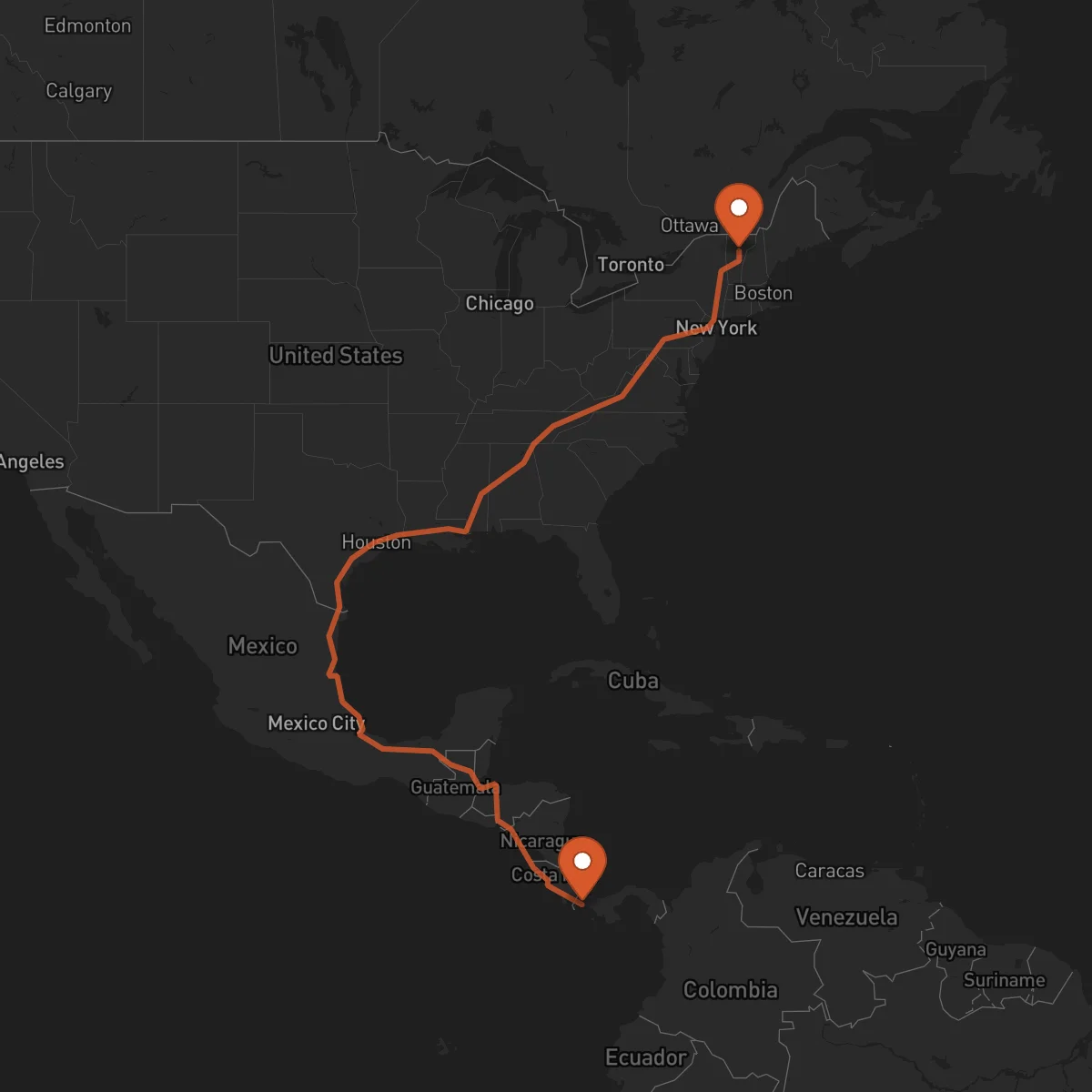
David to Montpelier
Montpelier → DavidFTL freight transportation service between David and Montpelier. Reliable logistics solutions for your business.
Route Description
Everything you need to know about the corridor David - Montpelier
The David, Chiriquí to Montpelier, Vermont corridor represents a critical north-south logistics artery connecting Central America's agricultural heartland with the strategic markets of New England. Spanning approximately 4,100 km, this cross-border route is vital for moving time-sensitive and high-value full truckload (FTL) freight across diverse regulatory and geographic landscapes. The corridor's strategic importance is underscored by its role in facilitating trade between Panama's export-oriented economy and the consumer and industrial markets of the northeastern United States, a key gateway for distribution into Canada.
Economically, the region is defined by robust agricultural and light manufacturing sectors. Chiriquí Province is a global breadbasket, producing significant volumes of coffee, bananas, sugar, and livestock products that require efficient, temperature-controlled transport. Montpelier and the surrounding Vermont region are renowned for dairy, maple syrup, artisanal foods, and specialized manufacturing. These complementary economic drivers create consistent, bidirectional freight demand, making a reliable FTL corridor essential for supply chain stability.
Industries leveraging this route include agribusiness exporters from Panama, food and beverage distributors in the U.S., and manufacturers with supply chains spanning both regions. The transportation infrastructure relies heavily on the Pan-American Highway (via the Interamericana) through Central America, transitioning to the U.S. Interstate system (primarily I-10, I-20, I-95) for the domestic leg. The primary formal border crossing is at the Panama-Costa Rica border (e.g., Paso Canoas/ Sixaola), followed by the U.S.-Mexico border. Each crossing presents unique customs and regulatory requirements, particularly for agricultural products, hazardous materials, or oversized cargo.
Control Terrestre facilitates seamless operations on this complex corridor through our alliance of certified providers. Our partners hold essential credentials including C-TPAT, FAST, and BASC, which streamline customs clearance and enhance security protocols for cross-border movements. We manage the entire journey as a unified, door-to-door FTL service, coordinating transloads where necessary and ensuring compliance with all U.S., Panamanian, and Costa Rican regulations. By leveraging our network's expertise in long-haul, cross-continental transport, we provide our clients with a single point of contact for a reliably managed supply chain, from the fields of Chiriquí to the distributors of Vermont.
Services for this Route
Available services for the corridor David - Montpelier
 Origin
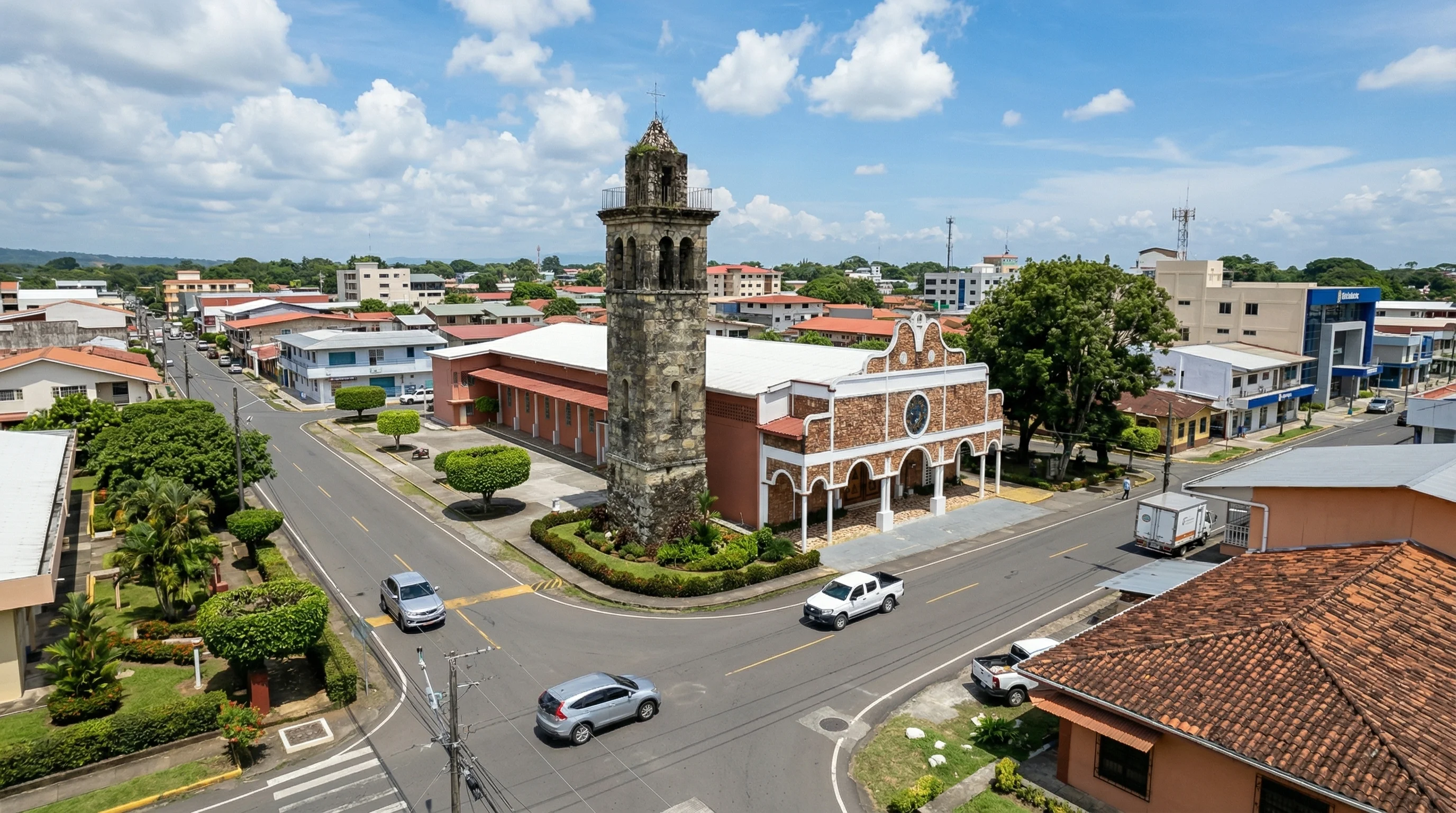
David, the capital of Panama's Chiriquí Province, is a pivotal logistics hub for the country's most productive agricultural region. Its strategic location is defined by proximity to both the Costa Rican border and the Pacific coast, providing access to major ports like Balboa and international highway networks. The city serves as the primary collection and distribution center for Chiriquí, an area responsible for a substantial portion of Panama's coffee, banana, sugar cane, and cattle exports. This creates a constant demand for outbound FTL freight, particularly in refrigerated and dry van equipment, to move perishable goods to North American markets. The local infrastructure is supported by the Pan-American Highway (Route 1), which provides the essential northbound land link. David's airport also offers supplemental air cargo options for high-value or urgent shipments, though the core of bulk export logistics remains firmly grounded in long-haul trucking, making it a foundational origin point for cross-border freight corridors.
 Destination
Montpelier
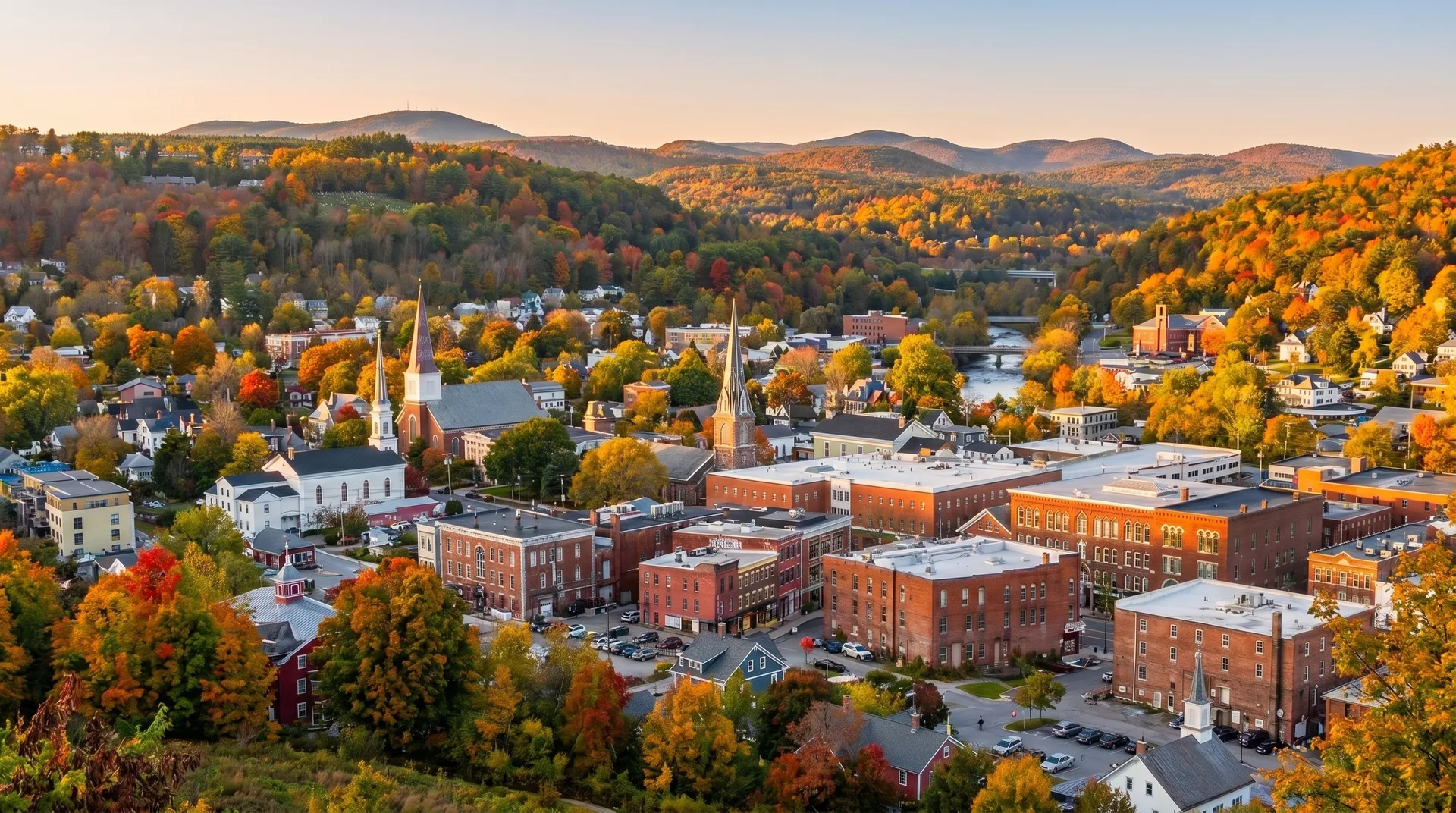
Montpelier, the capital of Vermont, functions as a strategic logistics node within the New England region, despite its smaller urban footprint. Its location provides efficient access to major interstate corridors (primarily I-89) that connect to the broader U.S. Northeast and Canadian markets via key border crossings. The local and state economy is heavily anchored in agriculture—notably dairy, maple syrup, and organic produce—along with specialized manufacturing and food processing. This generates consistent inbound FTL demand for raw materials and outbound shipments of finished goods. The transportation infrastructure is well-adapted for freight, with I-89 serving as the primary arterial route linking Montpelier to larger distribution centers in Burlington, New Hampshire, and beyond. Its position allows for efficient last-mile distribution throughout Vermont and serves as a consolidation point for goods destined for the broader Northern New England and Eastern Canada markets, making it a crucial destination for dedicated and cross-border freight services.










