
Cuilapa to Augusta
Augusta → CuilapaFTL freight transportation service between Cuilapa and Augusta. Reliable logistics solutions for your business.
Route Description
Everything you need to know about the corridor Cuilapa - Augusta
The logistics corridor connecting Cuilapa, Santa Rosa, Guatemala to Augusta, Maine represents a vital cross-border transportation route spanning approximately 3,864 kilometers. This corridor serves as a critical link between Central America and the northeastern United States, facilitating the movement of goods through diverse terrains and multiple international borders. The route traverses Mexico's extensive highway network before crossing into the United States through key border crossings, ultimately connecting to the industrial hubs of the northeastern region.
This corridor is particularly significant for industries requiring specialized transportation services, including refrigerated cargo, hazardous materials, and oversized freight. The route accommodates the growing trade between Guatemala and the United States, supporting sectors such as automotive parts, agricultural products, electronics, and manufacturing components. The infrastructure along this corridor includes major highways such as Mexico's Carretera Federal 190 and the United States' Interstate systems, providing reliable transportation options for full truckload shipments.
Control Terrestre facilitates seamless operations along this corridor through our network of certified carriers and strategic partnerships. Our expertise in cross-border logistics ensures compliance with customs regulations, efficient border crossing procedures, and real-time tracking capabilities. We provide dedicated services for time-sensitive and specialized cargo, leveraging our C-TPAT and FAST certifications to expedite clearance processes and minimize delays. Our comprehensive door-to-door solutions ensure that shipments from Cuilapa reach their final destination in Augusta efficiently and securely.
Services for this Route
Available services for the corridor Cuilapa - Augusta
 Origin
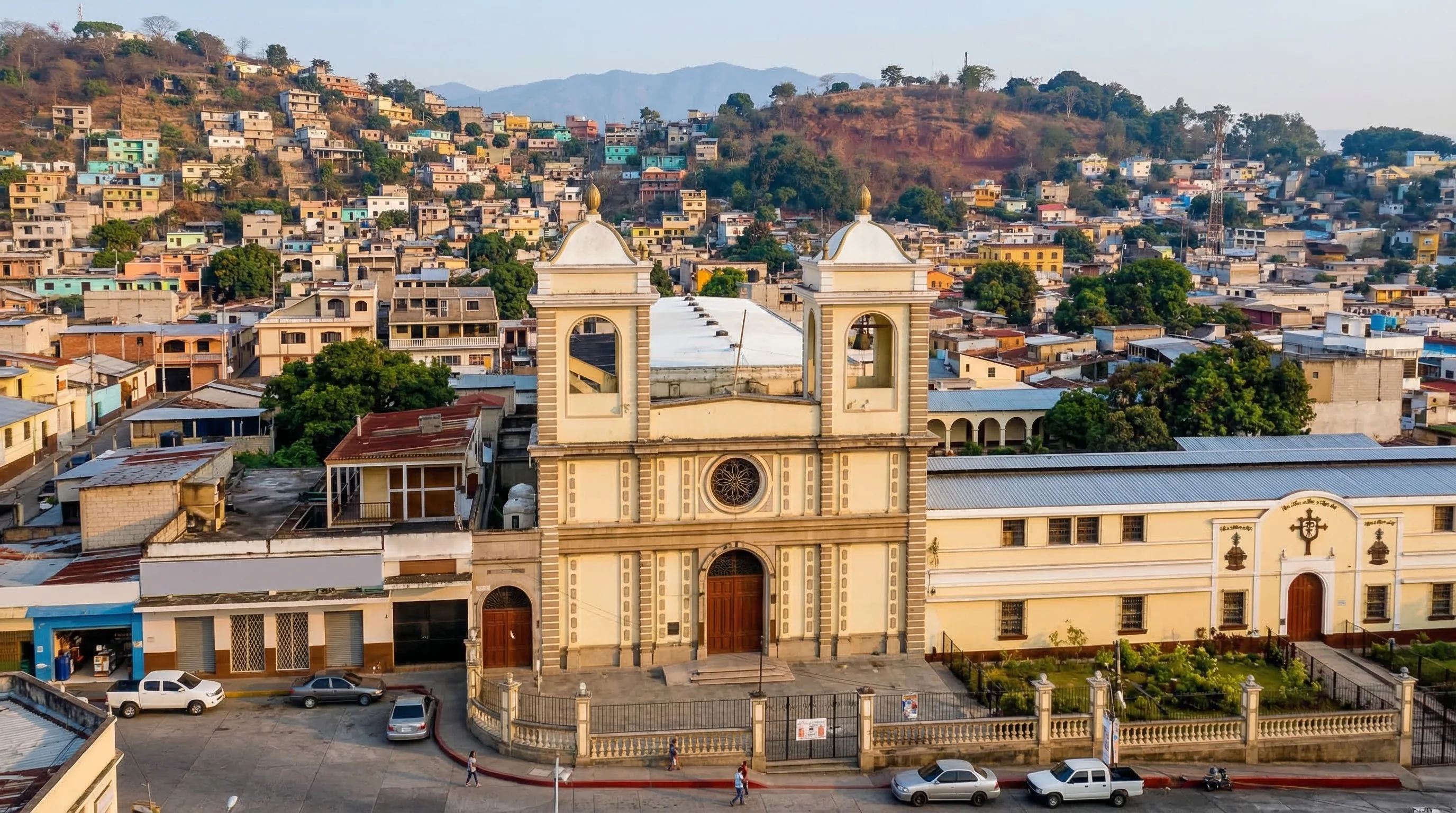
Cuilapa
Cuilapa, located in the department of Santa Rosa, Guatemala, serves as a strategic logistics hub in southern Guatemala. Its proximity to the El Salvador border and major transportation routes makes it an ideal origin point for cross-border shipments. The region benefits from Guatemala's Pacific corridor, providing access to both Atlantic and Pacific ports, which enhances its connectivity to international markets. Cuilapa's location allows for efficient consolidation of cargo from surrounding industrial areas and agricultural regions.
The economic landscape of Cuilapa and Santa Rosa includes significant agricultural production, textile manufacturing, and food processing industries. The region's infrastructure includes well-maintained highways connecting to Guatemala City and border crossings, facilitating smooth cargo movement. The area's growing industrial parks and manufacturing facilities generate substantial freight volume, making it a key origin point for exports to the United States and Canada.
 Destination
Augusta
Augusta, Maine, serves as a strategic logistics destination in the northeastern United States, offering access to major markets in New England and beyond. Located along the Kennebec River and with proximity to Interstate 95, Augusta provides excellent connectivity for freight distribution throughout the region. The city's location allows for efficient last-mile delivery to Maine's extensive rural areas and industrial centers, making it a crucial endpoint for cross-border shipments.
The economic profile of Augusta includes healthcare, government services, manufacturing, and technology sectors. The region's industrial base encompasses paper products, electronics, and specialized equipment manufacturing. Augusta's infrastructure includes modern warehousing facilities, intermodal terminals, and a robust road network that supports efficient freight handling. The city's strategic position provides access to major ports in Portland and Boston, further enhancing its role in regional distribution networks.










