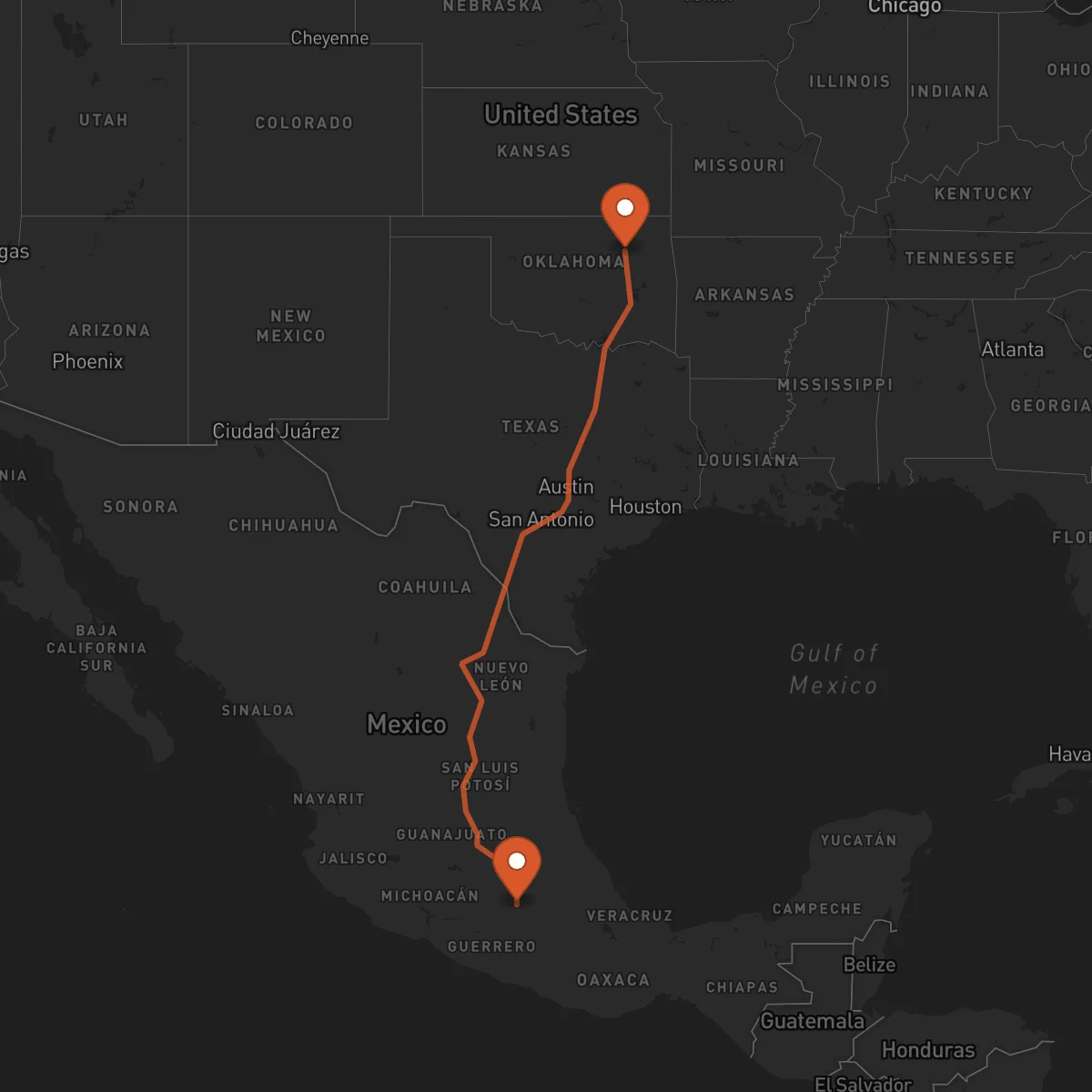
Cuernavaca to Tulsa
Tulsa → CuernavacaFTL freight transportation service between Cuernavaca and Tulsa. Reliable logistics solutions for your business.
Route Description
Everything you need to know about the corridor Cuernavaca - Tulsa
The logistics corridor connecting Cuernavaca, Morelos to Tulsa, Oklahoma represents a vital cross-border freight transportation route spanning approximately 1,942 kilometers. This strategic corridor links Mexico's industrial heartland with one of the United States' most important energy and manufacturing hubs. The route traverses key economic regions, facilitating the movement of goods between North America's most dynamic markets. Control Terrestre specializes in managing this cross-border corridor with expertise in customs procedures, regulatory compliance, and efficient cargo handling. Our comprehensive understanding of both Mexican and U.S. transportation networks ensures seamless freight movement across this critical international trade route.
Services for this Route
Available services for the corridor Cuernavaca - Tulsa
 Origin
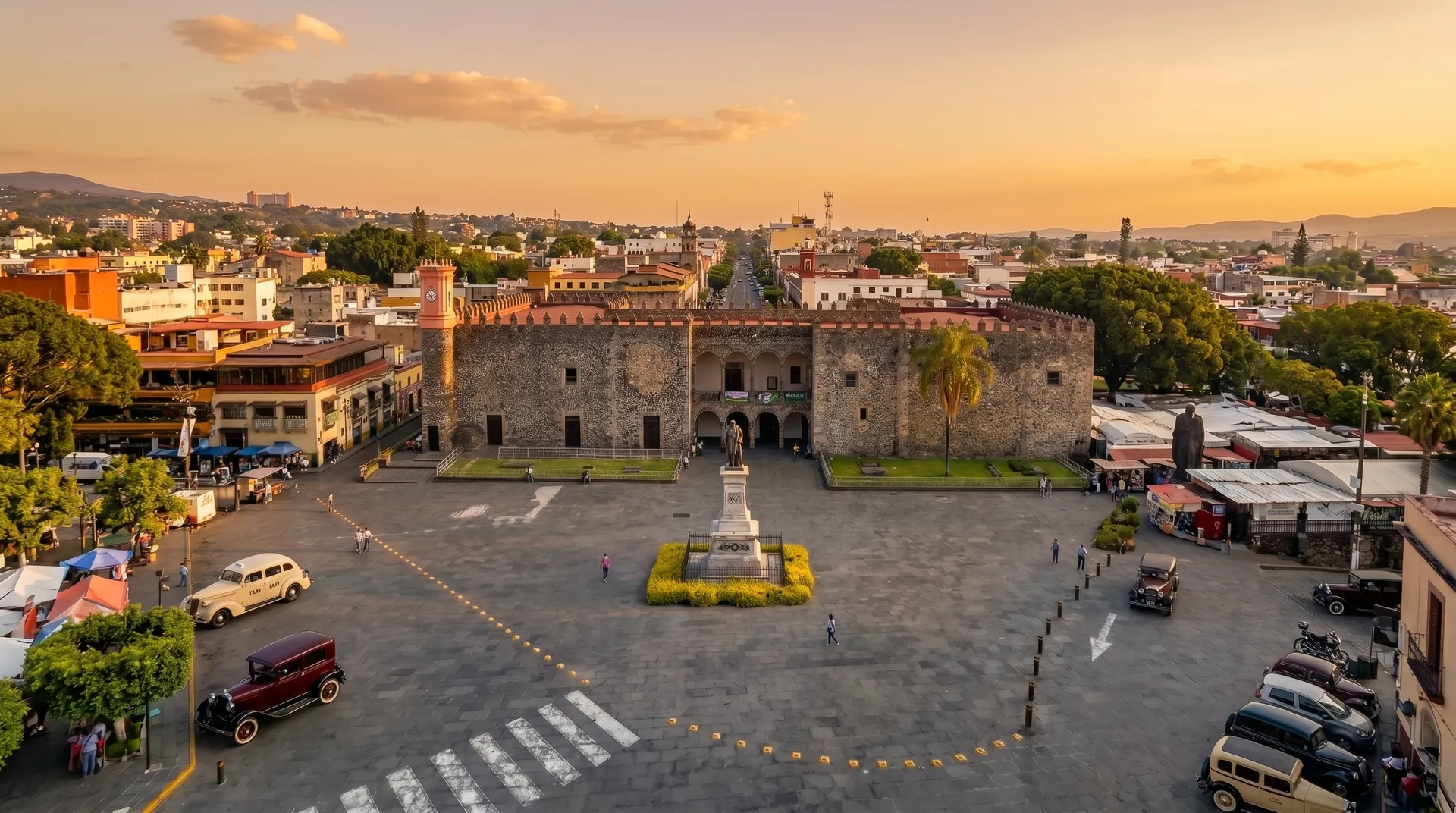
Cuernavaca, known as the "City of Eternal Spring," serves as a strategic logistics hub in central Mexico. Located just south of Mexico City, it benefits from proximity to major industrial centers and transportation networks. The region hosts diverse industries including pharmaceuticals, automotive components, food processing, and textiles. Cuernavaca's logistics infrastructure includes access to Federal Highway 160 and connections to Mexico's extensive highway system. The city's industrial parks and manufacturing facilities generate substantial freight volume, making it an important origin point for cross-border shipments to the United States.
 Destination
Tulsa
Tulsa, Oklahoma stands as a strategic logistics and industrial center in the southern United States. Known as the "Oil Capital of the World," Tulsa hosts major energy companies, aerospace manufacturers, and logistics operations. The city's location provides excellent access to the central U.S. market and major transportation corridors including Interstate 44 and the Port of Catoosa on the McClellan-Kerr Arkansas River Navigation System. Tulsa's diverse economy encompasses energy, aerospace, telecommunications, and manufacturing sectors, creating consistent demand for efficient freight transportation solutions connecting Mexico with the U.S. heartland.










