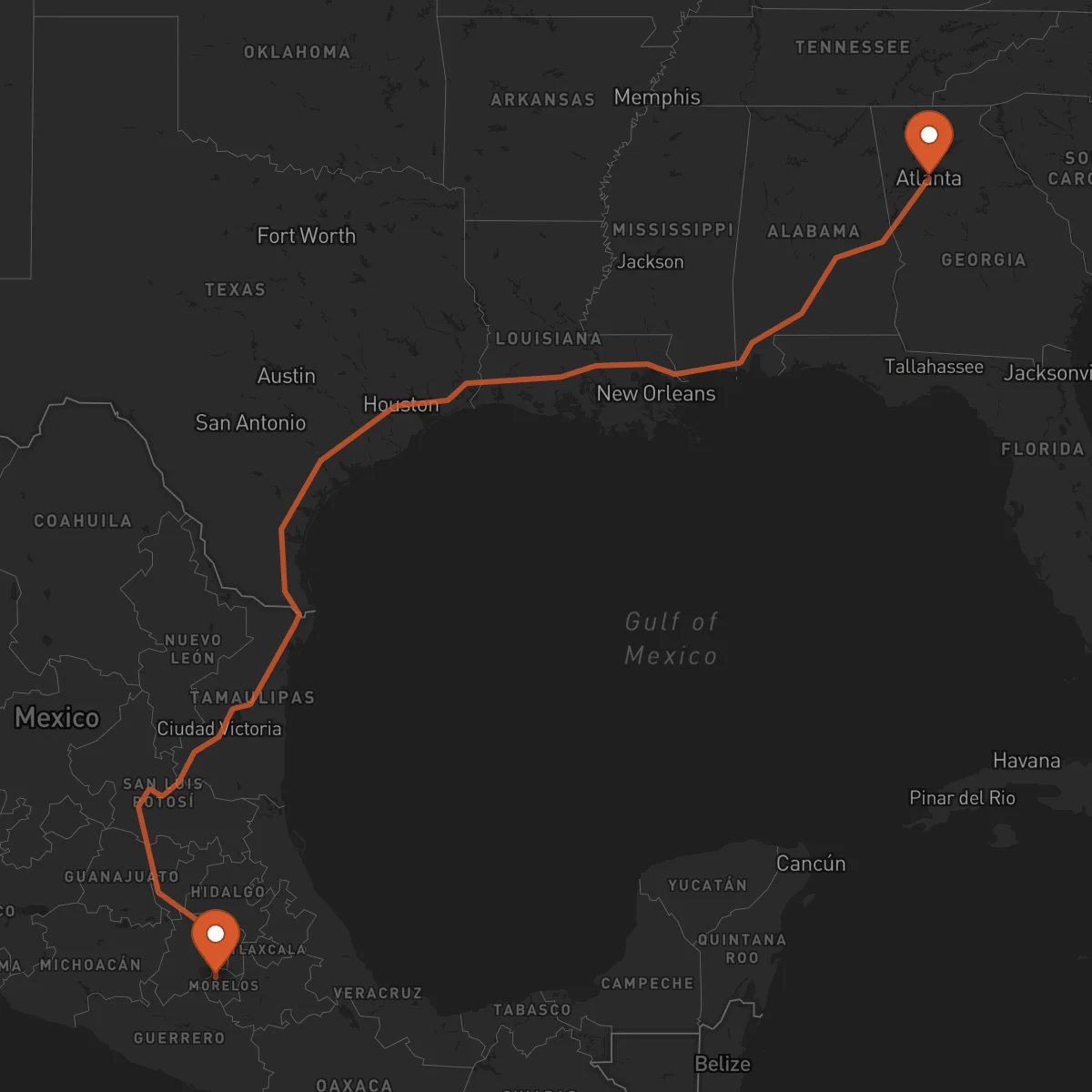
Cuernavaca to Atlanta
Atlanta → CuernavacaFTL freight transportation service between Cuernavaca and Atlanta. Reliable logistics solutions for your business.
Route Description
Everything you need to know about the corridor Cuernavaca - Atlanta
The logistics corridor between Cuernavaca and Atlanta represents a vital trade route connecting the industrial heartland of central Mexico with one of the most dynamic economic centers in the southeastern United States. This cross-border corridor spans approximately 2,209 kilometers, traversing diverse terrain and crossing international borders to facilitate the movement of goods between two major industrial regions. The route serves as a crucial link for companies operating in both the automotive, aerospace, and manufacturing sectors, where just-in-time delivery and supply chain efficiency are paramount.
The transportation infrastructure along this corridor is robust, primarily utilizing Mexico's Federal Highway 95D connecting Cuernavaca to Mexico City, then continuing north through Monterrey before crossing at Laredo/Nuevo Laredo. From there, major U.S. interstate highways including I-35, I-30, and I-20 provide direct access to Atlanta. This well-established route benefits from modern highway systems and multiple border crossing options, with the Laredo crossing being one of the busiest commercial ports of entry between Mexico and the United States. Control Terrestre's expertise in navigating these cross-border operations ensures seamless customs clearance and efficient transit times for full truckload shipments.
Control Terrestre specializes in managing the complexities of this cross-border corridor, offering dedicated FTL services that cater to the specific needs of industries requiring reliable, temperature-controlled, or specialized transportation. Our C-TPAT certified carriers and experienced logistics team handle all aspects of the journey, from pre-clearance documentation to final delivery in Atlanta's extensive intermodal facilities. We understand the unique challenges of cross-border freight, including customs regulations, border wait times, and the coordination required between Mexican and U.S. transportation networks, ensuring your cargo moves efficiently and securely from origin to destination.
Services for this Route
Available services for the corridor Cuernavaca - Atlanta
 Origin
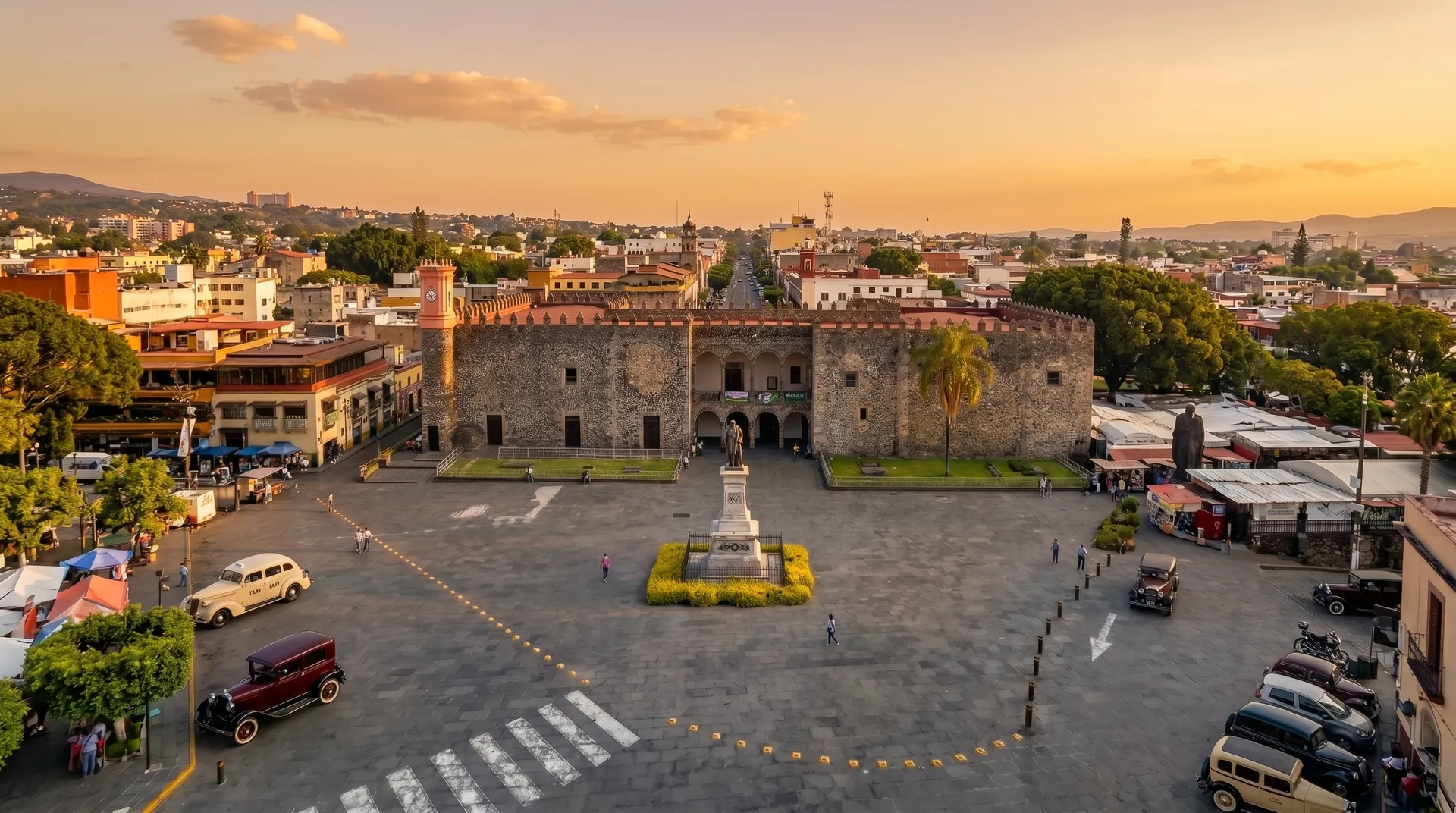
Cuernavaca, located in the state of Morelos, Mexico, serves as a strategic logistics hub in central Mexico, positioned just 85 kilometers south of Mexico City. This proximity to the nation's capital provides excellent connectivity to major industrial centers while offering competitive advantages in terms of operational costs and accessibility. The city benefits from its location within the broader Mexico City metropolitan area's logistics network, with access to multiple transportation modes including road, rail, and proximity to Mexico City's international airports.
The region surrounding Cuernavaca has developed strong industrial capabilities, particularly in automotive manufacturing, aerospace components, and medical devices. The presence of industrial parks and manufacturing facilities has created a robust demand for reliable freight transportation services. The area's infrastructure includes modern highways connecting to Mexico City and other major cities, as well as access to the extensive Mexican rail network for intermodal transportation options.
 Destination
Atlanta
Atlanta, Georgia stands as a premier logistics and distribution hub in the southeastern United States, strategically positioned to serve the entire region. The city's Hartsfield-Jackson International Airport, one of the busiest in the world, combined with its extensive highway network including I-20, I-75, and I-85, makes it an ideal gateway for freight distribution. Atlanta's location provides access to over 80% of the U.S. population within a two-hour flight radius, making it a critical node in North American supply chains.
The Atlanta metropolitan area hosts a diverse industrial base, with strong concentrations in automotive manufacturing, food and beverage processing, pharmaceuticals, and technology sectors. The region's logistics infrastructure includes multiple intermodal facilities, warehousing complexes, and distribution centers that handle millions of tons of freight annually. Atlanta's position as a major logistics center is further enhanced by its role in e-commerce distribution and its growing reputation as a technology and innovation hub.










