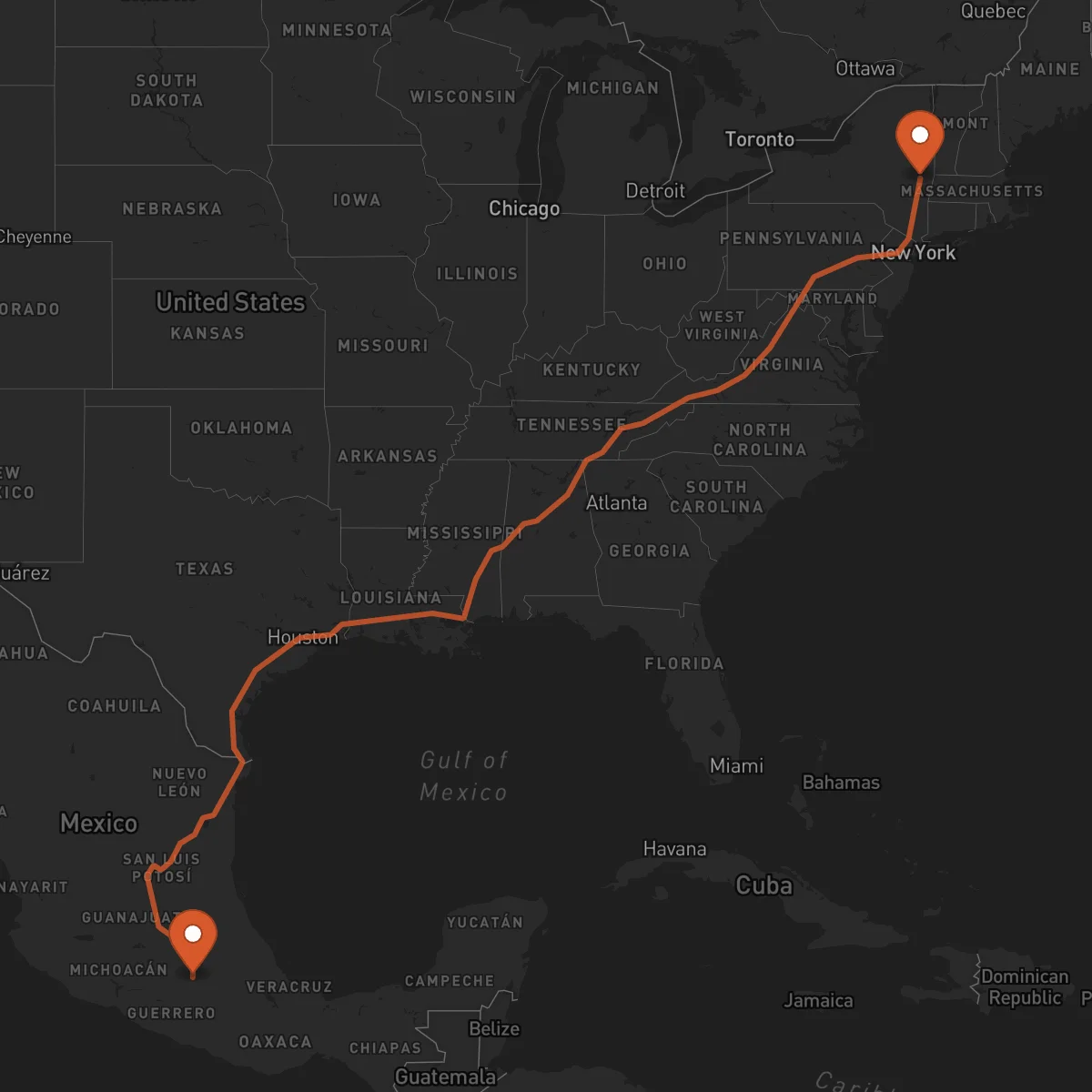
Cuernavaca to Albany
Albany → CuernavacaFTL freight transportation service between Cuernavaca and Albany. Reliable logistics solutions for your business.
Route Description
Everything you need to know about the corridor Cuernavaca - Albany
The Cuernavaca to Albany corridor represents a vital cross-border freight transportation route connecting central Mexico with the northeastern United States. This strategic corridor spans approximately 3,560 kilometers and facilitates the movement of diverse cargo types between two economically significant regions. The route traverses major industrial and commercial zones, connecting Mexico's manufacturing heartland with New York's logistics and distribution networks. Control Terrestre specializes in managing this complex cross-border operation, ensuring seamless freight movement through experienced coordination of transportation providers and customs clearance processes.
Services for this Route
Available services for the corridor Cuernavaca - Albany
 Origin
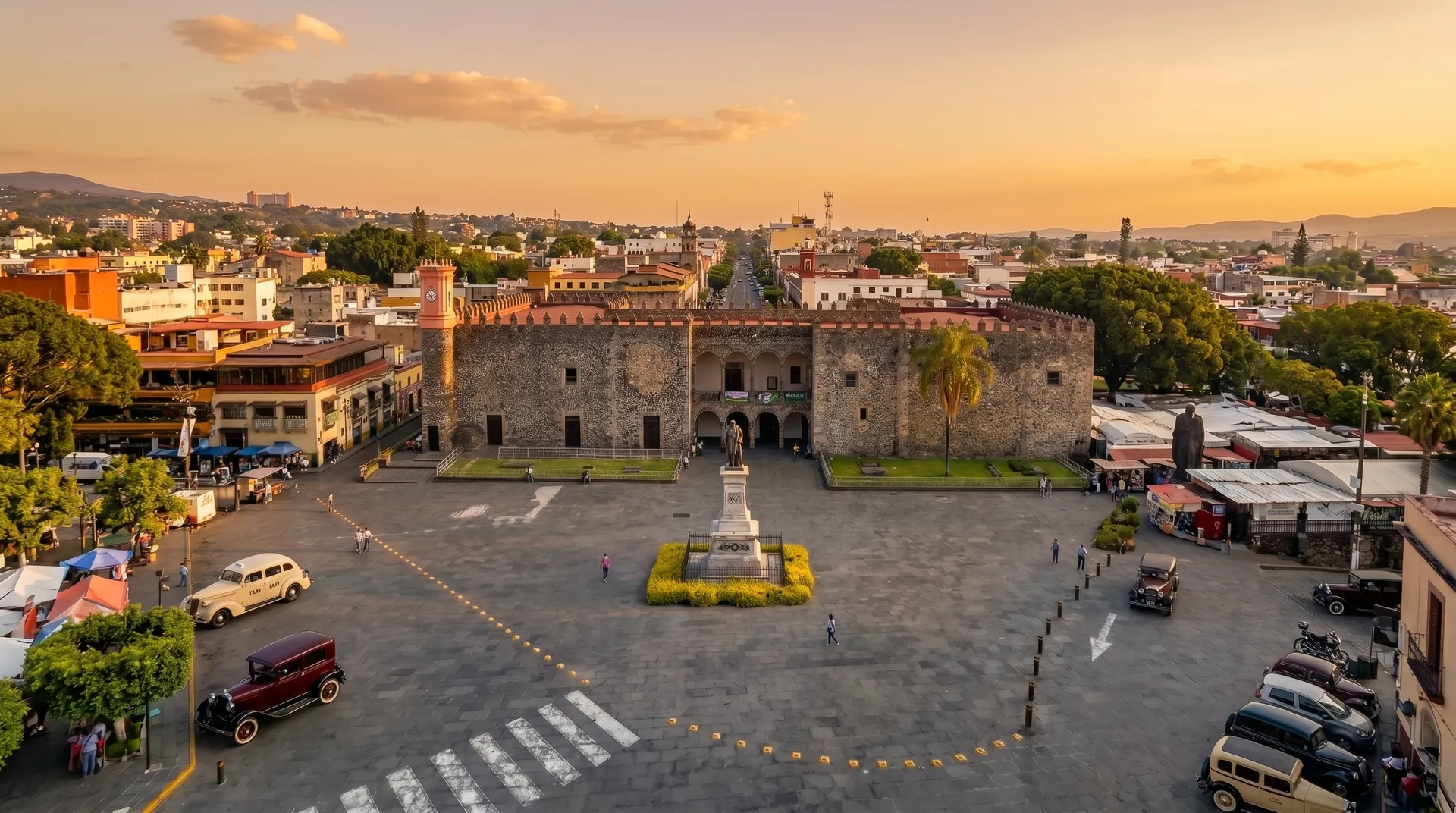
Cuernavaca, located in Morelos, Mexico, serves as a strategic logistics hub due to its proximity to Mexico City and its position within the country's industrial corridor. The city benefits from excellent connectivity to major highways including the Mexico-Cuernavaca and Mexico-Acapulco routes. Cuernavaca's economy features strong manufacturing, pharmaceutical, and agricultural sectors, generating consistent freight volume for cross-border transportation. The region's infrastructure includes modern warehousing facilities and distribution centers that support efficient cargo consolidation and preparation for international shipping.
 Destination
Albany
Albany, New York, stands as a crucial logistics center in the northeastern United States, offering strategic access to major markets including New York City, Boston, and Montreal. The city's location along the Hudson River and proximity to major interstate highways (I-90 and I-87) creates excellent distribution opportunities. Albany's economy encompasses government services, education, healthcare, and technology sectors, with significant warehousing and logistics operations supporting regional distribution needs. The area's infrastructure includes intermodal facilities and modern distribution centers that facilitate efficient freight handling and last-mile delivery.










