Concord to Cartago
Cartago → ConcordFTL freight transportation service between Concord and Cartago. Reliable logistics solutions for your business.
Route Description
Everything you need to know about the corridor Concord - Cartago
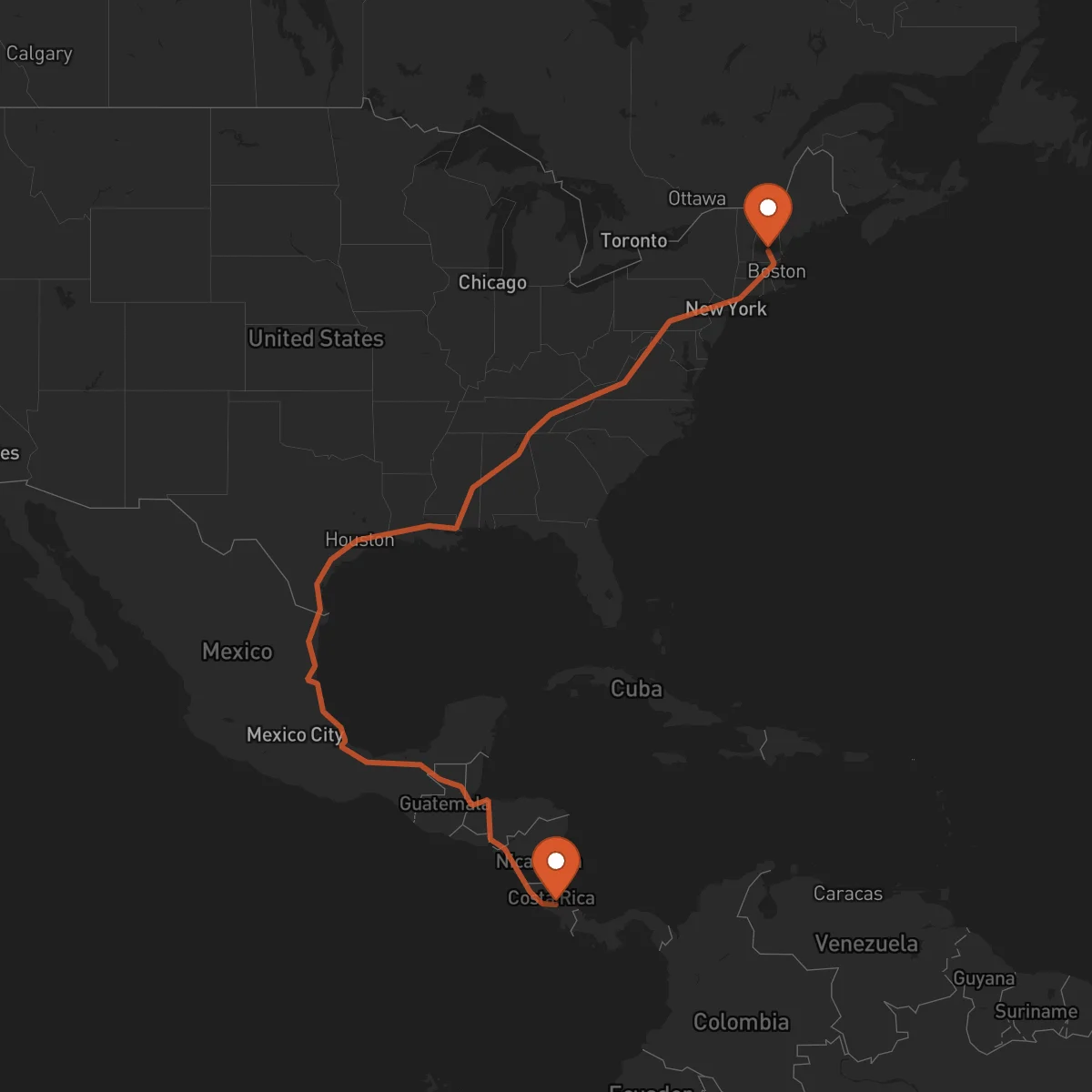
The logistics corridor between Concord, New Hampshire, and Cartago, Costa Rica, represents a vital trade route connecting the northeastern United States with Central America. This cross-border corridor spans approximately 3,897 kilometers, traversing diverse terrains and crossing multiple international borders. The route facilitates the movement of goods between two distinct economic regions, enabling businesses to optimize their supply chains across North and Central America.
The corridor's strategic importance lies in its ability to connect major industrial hubs in New England with the growing manufacturing and agricultural sectors in Costa Rica. This trade route supports a wide range of industries, including automotive parts, electronics, agricultural products, and manufactured goods. The journey begins in Concord, a key logistics center in New Hampshire, and extends through major U.S. transportation networks before crossing into Mexico and Central America.
Key transportation infrastructure along this corridor includes major interstate highways such as I-95, I-10, and CA-1, which provide reliable connectivity across multiple countries. The route involves critical border crossings, particularly at the U.S.-Mexico border and the border between Nicaragua and Costa Rica, where efficient customs clearance is essential for maintaining supply chain integrity. Control Terrestre facilitates seamless operations along this corridor by leveraging our extensive network of certified carriers and our expertise in cross-border logistics, ensuring that shipments move efficiently through each jurisdiction while complying with all regulatory requirements.
Services for this Route
Available services for the corridor Concord - Cartago
 Origin
Concord
Concord, New Hampshire serves as a strategic logistics hub in the northeastern United States, offering excellent connectivity to major markets along the East Coast and beyond. Located in Merrimack County, Concord benefits from its proximity to major transportation routes, including Interstate 93, which provides direct access to Boston and other key economic centers. The city's logistics infrastructure includes modern warehousing facilities, distribution centers, and a well-developed road network that supports efficient freight movement.
The economic landscape of Concord and the surrounding region is diverse, with strong presence in healthcare, education, technology, and advanced manufacturing sectors. The area is home to numerous small and medium-sized enterprises, as well as larger corporations that require reliable freight transportation services. Concord's industrial base includes specialized manufacturing, particularly in precision instruments and high-tech components, which often require dedicated full truckload (FTL) services for efficient distribution to international markets.
 Destination
Cartago
Cartago, Costa Rica, strategically located in the Central Valley region, serves as a key logistics and industrial center for Central America. The city benefits from its proximity to San José, the capital, and its access to major transportation routes, including the Inter-American Highway (CA-1), which connects Costa Rica with the rest of Central America and beyond. Cartago's infrastructure includes modern industrial parks, warehousing facilities, and a developing logistics ecosystem that supports both domestic and international trade.
The economic profile of Cartago is characterized by a mix of traditional and emerging industries. The region is known for its agricultural production, particularly in coffee, vegetables, and ornamental plants, as well as a growing manufacturing sector focused on electronics, medical devices, and automotive components. Cartago's strategic location makes it an ideal gateway for goods entering and exiting Costa Rica, with its industrial parks housing companies that require efficient cross-border freight transportation to maintain their competitive advantage in global markets.










