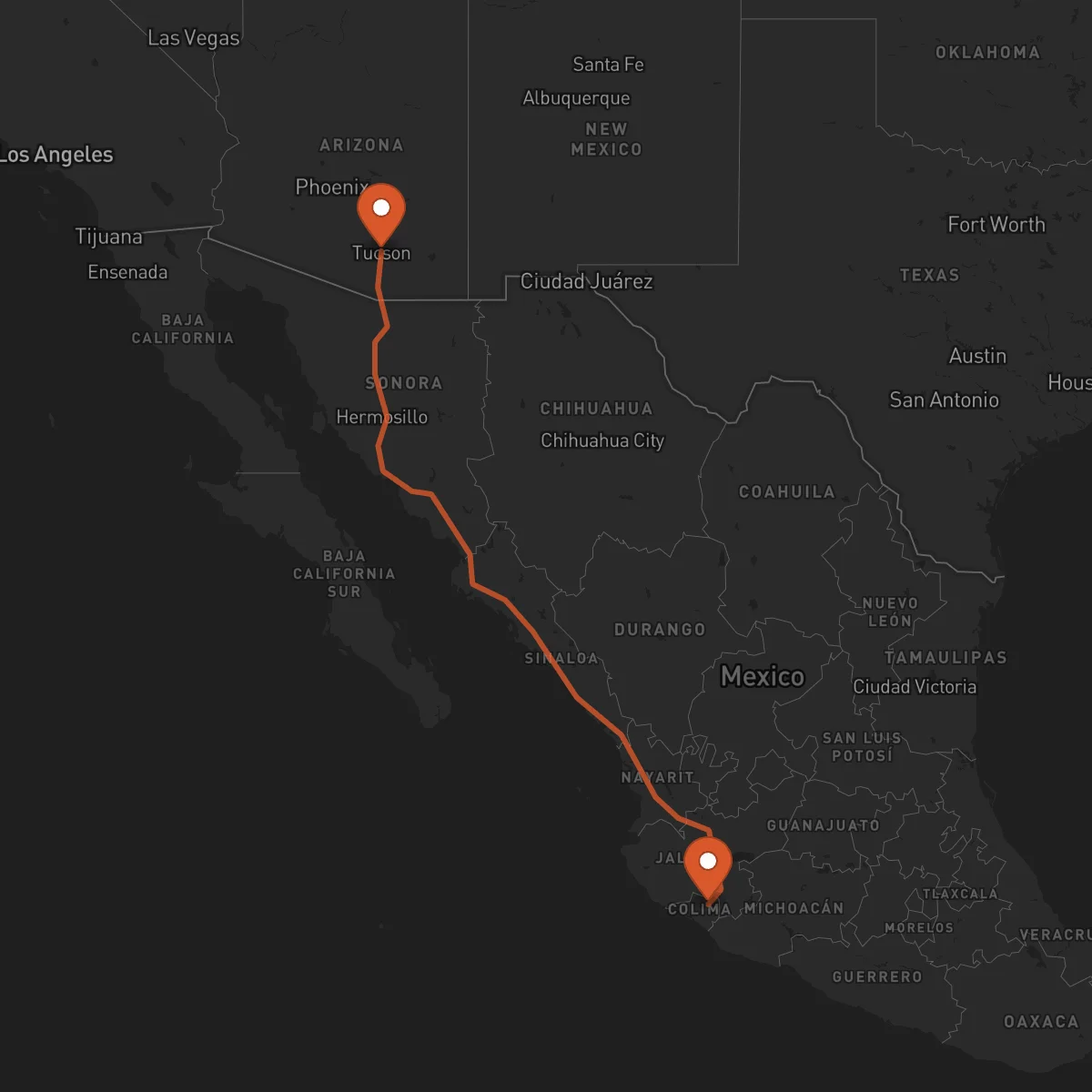
Colima to Tucson
Tucson → ColimaFTL freight transportation service between Colima and Tucson. Reliable logistics solutions for your business.
Route Description
Everything you need to know about the corridor Colima - Tucson
The logistics corridor between Colima, Colima and Tucson, Arizona represents a vital trade route connecting the Pacific coast of Mexico with the southwestern United States. This 1,617 km cross-border route facilitates the movement of goods between Mexico's industrial heartland and the growing markets of Arizona and the broader American Southwest. The corridor traverses diverse terrain, from Mexico's coastal regions through mountainous areas and desert landscapes, ultimately connecting to Tucson's strategic location in southern Arizona.
The economic significance of this route is substantial, supporting trade between Mexico's manufacturing and agricultural sectors with Arizona's distribution hubs and industrial centers. Colima serves as an important industrial and agricultural producer, while Tucson functions as a critical logistics node for southern Arizona, providing access to major markets in Phoenix, Las Vegas, and Southern California. This corridor is particularly important for industries such as automotive parts, electronics, agricultural products, and consumer goods moving between these two regions.
Key transportation infrastructure along this route includes Mexico's Federal Highway 54D and Federal Highway 45, which connect to major US interstates including I-10. The corridor typically crosses at the Nogales-Mariposa or Douglas ports of entry, both of which offer modern customs facilities and processing capabilities. Control Terrestre's expertise in cross-border operations ensures seamless freight movement through these checkpoints, handling all necessary customs documentation and compliance requirements while maintaining efficient transit times for our customers' shipments.
Services for this Route
Available services for the corridor Colima - Tucson
 Origin
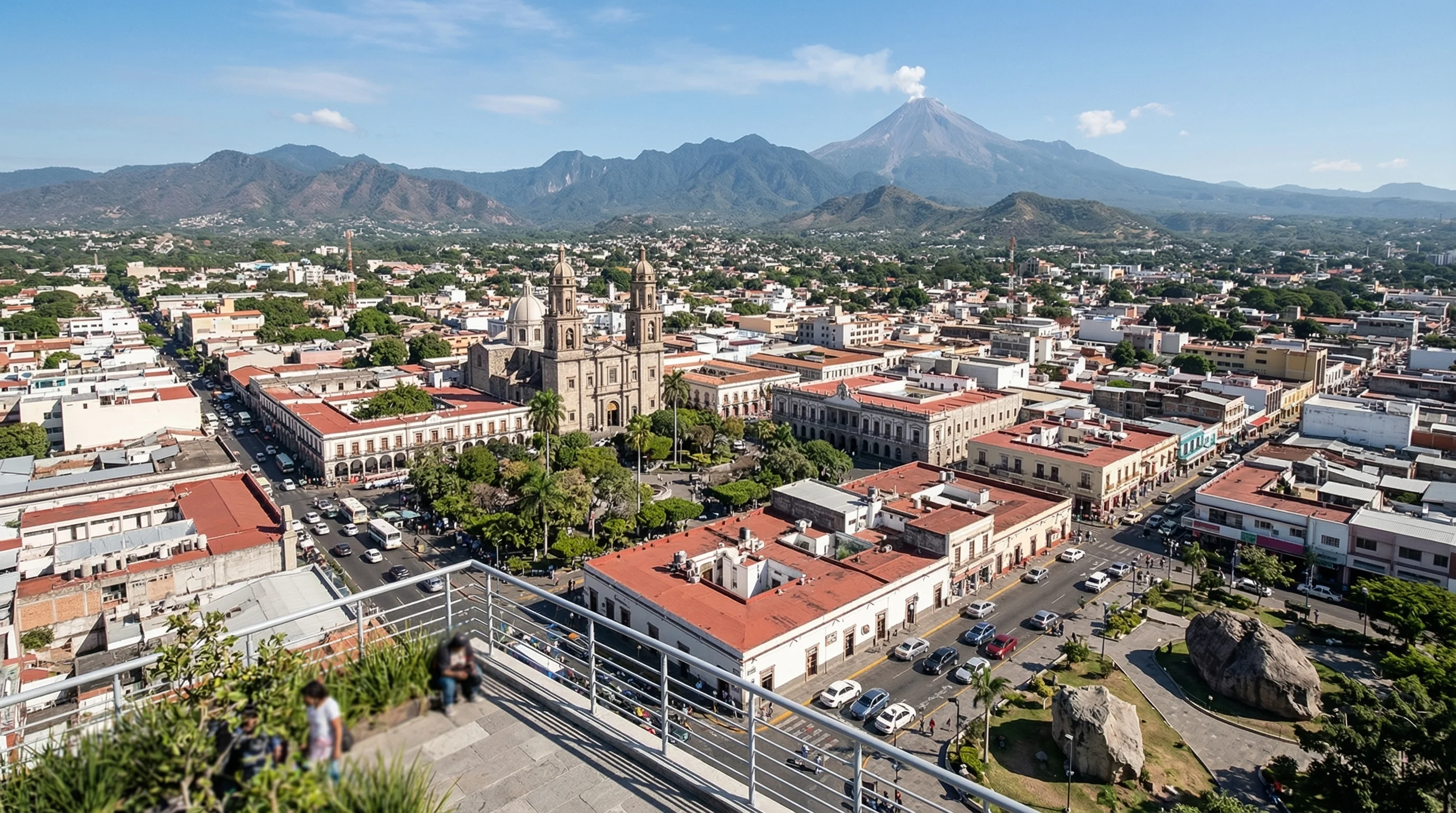
Colima, located on Mexico's Pacific coast, serves as a strategic logistics hub with excellent connectivity to both domestic and international markets. The state features modern port facilities in Manzanillo, Mexico's busiest cargo port, providing ocean freight connections that complement the cross-border ground transportation capabilities. Colima's transportation infrastructure includes well-maintained highways connecting to major industrial centers in Guadalajara, Mexico City, and the US border, making it an ideal origin point for freight shipments.
The region's economy is diverse, with strong manufacturing sectors including automotive parts, electronics, and food processing. Colima is also known for its agricultural production, particularly in fruits, vegetables, and coffee, which frequently move through this corridor to US markets. The presence of industrial parks and manufacturing facilities in and around Colima creates consistent demand for reliable freight transportation services, particularly for time-sensitive and high-value shipments that require dedicated truckload capacity.
 Destination
Tucson
Tucson, Arizona occupies a strategic position in the southwestern United States, serving as a critical logistics hub for southern Arizona and beyond. The city's location provides direct access to major transportation networks including Interstate 10, which connects Tucson to Phoenix, Los Angeles, and El Paso. Tucson's transportation infrastructure includes a major international airport, extensive highway systems, and proximity to the Mexican border, making it an ideal destination for cross-border freight operations.
The Tucson metropolitan area hosts a diverse economic base including aerospace and defense industries, optics and photonics, healthcare, and distribution centers serving the southwestern US market. The region's proximity to the US-Mexico border creates significant cross-border trade activity, with many companies using Tucson as a distribution point for goods entering the US market. The city's logistics ecosystem includes modern warehousing facilities, intermodal yards, and customs brokerage services that support efficient freight movement and distribution throughout the region.










