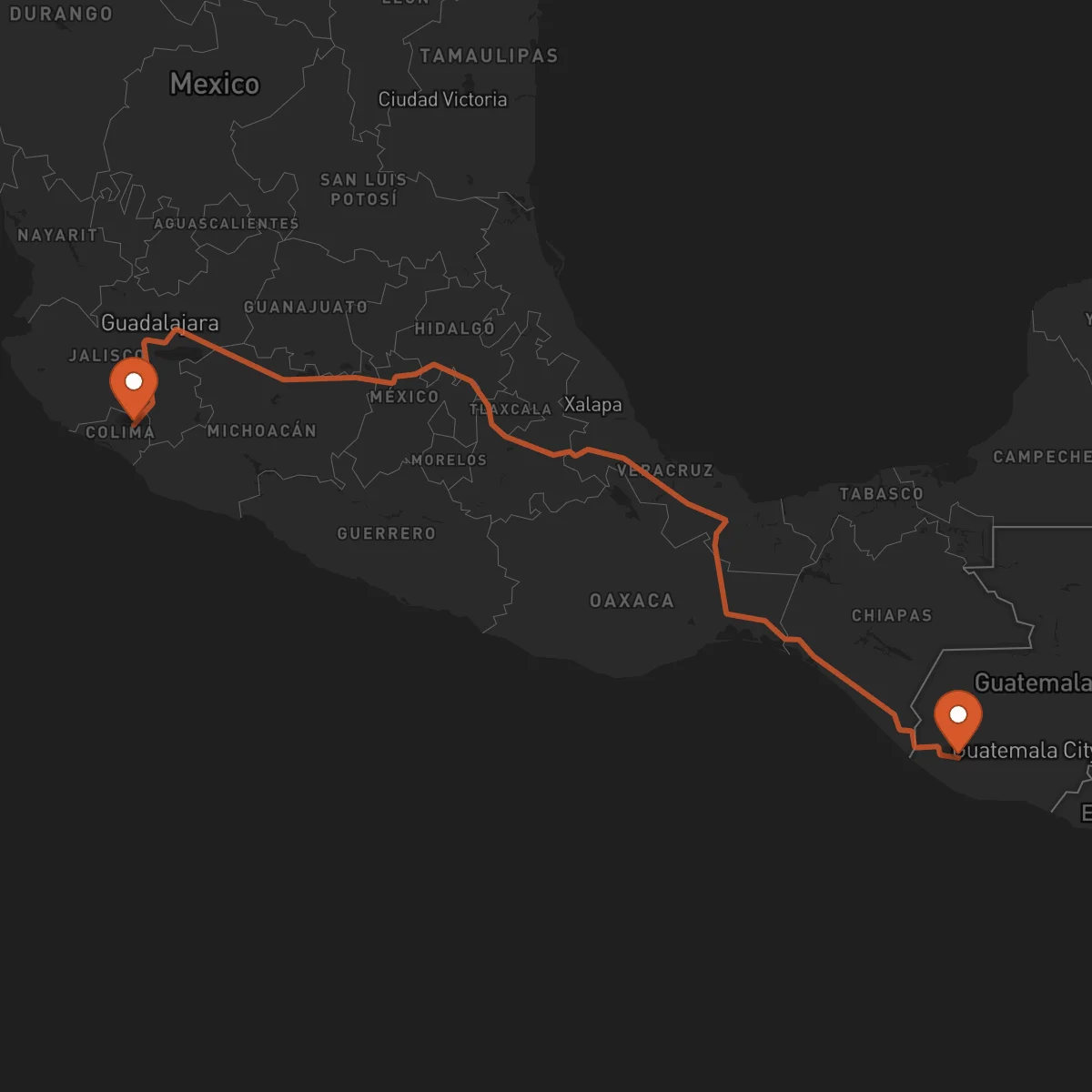
Colima to Mazatenango
Mazatenango → ColimaFTL freight transportation service between Colima and Mazatenango. Reliable logistics solutions for your business.
Route Description
Everything you need to know about the corridor Colima - Mazatenango
The Colima-Mazatenango corridor is a vital cross-border logistics artery connecting Mexico's Pacific coast with Guatemala's highlands, spanning approximately 1,401 km. This route is strategically critical for trade between Northwestern Mexico and Central America, facilitating the flow of goods through a complex but well-established network of highways and official border crossings. Economically, it links the industrial and port zones of Colima with the agricultural and manufacturing heartland of southwestern Guatemala, supporting key regional supply chains. Main industries utilizing this corridor include agriculture (moving produce like bananas, coffee, and sugarcane), manufacturing (textiles, processed foods), and bulk commodities. The primary terrestrial infrastructure relies on Mexican Federal Highway 200 south from Colima through coastal states, transitioning to Guatemalan routes like the CA-2 after crossing the border at Ciudad Hidalgo/Tecún Umán. This crossing is the principal gateway, requiring meticulous customs documentation and compliance with both nations' regulations. Control Terrestre facilitates seamless operations on this corridor through our exclusive focus on Full Truckload (FTL) services and our alliance network of certified providers. Our partners hold essential credentials such as C-TPAT, FAST, and BASC, which streamline customs procedures and enhance security. We manage all complexities of cross-border freight—from dedicated and expedited shipments to specialized cargo like refrigerated goods—ensuring a direct, door-to-door connection between Colima's production/export hubs and Mazatenango's distribution centers without consolidation delays.
Services for this Route
Available services for the corridor Colima - Mazatenango
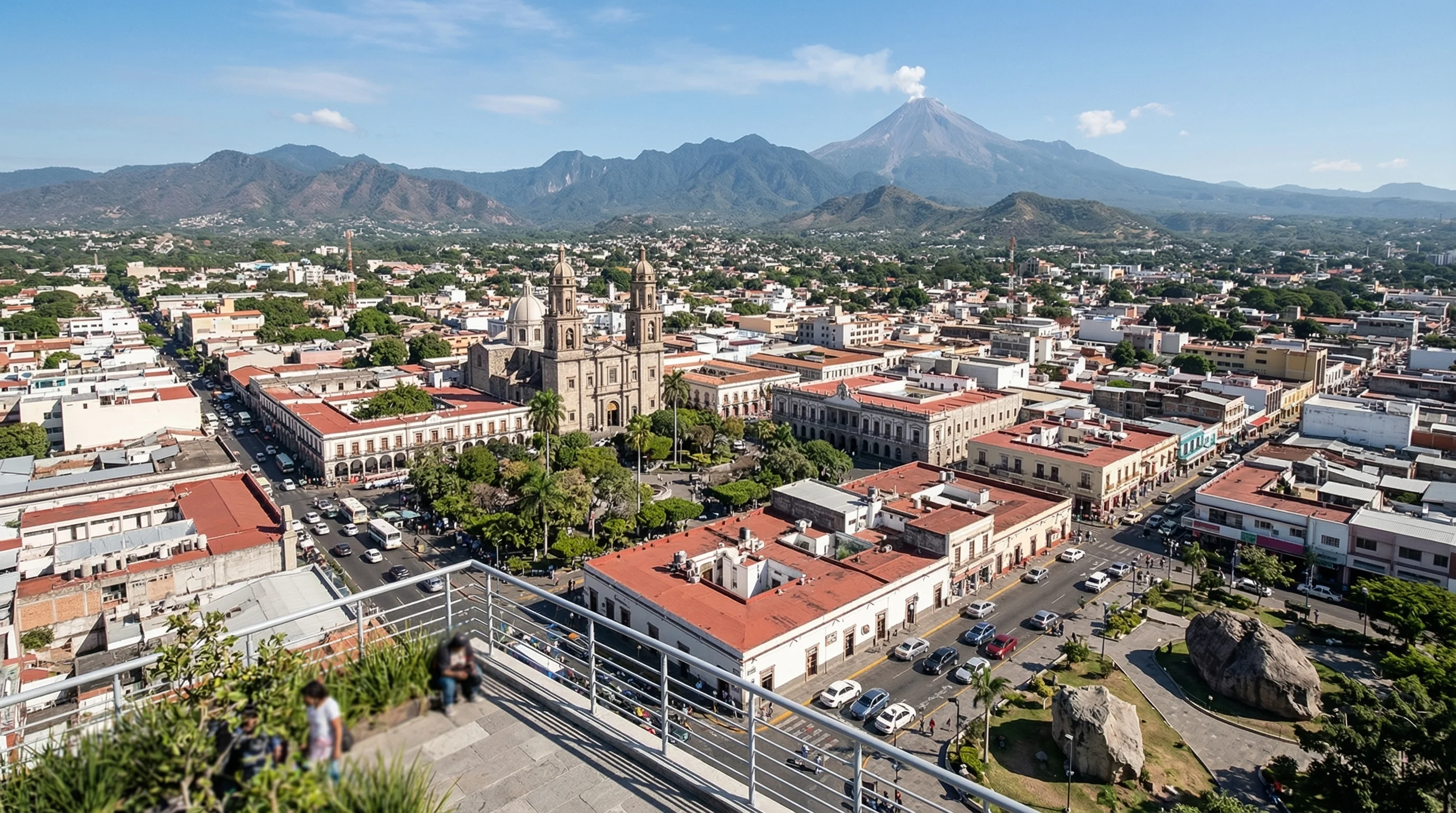 Origin
Colima, located on Mexico's Pacific coast, is a strategic logistics origin due to its world-class port infrastructure in Manzanillo, one of the busiest container ports in Latin America. This provides direct maritime access, making it a primary exit point for exports to Asia and a key entry for imports destined for central and southern Mexico. The state's economy is driven by agriculture (notably bananas, limes, and coconuts), tourism, and a growing industrial sector with manufacturing parks. The available transportation infrastructure is robust, centered on Mexican Federal Highway 200, which runs along the coast and connects efficiently to major inland highways like the Mexico-Guadalajara corridor. This network enables smooth consolidation of goods from across western Mexico to the port or directly southward for cross-border transport. For shippers, Colima offers a consolidated export platform with reliable road access to the southern border, making it an optimal starting point for freight bound for Central America.
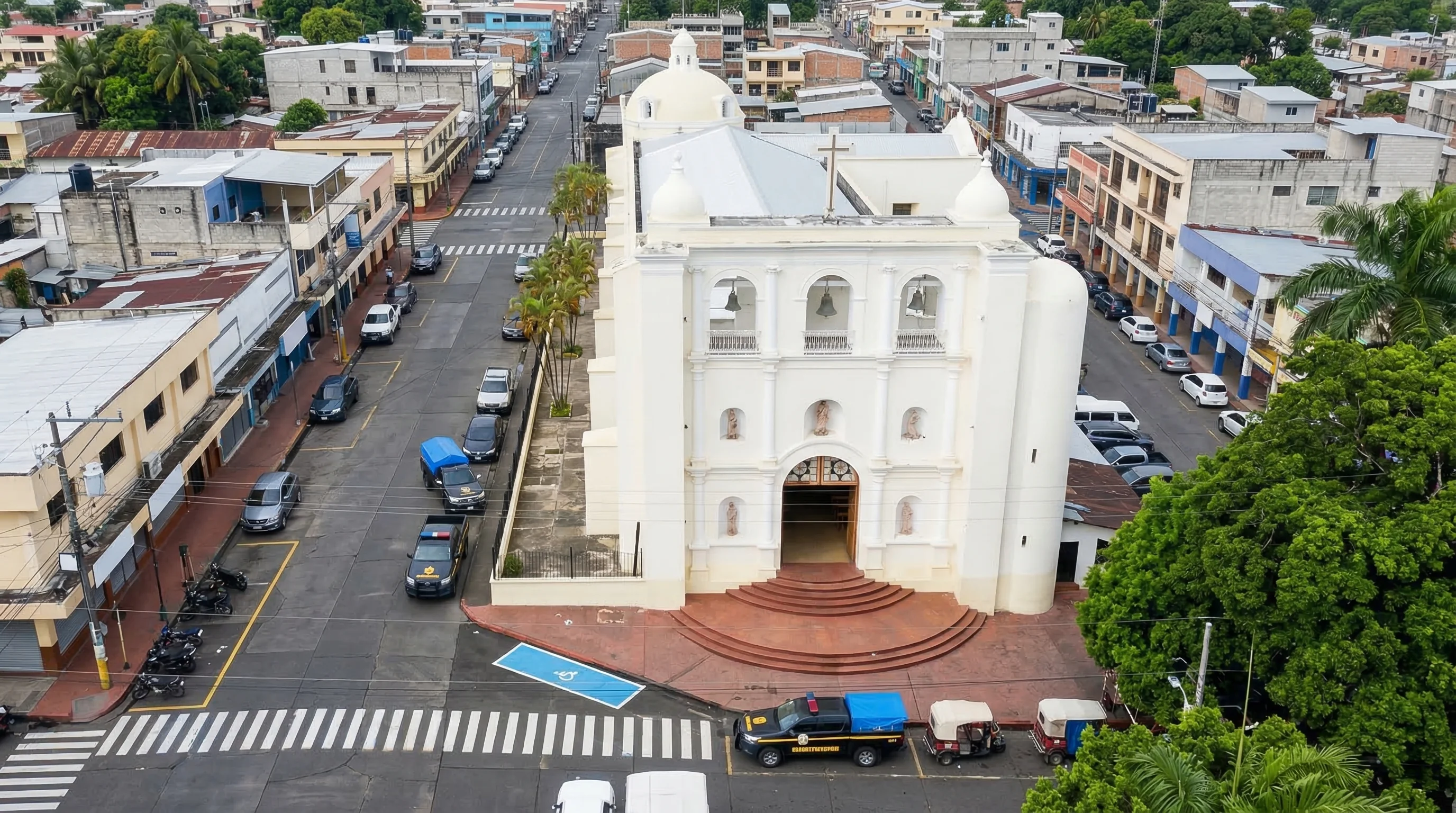 Destination
Mazatenango
Mazatenango, the capital of Suchitepéquez in Guatemala, serves as a pivotal logistics and commercial hub for the country's southwestern region. Its strategic location lies in a fertile valley with excellent connectivity to both the Pacific coast ports (like Puerto Quetzal) and the capital, Guatemala City. The local economy is heavily agricultural, producing coffee, sugarcane, bananas, and vegetables, alongside textile manufacturing and food processing industries. These sectors generate significant demand for inbound raw materials and outbound finished goods. The destination is well-served by the CA-2 highway, a major component of the Pan-American network, which provides direct north-south access to the Mexican border at Tecún Umán and east-west links to Guatemala City. This infrastructure supports efficient distribution within Guatemala and onward connections to El Salvador and Honduras. For international shippers, Mazatenango represents a key consumption and production node with road infrastructure capable of handling FTL and specialized cargo, making it a logical terminus for cross-border freight from Mexico.










