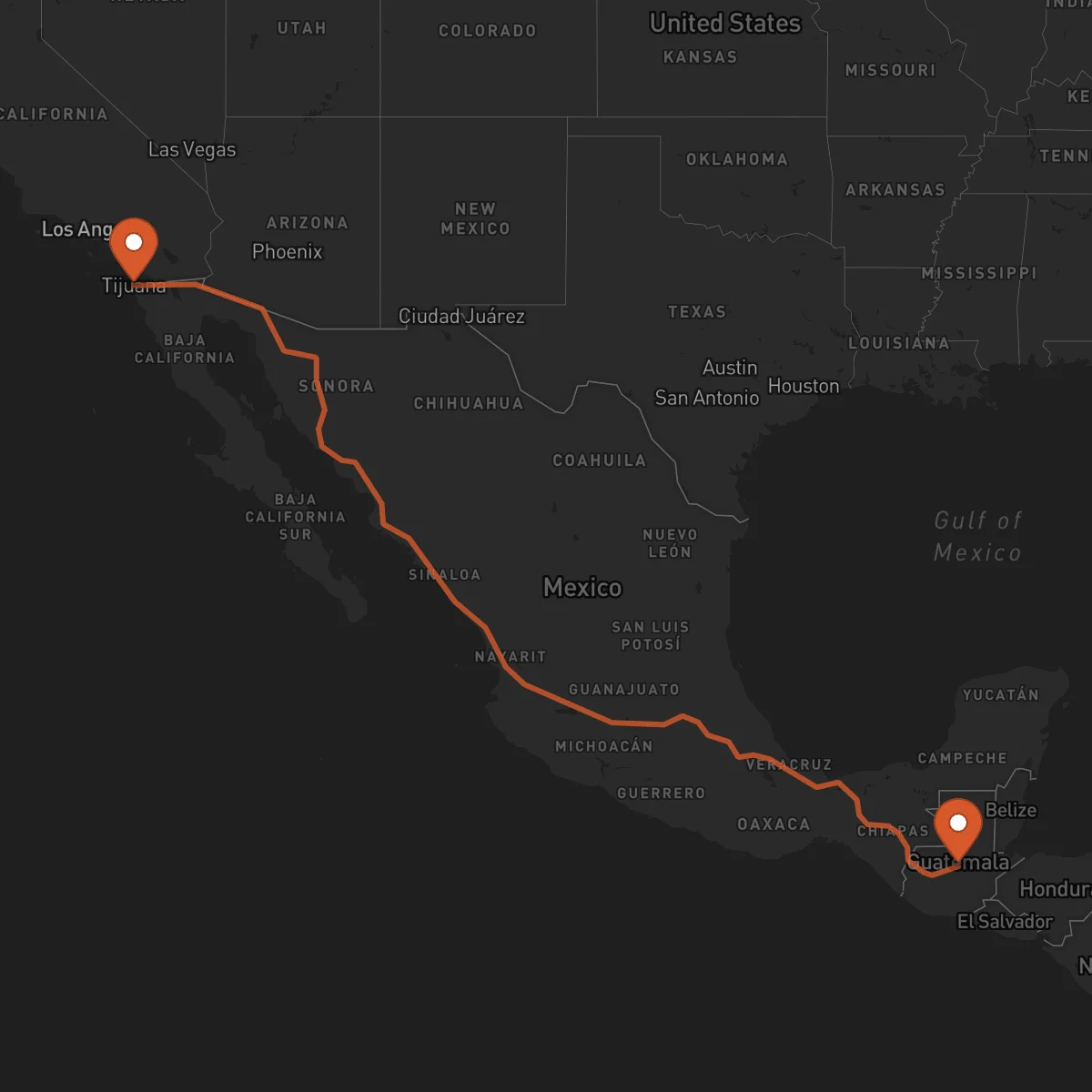
Cobán to Tijuana
Tijuana → CobánFTL freight transportation service between Cobán and Tijuana. Reliable logistics solutions for your business.
Route Description
Everything you need to know about the corridor Cobán - Tijuana
The logistics corridor connecting Cobán, Alta Verapaz in Guatemala to Tijuana, Baja California in Mexico represents a vital cross-border transportation route spanning approximately 3,289 kilometers. This corridor serves as a crucial link between Central America's agricultural heartland and Mexico's dynamic border region, facilitating the movement of goods between two distinct economic zones. The route traverses diverse terrain and crosses multiple international borders, making it a complex but essential pathway for regional trade.
The economic significance of this corridor is substantial, connecting Guatemala's agricultural production with Mexico's manufacturing and export-oriented industries. Cobán serves as a key agricultural center, while Tijuana has evolved into a major industrial hub with strong ties to the United States market. The corridor supports various industries including agriculture, manufacturing, electronics, and automotive components, with businesses relying on efficient cross-border transportation to maintain their supply chains and meet market demands.
Transportation infrastructure along this route includes major highways such as CA-9 in Guatemala and Mexico's Federal Highway 2, providing essential connectivity between the two regions. The corridor involves crossing at key border points, requiring careful coordination of customs procedures and documentation. Control Terrestre facilitates seamless operations on this corridor by leveraging our expertise in cross-border logistics, ensuring compliance with international regulations, and providing reliable full truckload transportation services that maintain the integrity of shipments throughout their journey from Cobán to Tijuana.
Services for this Route
Available services for the corridor Cobán - Tijuana
 Origin
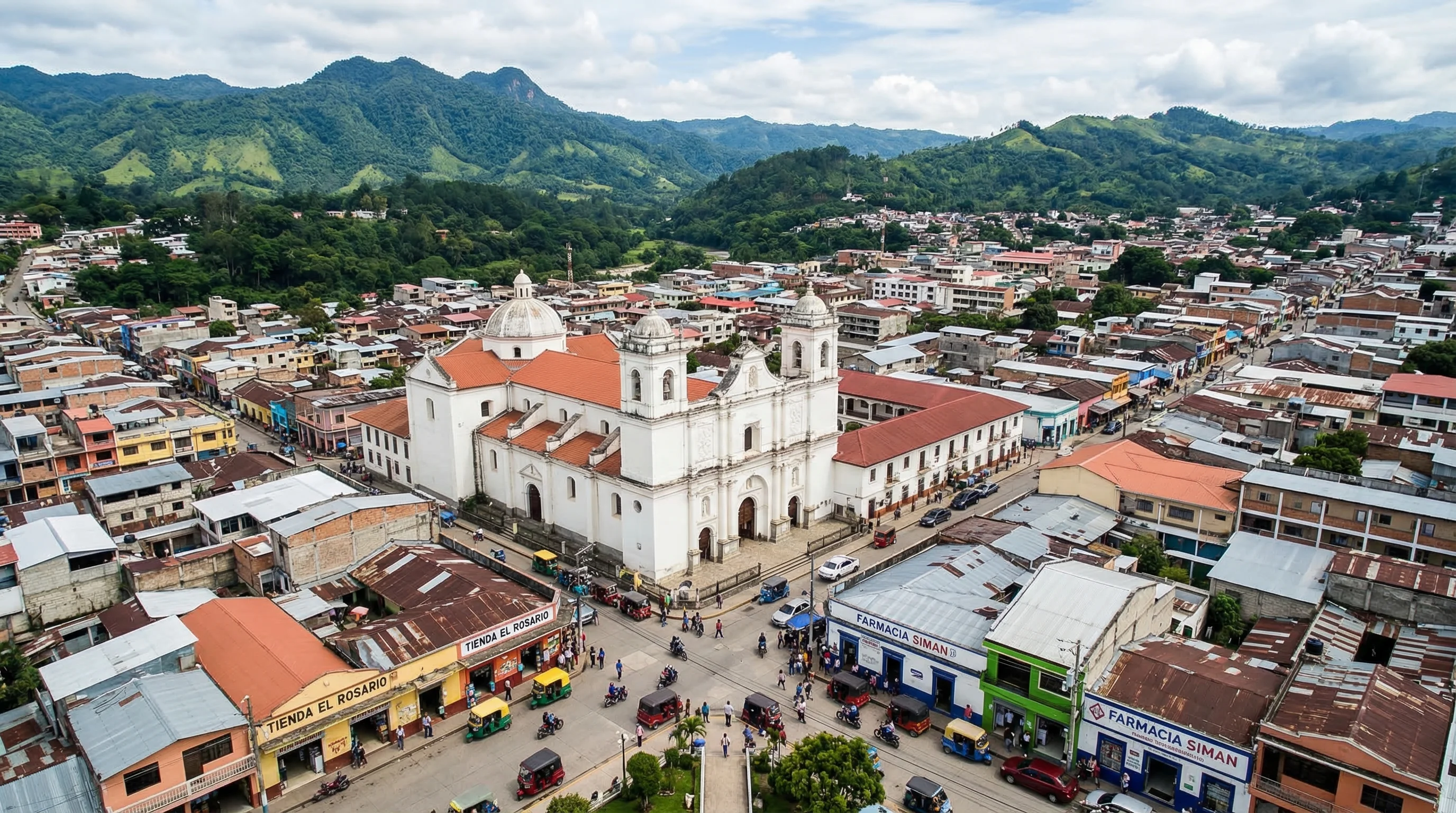
Cobán
Cobán, located in Alta Verapaz, Guatemala, serves as a strategic logistics hub in the heart of Central America's agricultural region. The city's location provides access to rich agricultural areas known for coffee, cardamom, and various tropical products, making it an important origin point for agricultural exports. Cobán benefits from its position within Guatemala's transportation network, with access to major highways connecting to the country's Pacific and Atlantic ports, facilitating both domestic distribution and international trade.
The region's economy is primarily driven by agriculture, with significant production of coffee, cardamom, and other agricultural products that require reliable transportation to both domestic and international markets. The available transportation infrastructure includes road connections to Guatemala City and other major centers, as well as access to Puerto Barrios on the Caribbean coast for maritime shipping. This infrastructure, combined with the region's agricultural productivity, makes Cobán an important origin point for freight transportation services, particularly for full truckload shipments of agricultural and related products.
 Destination
Tijuana
Tijuana, situated in Baja California, Mexico, stands as one of the most strategically important logistics hubs in North America due to its proximity to the United States border and its role in international trade. The city's location provides immediate access to California's major markets and serves as a gateway for goods entering and exiting the North American market. Tijuana's transportation infrastructure is highly developed, featuring extensive highway networks, rail connections, and proximity to major international airports and maritime ports.
The region's economy is diverse and robust, encompassing manufacturing, electronics, aerospace, medical devices, and automotive industries, with strong ties to both Mexican and American markets. Tijuana hosts numerous maquiladoras and manufacturing facilities that require efficient logistics solutions for both raw material imports and finished goods exports. The city's industrial parks and manufacturing zones are supported by modern warehousing facilities and a skilled workforce, making it a critical destination for freight transportation services. The availability of cross-border transportation options and the city's integration with the broader North American supply chain network make Tijuana an essential endpoint for cross-border logistics operations.










