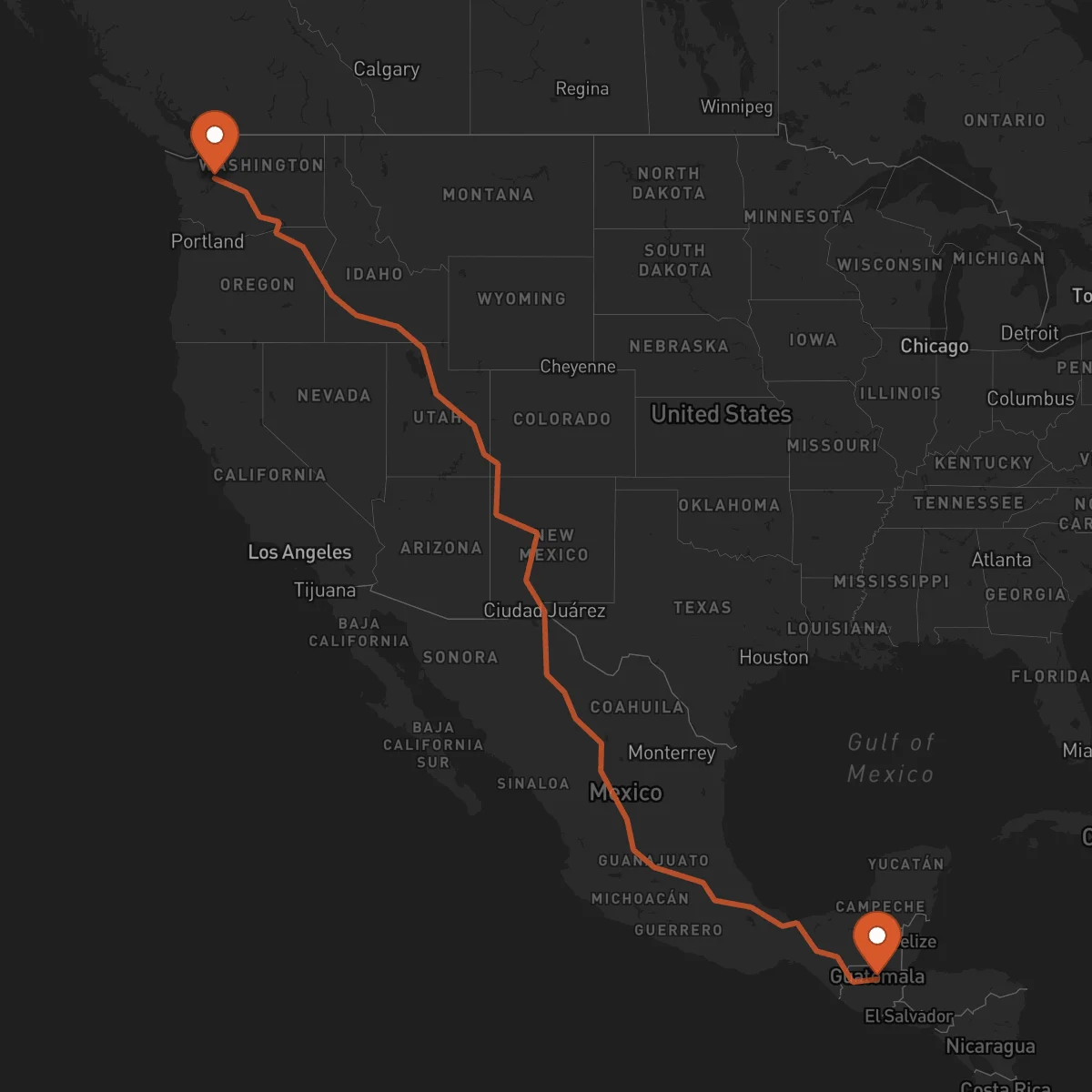
Cobán to Seattle
Seattle → CobánFTL freight transportation service between Cobán and Seattle. Reliable logistics solutions for your business.
Route Description
Everything you need to know about the corridor Cobán - Seattle
The Cobán to Seattle corridor represents a critical international freight link connecting the highlands of Guatemala with the Pacific Northwest of the United States. Spanning approximately 4,621 kilometers, this cross-border route is a vital artery for trade between Central America and North America, facilitating the movement of goods through Mexico and into the U.S. Its strategic importance lies in bridging key agricultural and manufacturing centers with major consumption and export hubs, enabling efficient supply chain integration across continents.
Economically, the corridor serves diverse industries. From Cobán, it primarily transports high-value agricultural products like coffee, cardamom, and tropical fruits, alongside timber and artisanal goods. Northbound flows are complemented by southbound shipments of manufactured items, technology components, and industrial equipment from the Seattle metropolitan area and broader Washington State. The route supports just-in-time inventory models for businesses reliant on these cross-continental exchanges.
Key transportation infrastructure relies on a network of major highways. The journey begins on Guatemala's CA-1, transitions through Mexico via federal highways such as the MX-190 and MX-15, and continues into the United States on the I-5 corridor, the primary north-south interstate on the West Coast. The most significant border crossings are at Tecún Umán (Guatemala-Mexico) and a designated Mexico-U.S. port of entry (such as Nogales, Arizona, or similar, depending on final routing). These crossings require meticulous customs and compliance management, where programs like C-TPAT and FAST, held by our provider network, are essential for streamlined clearance.
Control Terrestre facilitates seamless operations on this complex corridor by leveraging our alliance of certified transportation providers. We manage the entire full truckload (FTL) lifecycle—from origin pickup in Cobán to final delivery in Seattle—handling all cross-border documentation, customs coordination, and regulatory adherence. Our expertise ensures that specialized cargo, including refrigerated goods and oversized shipments, moves efficiently. We provide a single point of contact for our clients, transforming this long-haul international route into a reliable, manageable segment of their supply chain.
Services for this Route
Available services for the corridor Cobán - Seattle
 Origin
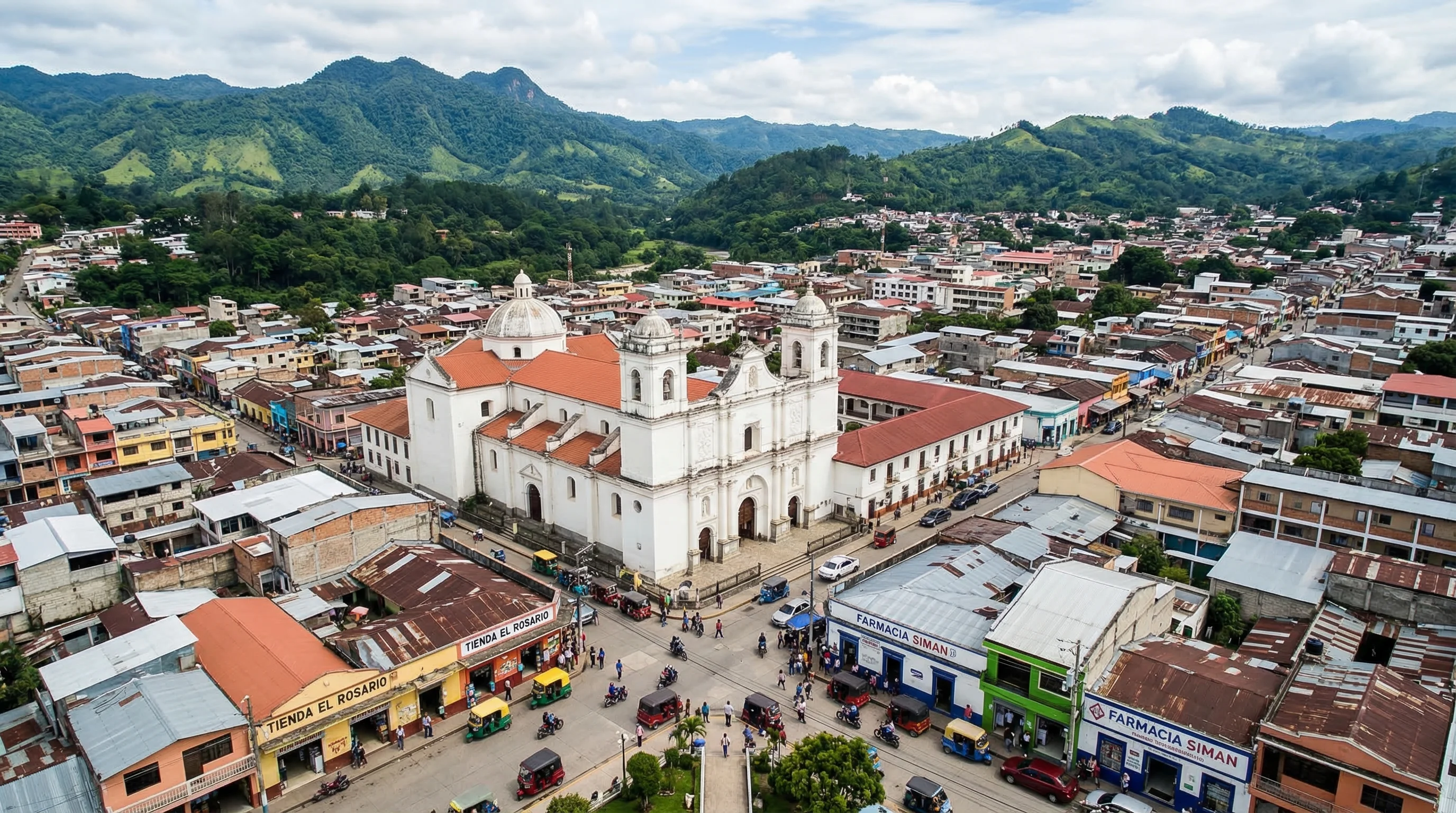
Cobán
Cobán, the capital of Guatemala's Alta Verapaz department, is a strategic logistics hub in the Central American highlands. Its location provides direct access to the country's most fertile agricultural regions, making it a primary collection point for export commodities. The city is surrounded by landscapes ideal for coffee and cardamom cultivation, two of Guatemala's top export earners, along with other produce like bananas and citrus. Key transportation infrastructure includes the CA-1 highway, which connects Cobán to Guatemala City and the Pacific coast ports, serving as the crucial first leg for any northbound freight. Local road networks distribute goods from surrounding farms and production facilities to consolidation points in Cobán, ready for long-haul transport.
 Destination
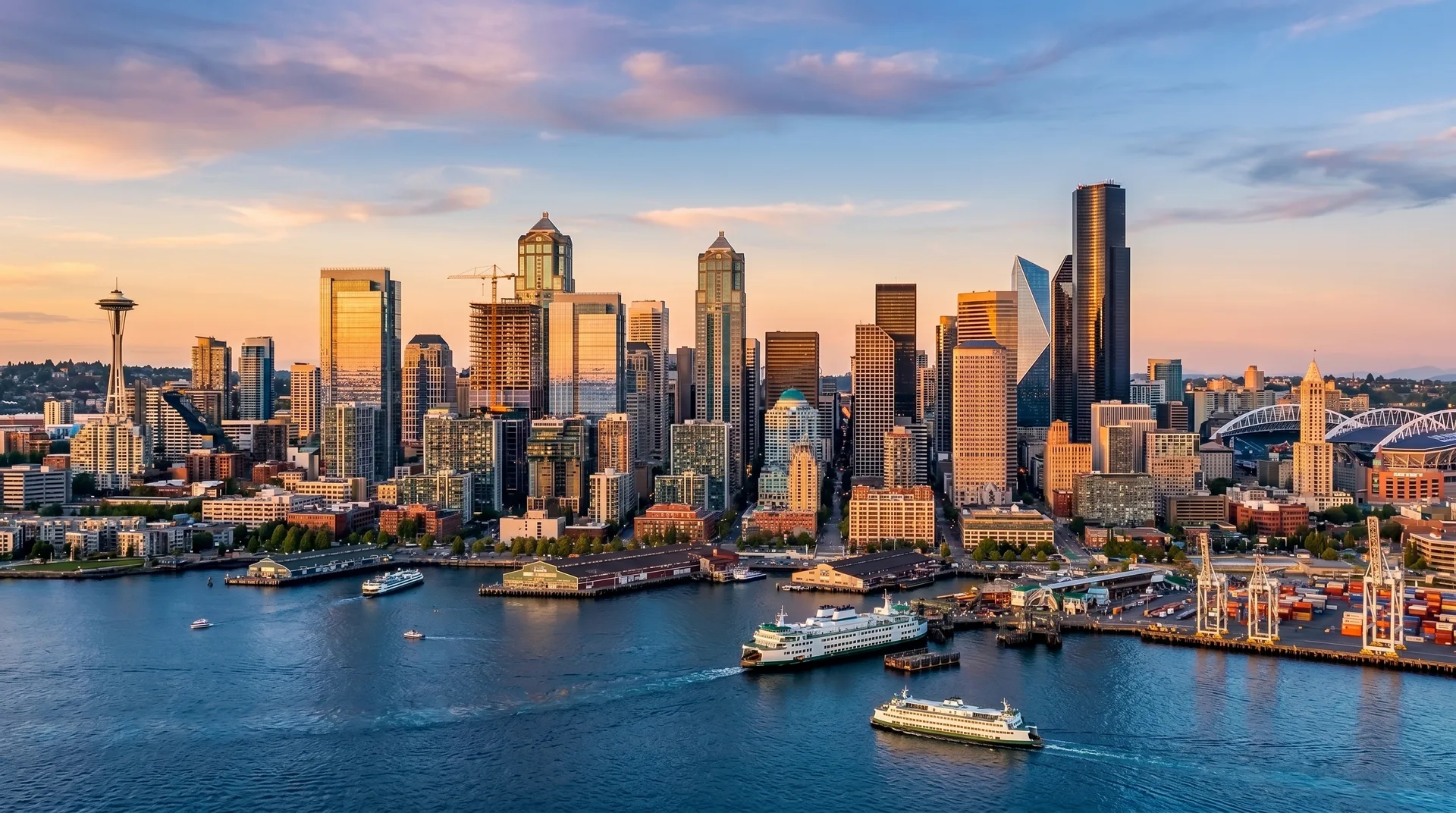
Seattle
Seattle, Washington, is a major economic and logistics gateway on the U.S. West Coast. Its strategic value stems from the Port of Seattle, one of the nation's busiest container ports, and its position as the northern terminus of the I-5 corridor—the essential highway linking the U.S.-Canada border to Mexico. The city's economy is anchored by aerospace (Boeing), technology (Microsoft, Amazon), and clean energy, but the broader Washington State region is also a powerhouse for agriculture, producing apples, cherries, hops, and wheat. Freight infrastructure is robust, featuring the I-5, extensive rail intermodal facilities, and direct port access, enabling efficient distribution to U.S. and Canadian markets from the final delivery point.










